


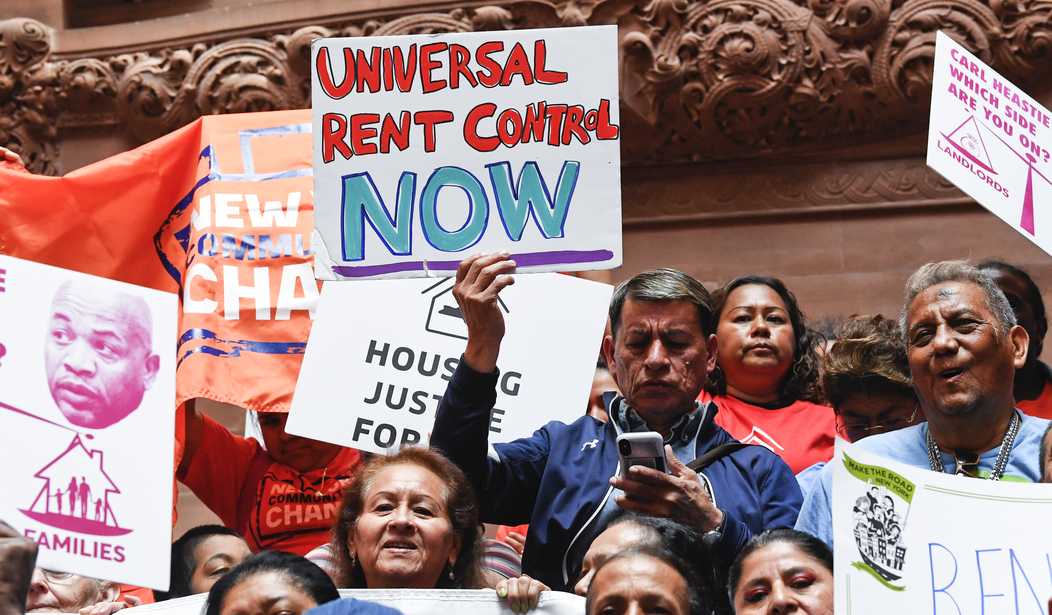
One of the welfare state's favorite areas of intervention is housing construction and assistance for people on lower incomes. This is the subject of Howard A. Husock's book “The Projects: A New History of Public Housing” (New York University Press). Today, 1.6 million Americans live in 886,000 public housing units. Between 1937 and the mid-1980s, 1.5 million units were built in the “Projects,” most of them between 1950 and 1976.
Hundreds of thousands of these units have since been demolished. Today, the Projects are socially troubled areas with high levels of crime. An analysis of New York police data found that although public housing residents make up only four percent of the city's population, approximately 20 percent of violent crimes occur within 100 feet of public housing.
Yet it had all begun very differently. The Projects were intended to realize utopian concepts of better housing – it was no longer the market but government planning and administration that would determine how people lived.
According to Husock, it began in 1934 with the “Modern Housing Exhibition” at New York's Museum of Modern Art. The accompanying publication argued that radical changes in social philosophy and public policy were necessary to improve housing conditions.
The central thesis was that the market had failed when it came to housing. The exhibition's proponents maintained that laissez-faire had failed particularly badly in providing housing for low-income groups and that such housing could never be produced profitably.
One of the most important initiators, Catharine Bauer, was affectionately referred to as “Communist Catherine,” while another, Philip Johnson, admired Adolf Hitler, attended the National Socialist Party rally in Nuremberg and supported the antisemitic radio preacher Father Coughlin.
Bauer argued that modern housing required entirely new communities, comprehensively planned for long-term usefulness rather than speculative profits. Rents should reflect tenants' ability to pay rather than market conditions. Her book Modern Housing was illustrated with photographs of European projects, including examples from Hitler's Germany and Stalin's Soviet Union.
The visionaries were intellectuals who believed that a perfect society and perfect housing could be planned at a desk, with their own aesthetic sensibilities serving as the guiding principle. It never occurred to them to involve the people for whom the projects were intended.
Neither voters nor builders had demanded the Projects, but rather essayists and ambitious architects. They believed that cooperation between government and modernist architects could create better cities and improve residents' lives.
Le Corbusier, one of the movement's most influential intellectual pioneers, argued in his 1927 book The City of Tomorrow that urban planning should govern everything, with architects designing cities according to a comprehensive vision.
This way of thinking is typical of the constructivism repeatedly criticized by Friedrich August von Hayek, namely the idea that a society and its economic order can be consciously shaped according to a rationally devised plan. Hayek criticized this pretence of knowledge because no individual and no central planning authority possesses the dispersed knowledge of millions of people necessary to manage a complex society. Many successful institutions, such as the market, law or language, developed through evolutionary processes without central design.
The prerequisite for creating something entirely new and utopian was the elimination – indeed, the violent and brutal elimination – of everything that had developed organically. This applied particularly to the structures referred to as “slums.”
They had to make way even when their residents resisted and when there was insufficient room in the replacement Projects to accommodate everyone. In Detroit, votes were held on whether neighborhoods should be destroyed, but opponents won more often than supporters.
Indeed, living conditions in many neighborhoods described as slums were terrible – overcrowded, dark and a reflection of social problems. But they could also be described more positively as spontaneously evolved social structures populated by hardworking immigrants and small business owners.
Husock describes a New York neighborhood as an unplanned, chaotic and spontaneous place, certainly with flaws. Yet he questions whether residents and business owners would have agreed to relocation into high-rise towers surrounded by parks, without commercial streets or stores.
So-called “slum clearance” meant the violent destruction of spontaneously evolved structures, usually without consulting the tenants and owners whose property was expropriated. And it was not just housing that was affected. In one demolished neighborhood, alongside more than 10,000 dwellings, there were 137 food stores, 118 bars and restaurants, 86 barber shops and beauty parlors, 80 churches and missions, 24 dry cleaners and six funeral homes.
The slums were overcrowded and much was wrong with them. But they also contained vibrant civil societies, with churches, synagogues, newspapers, shops, social clubs and charitable organizations. Since many slums were predominantly inhabited by black Americans, resistance emerged under the slogan “Slum clearance is Negro clearance.”
What replaced the demolished slums initially seemed better. In the early years, when the developments were new, they were usually clean and attractive, and many residents enjoyed living there. But their character changed increasingly over time.
Originally conceived for working-class families on average incomes, they increasingly became poorhouses and centers of social problems. The rents were insufficient to cover maintenance. Government administration was hopelessly overwhelmed and incapable, and the problems grew worse year after year.
Bauer, the most prominent intellectual pioneer of the Projects, eventually acknowledged their failure herself. She conceded that life in typical public housing developments did not correspond to how most American families wanted to live or to prevailing American values.
In 1973, President Richard Nixon declared that political leaders across party lines and different levels of government increasingly agreed that federally subsidized housing had failed.
In many respects, the new ghettos were even worse than the old ones. The Projects deliberately excluded locally owned businesses and commercial streets. Residents could not legally earn additional income by renting rooms. Private homeownership disappeared; renting was the only option.
The Projects were intended to replace the slums, but after their promising beginnings, they themselves became slums, often worse than those demolished to make way for them.
Following Nixon's moratorium in 1973, other concepts increasingly came to the fore. Hundreds of thousands of public housing units were demolished, and the new fashion was “mixed communities,” which sounded good on paper but did not correspond to what many Americans wanted.
The “Voucher System” also creates perverse incentives, since tenants' rent contributions are calculated as a percentage of income. As income rises, tenants must pay more, weakening incentives to earn additional money. Maintaining completely run-down Projects was often more expensive per square meter than building an average-sized new house.
Husock shows that one government-run system was replaced by another, but the new ideas failed as well. What remained unquestioned was the constructivist and statist approach, according to which the market had supposedly failed in the housing sector and government concepts and plans, often devised by well-meaning intellectuals, were therefore the solution.
Rainer Zitelmann is author of the books “The Power of Capitalism” https://the-power-of-
Editor’s Note: Do you enjoy Townhall’s conservative reporting that takes on the radical Left and woke media? Support our work so that we can continue to bring you the truth.
Join Townhall VIP and use promo code FIGHT to receive 60% off your membership.



Join the Conversation
VIP members get the ability to comment on articles.