





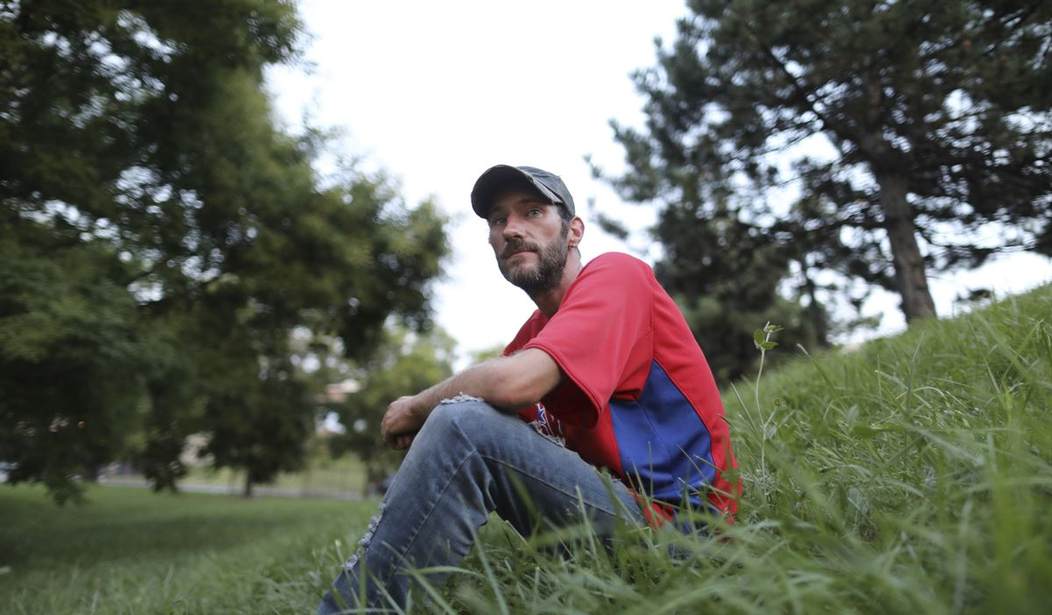
In a bold effort to confront decades of shortcomings in veteran care, President Trump recently signed an Executive Order to establish the National Center for Warrior Independence—a dedicated initiative set to be built on the Veterans Affairs campus in West Los Angeles. With an ambitious target of housing 6,000 homeless veterans by 2028, the order also enacts sweeping reforms to reduce wait times at VA hospitals, expand virtual healthcare access, and reinstate accountability by removing employees found guilty of misconduct.
Trump’s order marks a significant pivot in federal policy. It is the most comprehensive federal initiative in more than a decade aimed at combating veteran homelessness—and a long-overdue reckoning with the nation’s chronic failure to care for those who served.
That failure stretches far beyond recent memory. It is rooted in a pattern of institutional neglect spanning generations. One of the most chilling examples emerged during the final months of World War II.
On May 5, 1945, a U.S. Army Air Forces B-29 bomber from the 29th Bombardment Group was shot down over Fukuoka, Japan. Several American crew members survived the crash—only to be taken to Kyushu Imperial University, where they were subjected to unspeakable atrocities. Six POWs—Lieutenant William Fredericks, Lieutenant Dale Plambeck, Sergeant Teddy Ponczka, Corporal John Colehower, Sergeant Czarnecki, and Robert Williams—were vivisected by Japanese doctors. Without anesthesia, their organs were removed in real-time military experiments designed to test the limits of human endurance.
Only Captain Marvin Watkins, the bomber’s pilot, escaped. Held at Omori POW Camp in Tokyo, Watkins survived the war and later testified about the horrors his crewmates endured. But despite his efforts, the U.S. government listed the dead airmen as victims of the Hiroshima bombing—a deliberate misrepresentation designed to preserve postwar U.S.-Japan relations at the dawn of the Cold War.
Some justice was pursued in the Yokohama War Crimes Trials. Thirty Japanese doctors and military personnel associated with the atrocities were tried; 23 were convicted. Yet by 1958, all had been released. Most death sentences were commuted, and none of the senior figures at Kyushu Imperial University faced lasting consequences. Justice, it seemed, was just another casualty of geopolitics.
Today, the nonprofit Pacific Atrocities Education is working to right this wrong—not with weapons, but with memory. The organization has digitized over a million archival documents, produced 500 educational videos, and published 29 books chronicling wartime atrocities across the Asia-Pacific. Their work ensures that stories like the Fukuoka vivisections are not lost to time or buried for convenience.
Their efforts also underscore a broader truth: neglect of American servicemen, both in life and in death, is a national shame that transcends political party and historical period.
That’s why the Executive Order signed on May 9, 2025, is more than a policy document—it’s a moral declaration. Trump’s order acknowledges that America has repeatedly fallen short in caring for its veterans. Nowhere has that failure been more visible than on the West LA VA campus, originally granted to the federal government in 1888 for the sole purpose of serving veterans. Over time, the land was leased out to private businesses, a prep school, and even a university baseball team—all while thousands of veterans slept in tents on nearby streets.
Trump’s order halts that misuse and restores the land’s original purpose. The new center will offer more than just shelter; it will provide comprehensive mental health services, substance abuse treatment, and career rehabilitation—helping veterans reclaim not just housing, but dignity.
The United States has always depended on its servicemembers to uphold the ideals of freedom, sacrifice, and duty. Yet too often, those same men and women return to a country unwilling to return the favor. Some, like the airmen experimented on in Fukuoka, never made it home at all. Others came back only to face homelessness and societal neglect.
Trump’s Executive Order won’t erase the past. But it begins to right its wrongs. It sends a message: veterans are not an afterthought. They are the very foundation of national security and sovereignty.
Join the Conversation
VIP members get the ability to comment on articles.