





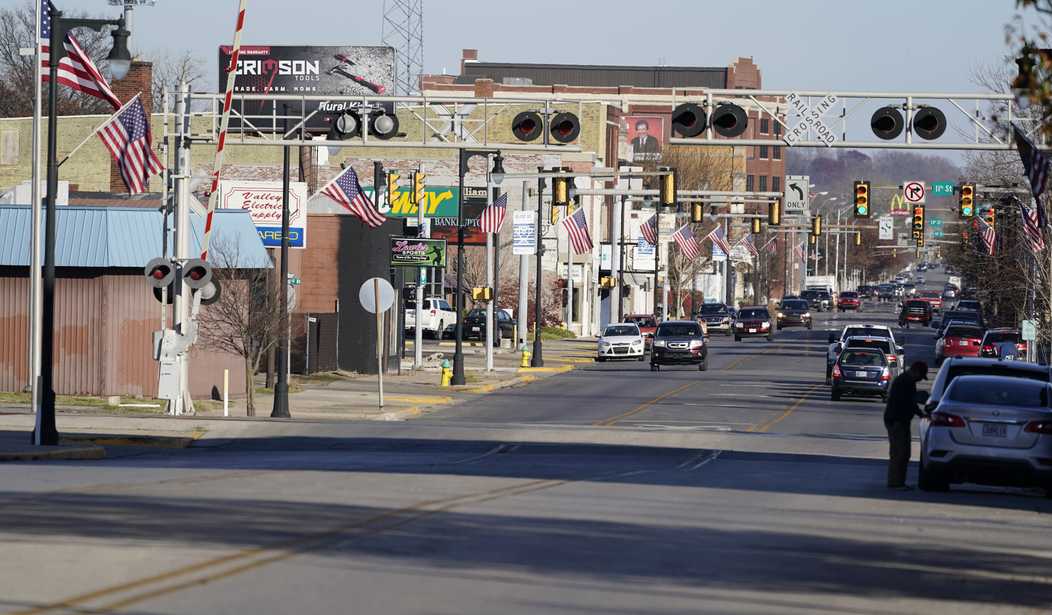
Every two years, the Rust Belt gets rediscovered. With the midterms a month away, candidates in every competitive seat from Pennsylvania to Iowa are making their pitch to working-class voters. Both parties will talk about affordability, which includes inflation, tariffs, energy, housing, wages, and artificial intelligence (AI). Ultimately, it’s about the cost of raising a family.
I've heard versions of this conversation most of my adult life. I grew up in Lake Station (East Gary), Indiana, in a steelworking family, and I spent eight years of my career in Washington. What I've learned from both ends is that despite an interest in reindustrializing, voters aren't looking for a return to the past. They want to know whether they can build a future for themselves as well as their children in an ever-changing world.
Politicians want to know how to "win" working-class voters. They're asking the wrong question. Every cycle, the Rust Belt becomes a puzzle to be solved as the two parties struggle to grasp the nuances of the Heartland. The experts focus on which message tests best, which counties might flip, which slogan plays at the union hall. This overanalysis often looks over a much simpler question: what are these voters asking their government to do?
For those still rooted in or at least visiting middle America, the answer isn't hard to find. As the ads roll this fall, most families won't be weighing grand ideological debates I’ve only heard in D.C. Instead, they'll be asking whether they can afford groceries and whether or not their job will still be there next year. For their kids, it will be about finding good employment, the ability to buy their first house, and whether AI is coming for their newly acquired professional roles.
That's why the midterms are about more than whether manufacturing comes back. They're about whether the American middle class can still build a life and leave its children better off than it was. The next Rust Belt story may not be about factories disappearing, but it may be about whether new industries create broadly shared prosperity, or whether they produce another economic boom that ordinary communities watch from the sidelines.
My father made his living in steel and said I could do anything but follow his footsteps. In my earlier years, I spent some time in the mills but later went to Washington and worked in government. Having stood in both places, I've seen how easily the view from a Capitol Hill office drifts from the view at a kitchen table in Northwest Indiana. Candidates should close that gap, and it starts with being able to answer the right questions.
Instead of talking about the GDP, inflation rate, and economic statistics that make just about anyone's eyes glaze over, candidates should be addressing what their economic agendas mean for a family making $60,000 a year. They should be addressing what happens in a community when the next industry changes and what tomorrow’s jobs look like.
For young people, the dream of owning a home feels out of reach, and candidates should be talking about whether there will be homes that people can afford, jobs that pay a living wage, and whether young families can afford to stay in the communities where they grew up.
And people want to know if work still provides a path to a better future for themselves and their children, and candidates need to be talking to their voters directly about this, letting them know they have a plan to get workers through technology changes like AI and help their communities thrive.
That's the midterm test. Candidates can spend the next few weeks telling voters what they think they want to hear, reciting statistics and talking points crafted by all the data points of a pollster. Or they can show these families that they've been heard, that they're understood, and that someone is ready to lead the next era of economic security for people like them.
My dad didn't go to work every day because he wanted to become a symbol of the American working class. He went to work because that was how he took care of his family.
The political conversation gets lost in labels: "working-class voters," "Rust Belt voters," "swing voters." But underneath all of it is a very simple truth. People want work that allows them to build a life.
That's what the candidates running in 2026 should understand.
Editor’s Note: The 2026 Midterms will determine the fate of President Trump’s America First agenda. Republicans must maintain control of both chambers of Congress.
Help Townhall continue to report on the Democrats’ radicalism and inform voters as our nation faces a crossroads. Join Townhall VIP and use promo code FIGHT to receive 60% off your membership.
Join the Conversation
VIP members get the ability to comment on articles.