





History doesn't always repeat itself, or even rhyme. People sometimes learn from experience, their own or others'.
Example: Woodrow Wilson, a stubborn Southerner, refused to involve any Republicans, all Northerners in those days, in treaty negotiations after World War I. His treaty version, which would require the United States to go to war on a vote of the League of Nations, was rejected by the Senate.
Franklin Roosevelt, who had been Wilson's assistant secretary of the Navy, included Republicans in post-war and treaty planning while World War II was still going on. That ensured bipartisan support for the United Nations, where America had a veto in the Security Council that authorizes war, and paved the way for bipartisan support of the Marshall Plan and the NATO Treaty – a post-war settlement that has lasted nigh on 80 years.
But are current leaders capable of learning from past mistakes? As the formidable learned historian Niall Ferguson wrote on February 28, as the U.S. and Israel launched attacks on Iran, "For the habitual critics of U.S. foreign policy in general and Donald Trump's in particular, the analogy between today's air raids against Iran and the invasion of Iraq nearly 23 years ago is too obvious to be resisted."
As for public opinion, such critics expected history to be repeated. There would be a familiar refrain, dating back to protests against Democratic presidents' 1960s escalations in Vietnam – the "traditional model: Rally-around-the-flag, then quagmire and backlash," as the brilliant polling analyst Nate Silver puts it.
Trump clearly wanted to avoid that trap. He's plainly unfamiliar with the people's great success in reviving dormant traditions of electoral democracy and rule of law in post-World War II Germany and Japan, and he spent most of this century decrying George W. Bush's attempts to nurture such plants in the less fertile soil of Iraq and Afghanistan.
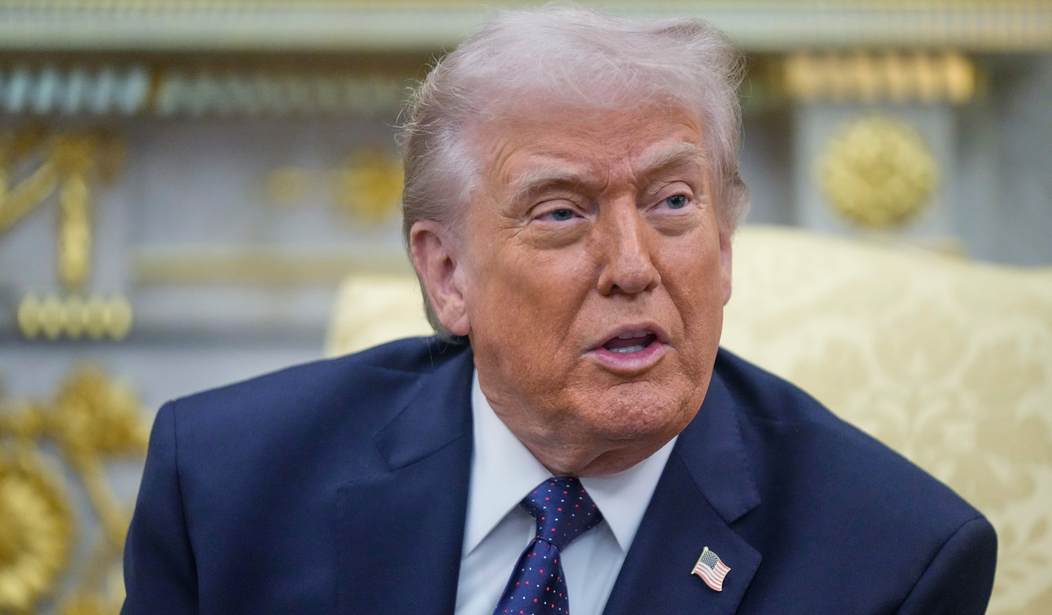
As did Roosevelt, he has taken a different course, in his removal of Nicolás Maduro from Venezuela and in the bombing of Iran, which resulted in the deaths of Ayatollah Ali Khamenei and several dozen regime leaders.
One reason he could do so was precision bombing. Massive bombing didn't produce regime change in Churchill's Britain or Hitler's Germany, but bombs were famously inaccurate. Five decades later, technology facilitated precision bombing. In 1991, Iraqis strolled along the banks of the Tigris River, confident that the bombs released from George H. W. Bush's Desert Storm planes would fall on buildings hosting Saddam's entourage and regime loyalists.
Electronic surveillance – which will not surprise viewers of Apple TV's Israeli-made streaming series "Tehran" – has enabled the precision location of regime leaders, ushering in U.S. special forces to extract Maduro from his safe room in Caracas and Israeli and American jets to zero in on Khamenei and the supreme leader's colleagues in their Saturday morning conference.
That capability has added an arrow to America's quiver. Trump recognized Maduro's deputy Delcy Rodriguez as Venezuela's de facto leader, but his capacity to take out her predecessor has left her and her colleagues and possible successors fearful of being caught doing anything Trump may not like. You can control a regime, to some limited extent, if you have the capacity to extract or exterminate the leader.
Which makes it easier, apparently, for leaders of other countries to endorse an operation launched by just the U.S. and Israel. Australia and Canada chimed in with immediate support (though Britain has dithered), France and Germany made helpful statements, and Iranian military leaders' attacks provoked sharp opposition from the Gulf Arab States, Saudi Arabia, and Jordan, reviving the Abraham Accords, one of the prime achievements of the first Trump term.
Another reason Trump may not be repeating history is that he is, for the time being and at least in the near future, keeping any perceptible number of U.S. troops out of Iran, as he has in Venezuela. There's been no visible conquest and no visible occupation.
One corollary is that there's almost no U.S. press or American television cameras there, either. Media budgets are tightening, and media executives may be reluctant to order constant coverage, as they did in Afghanistan and Iraq, with so few Americans currently at risk in Iran.
Some on the right charge the press with trying to subvert U.S. aims, and certainly, there are some who root for the other guys. But covering a war is a dangerous business, and no one should ignore the many deaths and grievous suffering of the press, going back to the death of The Atlantic editor Michael Kelly in April 2003. And bad news, by its nature, gets more coverage than good news.
Trump is trying to avoid any backlash generated by bad news by setting modest goals. The 1960s Democrats wanted anti-communists to govern South Vietnam; George W. Bush wanted democracy and human rights to prevail in Iraq and Afghanistan.
Trump's goal appears to be to prevent leaders of adversary nations from doing bad things beyond their borders. Just as Thomas Jefferson sent the Navy against the Barbary pirates (without a declaration of war or much initial congressional approval), he's seeking not internal regime change but external regime behavior.
The upside possibility is disappointing for those proud of Americans' role in advancing freedoms around the world over the last century and more. But the downside risk of negative history repeating itself looks to be less.
Michael Barone is a senior political analyst for the Washington Examiner, resident fellow at the American Enterprise Institute, and longtime co-author of "The Almanac of American Politics." His new book, "Mental Maps of the Founders: How Geographic Imagination Guided America's Revolutionary Leaders," is now available.
Editor's Note: For decades, former presidents have been all talk and no action. Now, Donald Trump is eliminating the threat from Iran once and for all.
Help us report the truth about the Trump administration’s decisive actions to keep Americans safe and bring peace to the world. Join Townhall VIP and use promo code FIGHT to get 60% off your VIP membership.

Join the Conversation
VIP members get the ability to comment on articles.