





Christopher Columbus spent years trying to find sponsors to invest in a risky and very expensive endeavor. He failed to entice King John II of Portugal to sponsor the journey. Two years later, in 1486, he got an audience with King Ferdinand and Queen Isabella of Spain. They referred him to a committee. Six years later, the journey was approved, despite the misgivings of a lot of experts who were sure that Asia was a lot farther than Columbus insisted.
They were right, and he was wrong, technically. But Columbus’ willingness to take the risk to seek out that new trade route ended up leading to one of the most important discoveries in history.
Decades later, Ferdinand Magellan set out to find land and treasure while attempting something no one had done before. The journey sadly ended for him in the Philippines, but the expedition went on. In the end, a single ship out of the five that originally left arrived back in a Spanish harbor, having succeeded in circumnavigating the globe.
Over the next few hundred years, fleets of vessels charged into the brutally cold Northern Atlantic, trying to find open water that would significantly shorten trips from Europe to Asia. Many men died, and there was no guaranteed return on investment. But those trips resulted in the mapping of the Arctic landmasses.
Nowadays, we seem to have an impulse to demand that all exploration justify itself to an extraordinary degree. If there is too much uncertainty, the project should be abandoned. This is especially the case for anything government-funded.
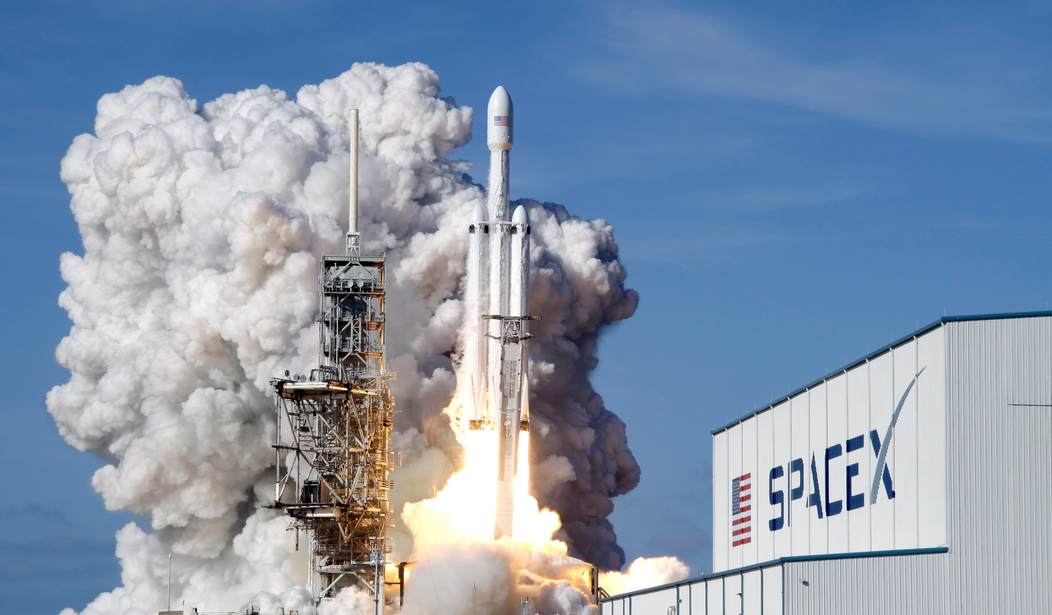
I’ve seen this manifest a lot lately in the comment sections under nearly every video of a SpaceX launch. Comments like, “Why are we wasting money on this when we’ve got problems to solve here? and all I see are my tax dollars being burned as rocket fuel, and this money could go to the poor.”
It’s a logical impulse, and in some cases comes from a solid fiscal conservative mind, or from a sensitivity to waste when individuals are struggling to make ends meet.
They are not wrong that our government spends money like a kid on Roblox with mom’s credit card. Government waste is very real, ubiquitous, and the national debt is a serious problem. When in debt, the smart thing is to cut frivolous spending and eat red beans and rice for a while until it’s paid off.
But I’d caution against this impulse when it comes to exploration. There is a difference between saying government spending is out of control and saying that anything without obvious material benefit is wasteful or frivolous. When Queen Isabella funded Christopher Columbus’ journey, Spain was in colossal debt after the 10-year-long Granada War of the Reconquista.
If we are going to have a space program at all, whether entirely government-run like NASA, or a public-private partnership like SpaceX’s contract work for the U.S. government, just doing passive near-Earth monitoring with satellites already in orbit would be a mistake.
What a good space program should do is the kind of spirit-edifying work that had the entire world glued to their television screens in 1969.
Great explorers had material goals to be sure, trade routes and treasure, as does space exploration. Even if none of those things are found, we still learn something about Creation, and that’s worth it too. Seeing everything as a zero-sum game, or always from a perspective of scarcity, is ironically a bottomless pit.
This mindset eventually concludes that beauty itself is wasteful, taken to its limit. It is a failure in thinking so old that the Bible itself comments on it. The spikenard could have been sold and the money given to the poor. Why build a Cathedral when a simpler building would do? Why send a man to Mars or build a moon base when the debt clock is ticking? Why send even just a probe beyond the solar system?
I don’t know, maybe because it is wonderful just to see what is out there.
All of this is not to say that NASA and other government-funded space programs shouldn’t be audited to find areas where we can cut fat and get some of the bureaucracy slashed. It absolutely should be; that is responsible and frankly would probably result in a more effective and focused program.
You can’t run a perfect cost-benefit analysis when exploration is the project. It could end up a disaster, like Sir John Franklin’s ill-fated search for the Northwest Passage, or it can discover entire new worlds.
Linnea Lueken (llueken@heartland.org) is a research fellow with the Arthur B. Robinson Center on Climate and Environmental Policy at The Heartland Institute. X: @LinneaLueken
Editor’s Note: Do you enjoy Townhall’s conservative reporting that takes on the radical Left and woke media? Support our work so that we can continue to bring you the truth.
Join Townhall VIP and use promo code FIGHT to receive 60% off your membership.



Join the Conversation
VIP members get the ability to comment on articles.