





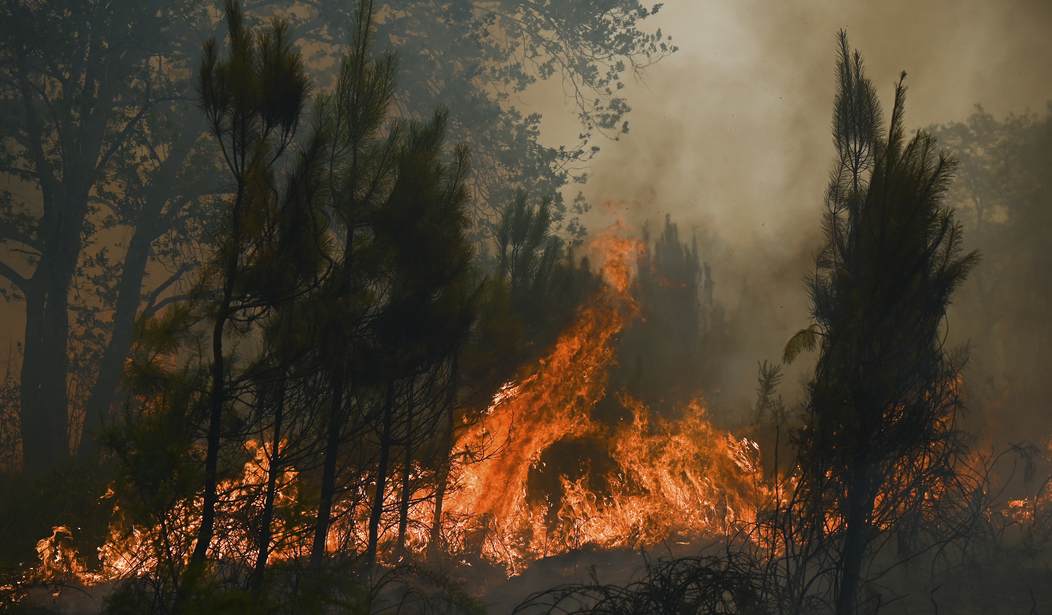
As wildfires ravage southwestern France this July, forcing more than 220,000 people from their homes in the Gironde region near Bordeaux and burning some 42,000 hectares (162 sq. miles) of forest, the familiar refrain returns: climate change is to blame. France is now enduring its worst fire season on record.
Extreme heat and drought clearly worsen conditions. But blaming climate alone hides more immediate, controllable causes: human ignition, fuel buildup, and forest management choices that turn landscapes into tinderboxes.
French authorities have detained well over 160 people since early July for suspected arson or reckless fire-starting. Officials say nine in 10 fires have human origins, whether deliberate or careless, from discarded cigarettes to illegal machinery and fireworks.
The most serious blaze alone has destroyed roughly 240 homes and pushed to within about nine miles of Bordeaux.
In Spain, parallel blazes near Madrid have produced arrests linked to farm equipment and other human activity. Matches and carelessness light most fires. Weather merely fans them.
The forests themselves amplify the danger. Much of the Gironde and the neighboring Landes de Gascogne is managed maritime pine plantation, Europe's largest artificial forest of even-aged, resin-rich Pinus pinaster, established for timber and still maintained for lumber.
These monocultures create continuous fuel beds of needles and undergrowth with few natural firebreaks. Broadleaf species that hold more moisture and would slow a fire are often cut back or suppressed.
The same pattern appears elsewhere. In North America, herbicides including glyphosate, the active ingredient in Roundup, are routinely sprayed after harvest or fire to kill competing hardwoods so commercial pines, spruces, and Douglas firs can dominate.
Limited, targeted use of the same chemicals has occurred in the Landes for site preparation and young-stand weed control. The result is a landscape optimized for softwood volume, not resilience. Fuel buildup compounds the problem. Decades of fire suppression without enough prescribed burns, thinning, or mechanical removal leave dense underbrush ready to explode once ignited.
States that actively manage their forests tell a different story. Texas, Florida, North Carolina, Wisconsin, and Idaho hold vast forests yet rarely see California-scale megafires. Prescribed fire, selective harvesting, and vegetation control keep fuel loads low and fires small.
California and parts of the West that favored passive "let nature take its course" policies, alongside sprawling wildland-urban interfaces, have seen the opposite. Even California's own universities now urge a return to the controlled burning Native Americans practiced for centuries, a tacit admission that the hands-off approach failed. Management, not temperature alone, shapes the outcome.
Global data challenges the claim that the planet is simply burning more. NASA satellite records show the total land area burned each year has fallen about 25 percent since the late 1990s, especially in grasslands and savannas as farming and settlement replaced open burning.
This year fits that pattern. Globally, 2026 is running as a below-average wildfire year, with total area burned near record lows for the date, even as Europe endures a severe season.
Forest fires have grown more intense in some regions, including the Mediterranean and the western U.S. But the worldwide trend in burned area is down, not up. Climate shapes fire weather; human land use and ignition largely determine whether and how far fires spread.
None of this denies that hotter, drier summers raise risk. Heatwaves dry out vegetation, make it more combustible, and make firefighting harder and more dangerous. In the U.S., we have had more heatwaves and wildfires in the past than we do now; look at the very hot and dry 1930s or the 1870s, when we had the deadliest fire ever, the Great Peshtigo Fire.
Treating every blaze as proof of an unmanageable climate crisis distracts from practical remedies: aggressive prosecution of arson, restoring diverse forest structures instead of pure softwood monocultures, expanded prescribed burning, mechanical fuel reduction, and clearing defensible space around the homes crowding into fire-prone terrain.
The Landes pine plantations and North American conifer-release programs show how timber-focused management can raise fire hazard. Places that treat forests as working landscapes, not untouchable wilderness, demonstrate that better stewardship reduces catastrophe.
The fires in Gironde are tragic and destructive. They are also largely the product of human choices: what we plant, what we suppress, what we let accumulate, and who lights the first spark.
Climate sets the stage. Management and responsibility write the script. Governments should take responsibility, do their job, and stop scapegoating climate change to avoid responsibility.
Editor's Note: Do you enjoy Townhall's conservative reporting that takes on the radical Left and woke media? Support our work so that we can continue to bring you the truth.
Join Townhall VIP and use promo code FIGHT to receive 60% off your membership.

Join the Conversation
VIP members get the ability to comment on articles.