


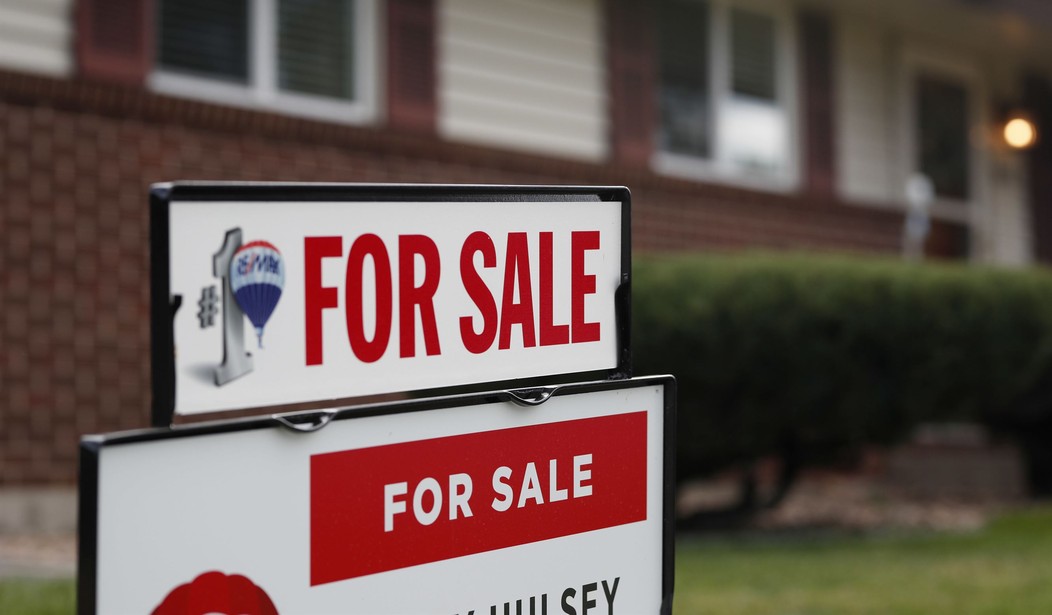
Philadelphia Mayor Cherelle Parker wants to make her city the first in the nation to offer a city-backed mortgage, available to people who wouldn’t otherwise qualify for a loan. If that sounds familiar, it’s because loosening lending standards was the recipe for the housing bubble of the early 2000s, and the City of Brotherly looks ready to bake that cake again.
Under the mayor’s One Philly Mortgage plan, first-time buyers with “less-than-perfect credit” could put down as little as 3 percent, pay no private mortgage insurance, and get an interest rate roughly 1 percentage point below market, while public funds cover part of the interest payments. If the loan goes bad, the city covers it, meaning taxpayers foot the bill.
And that bill could be quite large, judging by the mayor offering a credit score of 620 as an example of who the program will serve. That’s right on the line traditionally used to separate subprime borrowers. Lenders have good reason for preferring higher credit scores and eschewing subprime borrowers: lower scores are highly correlated with increased default risk.
Credit scores aren’t some kind of moral judgment but a statistical proxy for the likelihood that someone will repay a loan. They’re formed from decades of data across millions of loans, not opinions or feelings. Someone with a higher credit score is less likely to default on the same loan as someone with a lower score.
Likewise, lenders use additional tools like verified income to establish whether a borrower can actually afford the proposed monthly payment, while a down payment shows the borrower has the discipline to save and gives him skin in the game. Additionally, it provides an equity cushion that protects both borrower and lender if home prices dip, which has happened in many markets over the last few years.
But with the mayor’s proposed plan of only 3 percent down, that cushion is paper thin. Selling a home often costs 6 percent or more in commissions and closing costs, so a buyer with 3 percent equity is effectively underwater the day he moves in. If he loses his job or faces a big repair bill, he can’t sell his way out. That’s when defaults turn into foreclosures.
The nation already learned that lesson the hard way, but apparently Parker forgets that, in the early 2000s, Washington pushed hard to expand homeownership, and lenders relaxed their standards to oblige. Down payments shrank, credit requirements loosened, and “liar loans” that skipped income verification became commonplace.
By 2006, roughly one in five new mortgages was subprime. When interest rates rose and home prices stopped rising, the defaults came in waves, millions of families lost their homes, and taxpayers were left footing the bill for bailouts by the Treasury and Federal Reserve, most of which just benefited Wall Street.
Banks ordinarily underwrite loans carefully because they bear the risk of default. Even if they sell a loan, they get top dollar for it when the default risk is low, so there’s still an incentive to lend carefully. When government promises to cover losses, however, that prudence disappears.
Under Parker’s scheme, the banks get to collect interest, some of which is paid for by taxpayers, and then those lenders don’t have to worry about losses because taxpayers will cover those too if they arrive. It’s privatized profits and socialized losses — no wonder Citizens Bank wants to participate! That’s what made the last bubble so destructive, and it’s exactly what a loan loss reserve does.
The mayor may have the best of intentions, but there’s an infamous road constructed with those. And while supporters point to a Massachusetts program that is supposedly both similar and successful, that hasn’t been without costs to taxpayers either. Nor is it necessarily comparable to what Parker’s pursuing.
Massachusetts households earn far more than Philadelphia’s, and Philadelphia’s housing stock is older and more distressed. What works in Boston’s suburbs won’t necessarily work in Kensington — they’re fundamentally different markets.
Philadelphia has one of the highest poverty rates of any big city in America. Even Drexel economist Kevin Gillen warns that expanding homeownership through risky lending without addressing poverty and distressed housing could raise foreclosure rates, especially when buyers take on repairs they can’t afford.
It’s true that housing affordability has deteriorated badly in recent years, including in Philadelphia, where it now takes 47 percent of the median household’s pre-tax income to cover the monthly mortgage payment on a median-priced home. But that answer isn’t putting taxpayers on the hook for loans that private lenders would never make on their own.
Instead of creating a subprime bubble, the city could reduce property taxes and permitting delays or enact zoning reform to make building and living in Philadelphia more affordable. Unfortunately, cutting taxes or red tape doesn’t lend itself to a flashy interview for the mayor the way subsidizing irresponsible lending does. Besides, taxpayers won’t see the final bill for years.
E.J. Antoni, Ph.D., is chief economist and the Richard Aster fellow at the Heritage Foundation and a senior fellow at Unleash Prosperity.
Editor’s Note: Thanks to President Trump’s leadership and bold policies, America’s economy is back on track.
Help us continue to report on the president’s successes and combat the Democrats' lies about America's economic revival. Join Townhall VIP and use promo code FIGHT to receive 60% off your membership.
Join the Conversation
VIP members get the ability to comment on articles.