





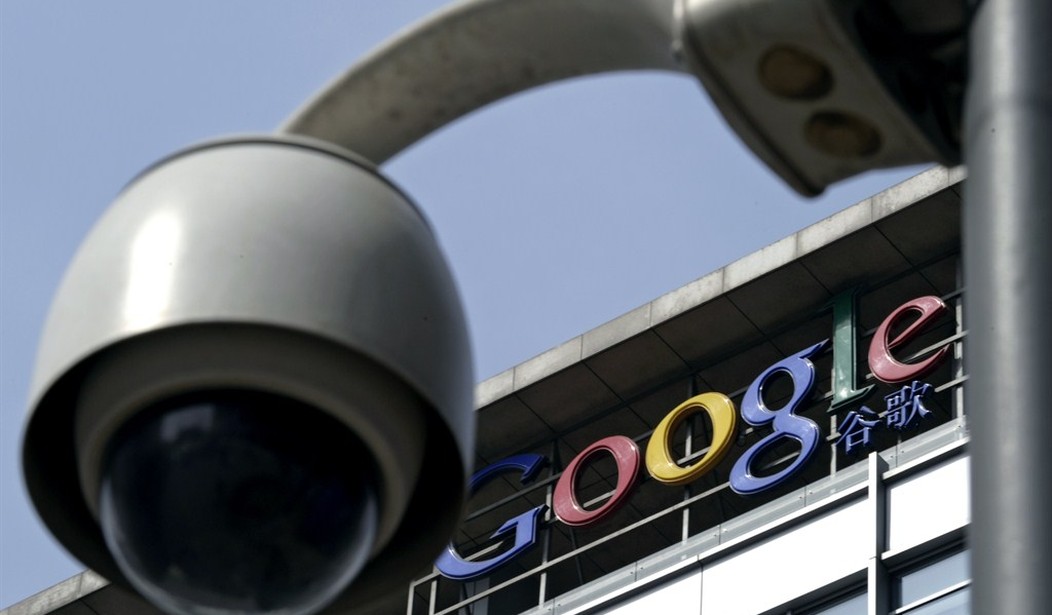
"Big Brother is watching you" is no longer a fictional admonition. Everywhere you go, your location is recorded by phone technology, license plate readers, Uber and Lyft transactions, and cameras.
Privacy? Forget about it. Your location history is in the hands of many tech companies. Can the police and other government agencies force tech companies to share that information about you? The U.S. Supreme Court took up that question on Monday. The court's decision could have widespread impact on your privacy.
If your location history puts you within a 1-mile radius of a bank robbery with hundreds of other people, you could become a suspect, swept up in the wide net cast to find the perpetrator.
Many people find the growing surveillance creepy, but law enforcement is using this technology -- called geofencing -- to solve crimes rapidly, including some that would go unsolved.
During Monday's oral arguments in Chatrie v. United States, the justices tackled this tradeoff between privacy and effective crimefighting, and how the U.S. Constitution, written over two centuries ago, can be interpreted to safeguard your rights in the age of Big Brother.
In 2019, a gunman robbed the Call Federal Credit Union in Midlothian, Virginia. Stumped, the police secured a "geofence warrant" instructing Google to produce location history records for every digital device within a 17.5-acre circle around the crime scene for a two-hour timeframe. Then the police asked Google for the identity of three device users, including the man ultimately charged with the crime, Okello Chatrie.
Chatrie claims his Fourth Amendment right to be protected from "unreasonable" government search was violated when police used geofencing and compelled Google to disclose his location history.
The case is making for strange bedfellows, bringing together the often left-leaning American Civil Liberties Union and the more conservative Institute for Justice and CATO Institute. They argue that when a judge issues a warrant allowing law enforcement to pore over hundreds of thousands of location records implicating hundreds or thousands of people in order to narrow down a list of possible suspects, that is the modern version of the "general warrant," which British customs officials 250 years ago used to burst into every home in a town to look for smuggled goods; the Fourth Amendment banned these generalized searches.
But during Monday's session, that argument made little headway, as Justices Samuel Alito and Brett Kavanaugh cited statements on geofencing's usefulness for law enforcement. Most of the Justices will likely uphold the bank robber's conviction. Law enforcement has to get a warrant to use geofencing -- and much of the discussion focused on whether the standards for granting warrants need to be stricter.
The justices anticipated how geofencing could be abused by government. "What's to prevent the government from using this to find out the identities of everybody at a particular church, a particular political organization?" Chief Justice John Roberts asked.
The court will announce its ruling in June, and the implication will reach far beyond cellphone technology. Google actually has phased out storing location data and announced that it will no longer comply with geo-warrants. Alito wondered aloud why the court was even hearing the case. But many other tech companies collect location data.
Flock Safety, a license plate reading company, has cameras in more than 5,000 communities and provides reports to 4,800 law enforcement agencies in 49 states.
License plate readers, according to Staten Island District Attorney Michael McMahon, allow for much faster arrest of car thieves and more successful prosecutions in court.
But the ACLU objects that extensive tracking of every person's whereabouts via license plate readers amounts to an invasion of privacy. The ACLU is calling for "clear regulations to keep the government from tracking our movements on a massive scale."
As usual in politics, there's a fair share of hypocrisy. Several Democratic-led cities in New York, Colorado, Illinois, Massachusetts and Texas are terminating their contracts with Flock Safety because it has cooperated with Immigrations and Customs Enforcement.
They apparently think it's OK to arrest American-born criminals using geo-searches, but not illegals. Ridiculous. The Denver City Council unanimously voted to terminate Flock Safety, but the city's mayor, Mike Johnston, saw the light, calling it a useful crimefighting tool.
One takeaway from Monday's hearing: Wherever you go, assume you are creating a digital and photographic record of your own movements. Privacy is a thing of the past. The issue now is using these technologies to fight crime without empowering government to crush our personal liberties.
Betsy McCaughey is a former Lt. Governor of New York State and Chairman & Founder of the Committee to Reduce Infection Deaths at www.hospitalinfection.org. Follow her on Twitter @Betsy_McCaughey.
Editor's Note: Do you enjoy Townhall's conservative reporting that takes on the radical left and woke media? Support our work so that we can continue to bring you the truth.
Join Townhall VIP and use promo code FIGHT to receive 60% off your membership.


Join the Conversation
VIP members get the ability to comment on articles.