







Every career begins with a defining moment, an instant when preparation meets courage and the future quietly changes course.
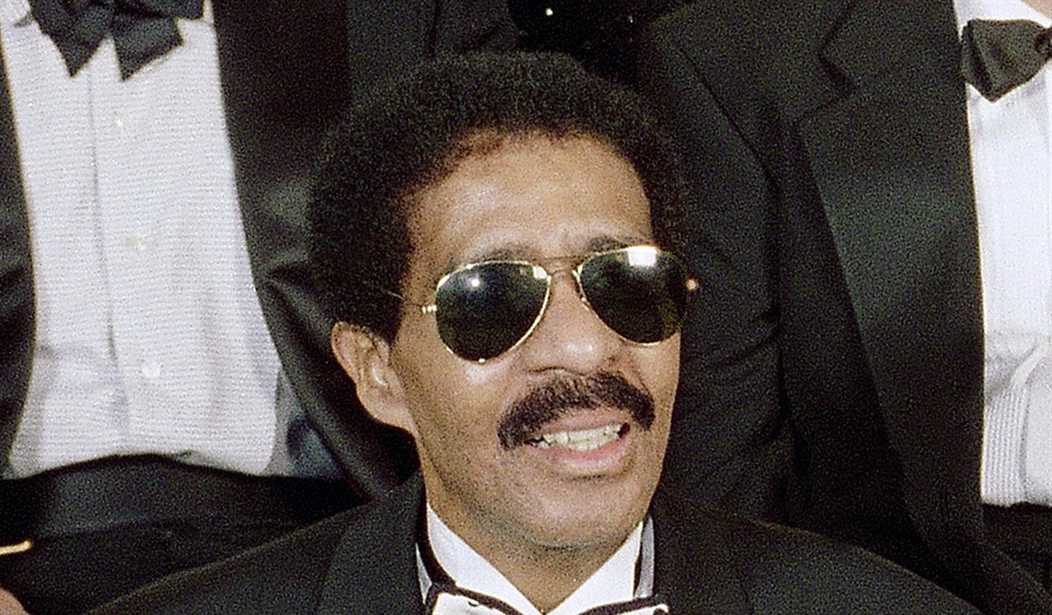
For me, that moment came in 1983, when, at just 21 years old, I brought Richard Pryor to speak before more than 1,500 employees at the U.S. Department of Agriculture in Washington, D.C. I was young, untested and responsible for selecting a keynote speaker. Instead of choosing the safe or expected option, I took a risk and set my sights on Pryor — not the comedian the world knew but the thinker, the truth-teller behind the myth.
It was his first-ever straight speech. No comedy. No performance. Just truth. That single decision altered the trajectory of my life.
When Pryor arrived at Dulles International Airport, he was visibly surprised to discover that I was Black and so young. He paused, studied me and smiled. What followed was not doubt but affirmation. He reminded me then, at age 21, that the sky was the limit, and that I must never allow anyone or anything to place me in a Black box. That advice became a creed I have lived by ever since.
Through Pryor, I met his attorney, Terry Giles, and doors opened to Hollywood, media and global enterprise. But another door, less visible and far more consequential, opened through the Pryor story itself. After hearing about Pryor's speech and his quiet influence in Washington, Robert J. Brown took notice. Brown had worked for Presidents Richard Nixon and John F. Kennedy, as well as Robert F. Kennedy, and he understood power, discretion and judgment when he saw it. He hired me as vice president of government and international affairs at B&C Associates, not as a favor but because he recognized initiative and resolve.
That relationship became another hinge point in my life. Through Brown, I was introduced to Nelson and Winnie Mandela, Coretta Scott King, Maya Angelou and Oprah Winfrey. These were not ceremonial encounters; they were substantive relationships grounded in trust. For two years, I served as executive director of Oprah's charitable giving, overseeing philanthropic initiatives rooted in accountability and impact. During that same period, her partner, Stedman Graham, and I were business partners across several ventures.
At the same time, my path moved decisively into cultural storytelling. Through Giles and Pryor, I entered Hollywood and became a writer for Norman Lear, who understood that comedy could carry moral weight and that honest representation could challenge assumptions. Most notably, I worked on the sitcom "704 Hauser," created as a generational counterpoint to "All in the Family." The character Goodie, an educated, articulate Black conservative who refused caricature, was written in my likeness. At a time when Black conservatism was either ignored or mocked, the show gave it legitimacy, complexity and voice. That mattered. It demonstrated that Black political thought was not monolithic, and that conservatism rooted in discipline, faith, enterprise and independence had an authentic place in Black life.
Meanwhile, history continued unfolding quietly. The day after Pryor's speech, then-President Ronald Reagan hosted a Black History Month reception at the White House. This was before Martin Luther King Jr. had a federal holiday. In his remarks at the Department of Agriculture, Pryor publicly urged Congress to make King's birthday a national holiday. But he did not stop at the podium. Behind the scenes, he pressed the issue directly with the president and later in private meetings with Sen. Strom Thurmond, then chairman of the Senate Judiciary Committee. Through quiet persistence and unexpected diplomacy, Pryor worked tirelessly to move hearts and minds at the highest levels of government.
Sometimes history is not made with a microphone. Sometimes it is made in rooms no one talks about.
That same principle guided my later work with Clarence Thomas, then chairman of the Equal Employment Opportunity Commission, who hired me early in his public career. Years later, during his Supreme Court confirmation battle, my relationship with Angelou proved pivotal. Her decision to write an op-ed in The New York Times endorsing his confirmation reframed the debate and helped secure the final votes. It was a reminder that moral authority, when exercised with courage, can still move institutions.
Looking back, I understand what Pryor saw that day at Dulles. He saw possibilities unconfined, unapologetic and unwilling to be boxed in. One speech changed everything. One decision opened worlds. And one truth endures: Never allow anyone or any system to define the limits of your future.
Armstrong Williams is manager/sole owner of Howard Stirk Holdings I & II Broadcast Television Stations and the 2016 Multicultural Media Broadcast owner of the year. To find out more about him and read features by other Creators Syndicate writers and cartoonists, visit the Creators Syndicate website at www.creators.com.
Editor’s Note: Do you enjoy Townhall’s conservative reporting that takes on the radical left and woke media? Support our work so that we can continue to bring you the truth.
Join Townhall VIP and use promo code FIGHT to receive 60% off your membership.

Join the Conversation
VIP members get the ability to comment on articles.