





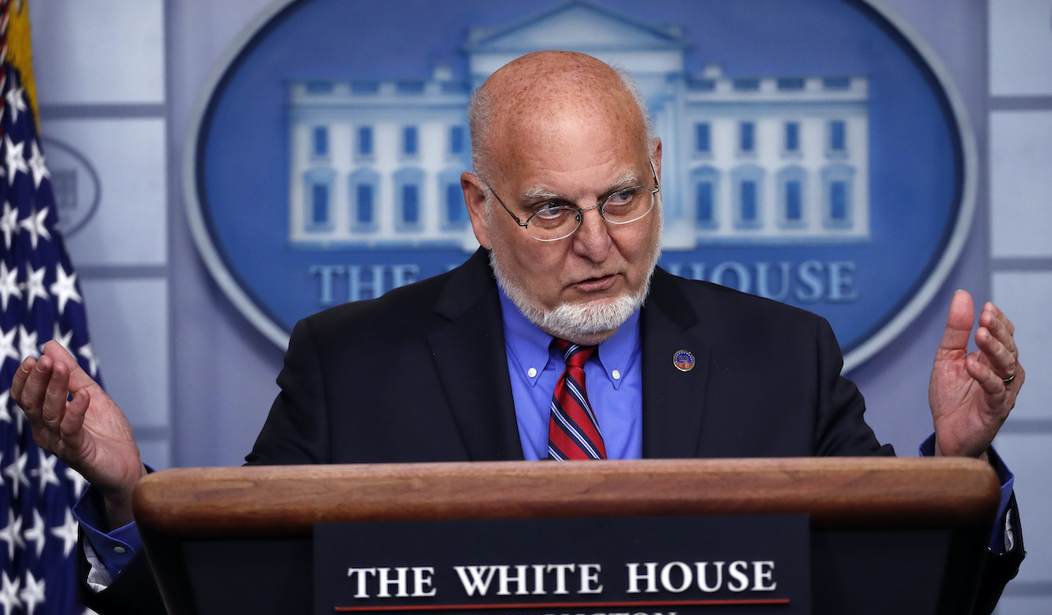
Center for Disease Control Director Robert Redfield said in a Buck Institute webinar that suicides and drug overdoses have surpassed the death rate for COVID-19 among high school students. Redfield argued that lockdowns and lack of public schooling constituted a disproportionally negative impact on young peoples’ mental health.
"But there has been another cost that we’ve seen, particularly in high schools," Redfield said. "We’re seeing, sadly, far greater suicides now than we are deaths from COVID. We’re seeing far greater deaths from drug overdose that are above excess that we had as background than we are seeing the deaths from COVID. So this is why I keep coming back for the overall social being of individuals, is let’s all work together and find out how we can find common ground to get these schools open in a way that people are comfortable and their safe."
Roughly 146,000 people have died from COVID or COVID-related causes in the U.S., according to CDC data.
The most recent publicized federal data records 48,000 deaths from suicide and at least 1.4 million attempts in 2018. In 2019, almost 71,000 people died from drug overdoses.
Where Redfield obtained his data is unknown, although a doctor at John Muir Medical Center in Walnut Creek, CA claimed the facility has “seen a year’s worth of suicide attempts in the last four weeks.” He did not say how many deaths occurred, or whether the statement was exaggerated for emphasis.
"What I have seen recently, I have never seen before," Hansen said. "I have never seen so much intentional injury,” said a nurse from the same hospital.
And while health authorities will not have verified data regarding suicides and drug overdoses in 2020 for two more years, local reporting indicates that suicide fatalities have increased year-on-year.
According to the American Medical Association, “More than 35 states have reported increases in opioid-related mortality as well as ongoing concerns for those with a mental illness or substance use disorder in counties and other areas within the state.”
In Eagle County, Colorado, six suicides have been recorded, just one below the yearly average. Colorado on the whole recorded a 40 percent decrease in suicides in March and April, but the number of calls to Colorado Crisis Services increased 48 percent.
The Chicago Sun-Times looked specifically at black populations. In Cook County, Illinois, the number of suicide deaths is already higher than for all of 2019.
In Yakima County, Washington, the suicide rate has risen 30 percent, according to the county coroner.
Between March 15 and April 29, as many people commited suicide in Queens, New York than did between January 1 and April 29 the year prior.
The Pima County Health Department in Arizona has recorded an uptick in suicide rates as well.
Ulster County reported a significant increase in both suicides and drug overdoses, both fatal and non-fatal.
Historical trends give reason to believe the suicide rate may rise due to extenuating circumstances caused by COVID-19, including unemployment and social isolation. For example, in the year after the Great Recession in 2008, the rate in America was 6.4 percent higher than expected. While the rate didn’t’ “skyrocket,” as some have predicted it will this year, the coronavirus pandemic and economic shutdown has dealt a worse blow to the U.S. psyche.
Thirty to 40 million jobs have been lost to the economic shutdown, compared to 2.6 million in 2008.
Editor's Note: This piece has been updated to clarify that the CDC director was referring specifically to high school students when discussing the rate of suicides vs. COVID deaths.


Join the Conversation
VIP members get the ability to comment on articles.