


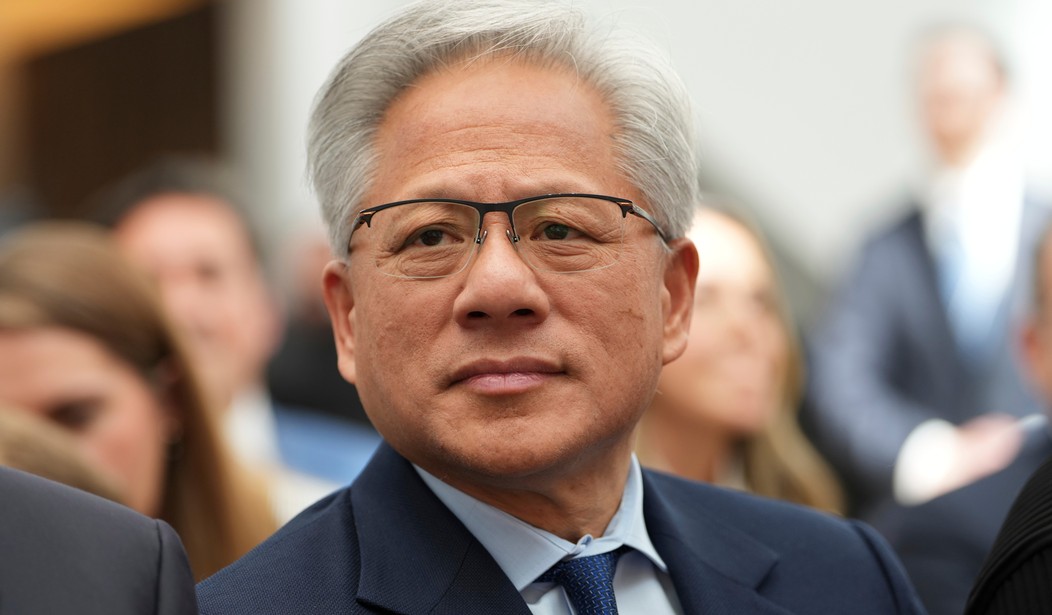
A new investigation is shedding light on just how much AI giants like Anthropic and OpenAI could benefit from Jensen Huang’s removal as NVIDIA’s CEO, and why the American public has more at stake in whether he’s reinstated than it might seem.
When most people think about artificial intelligence, they think about Anthropic’s Claude or OpenAI’s ChatGPT. These are “closed-source” models, whose inner workings are closely guarded company secrets. Access is controlled by the companies behind them, with some features available for free and others requiring payment. On the other side is “open-source” AI, which lets businesses and individuals download models, examine what’s made available, and adapt them to their own needs.
NVIDIA’s Jensen Huang has been a major proponent of the latter, not only because more models mean more demand for his company’s chips, but because open-source AI offers a challenge to closed-source models and the companies that dominate the industry. It allows people to build on existing models, share improvements, and experiment without having to start from scratch. That freer flow of ideas gives more people the opportunity to test new approaches and build on one another’s work, creating more room for breakthroughs and major improvements rather than confining development to a handful of corporate AI giants.
Well, according to Business Insider, NVIDIA was ramping up its aggressive support of open-source models under Jensen Huang, and this was more than a long-term ambition. The company had already developed its own family of open source models called Nemotron and was backing other open source startups including Reflection AI, Thinking Machines Lab, and Poolside. It was also moving to acquire Hugging Face, another major platform for sharing open-weight AI models, putting its money and resources behind a growing challenge to the companies that currently dominate the industry.
After several separate efforts, NVIDIA’s open-source strategy was finally coming together into an ecosystem that could challenge the industry’s dominant firms, a vision Huang promoted at a San Francisco conference on November 3. Then, according to Business Insider, the affair story broke, just as Anthropic was preparing to go public at a potential $1.4 trillion valuation. In other words, investors had an enormous stake in the very business model NVIDIA was working to challenge.
Nvidia founder Jensen Huang's ouster removes a major threat to AI company Anthropic as it prepares to go public this week at a possible $1.4 trillion valuation, Business Insider reports. The two have clashed for years over China. Anthropic CEO Dario Amodei wants advanced US chips kept out of China, comparing the sales to "selling nuclear weapons to North Korea." Huang wanted to keep selling to China, calling the comparison "lunacy" and warning that cutting China off pushes it to build its own chips. Huang was also funding cheaper open AI models that compete with Anthropic's. Anthropic has paid $1.63 million to two lobbying firms tied to Secretary of State Marco Rubio and Susie Wiles. Rubio's March 30 memo led to Huang's downfall, and on Monday the administration closed a loophole that let Chinese firms rent Nvidia chips outside China. Follow: @AFpost
— AF Post (@AFpost) November 18, 2026
To complicate matters further, this effort appears to depend heavily not just on NVIDIA, but on Huang himself.
“Jensen is the premier champion of open models,” Replit CEO Amjad Masad said at a conference earlier this week. “If it wasn’t for Jensen, there wouldn’t be a lot of funding going into US open model companies.”
Whether Anthropic had anything to do with Huang’s ouster remains speculation, though the timing is certainly convenient.
This comes as the debate over whether Huang should be reinstated at NVIDIA continues. President Trump has called for his return, while Elon Musk has signed a petition also urging his reinstatement. That petition has drawn nearly 200,000 signatures from employees, business partners, investors, and others.
Treasury Secretary Scott Bessent, meanwhile, has publicly opposed Huang’s return, accusing him of knowingly selling to risky companies connected to the Chinese Communist Party, a problem Bessent said extends to NVIDIA’s senior leadership. But that criticism is complicated by Commerce Secretary Howard Lutnick’s decision to delay blacklisting Megaspeed, the company where the alleged Chinese spy worked.
NVIDIA’s board of directors has said it does not plan to reinstate Huang. An investigation into his affair and the allegations surrounding it remains important. But the stakes extend beyond Huang himself. His absence from NVIDIA could help determine whether the future of AI is shaped by open competition and a free exchange of ideas, or increasingly controlled by a handful of dominant companies.
Editor's Note: Do you enjoy Townhall's conservative reporting that takes on the radical Left and woke media? Support our work so that we can continue to bring you the truth.
Join Townhall VIP and use promo code FIGHT to receive 60% off your membership.

Join the Conversation
VIP members get the ability to comment on articles.