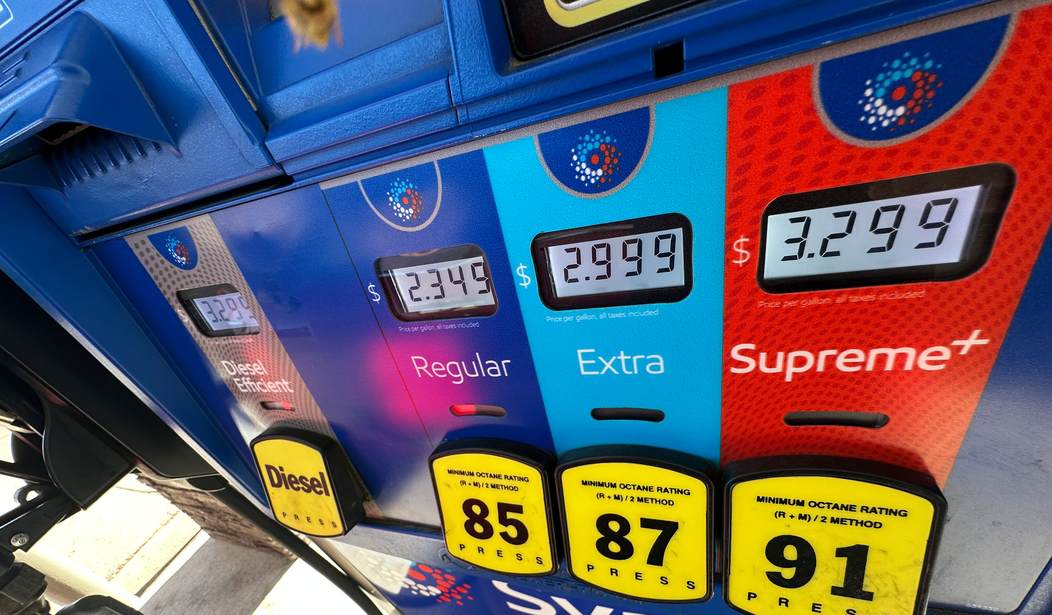

The irony of Gavin Newsom complaining about gas prices is not lost on me. California has the highest gas taxes in the nation, with $0.736 of every gallon of gas going to Sacramento. If that wasn't bad enough, Democrats in the state are poised to add a mileage tax on top of it, and that tax could be as high as $0.09 per mile. That will also cost people hundreds of dollars more a year just to drive to work and the store, where prices will be up because businesses will have to pay that mileage tax on their trucks too.
Despite that reality, Newsom said the price of things is just unacceptable.
From California to the South, people are fed up.
— Gavin Newsom (@GavinNewsom) September 8, 2026
Groceries and gas are up. Wages aren’t keeping pace. Families are getting squeezed.
This November, we have the power to change it. pic.twitter.com/uS7PGYupWY
Of course, if you elect Democrats, they'll just raise your taxes across the board like Abigail Spanberger did in Virginia, and then blame Republicans. Newsom just did that, too, saying "right-wing media" — and not his disastrous policies — are to blame for his state's bad reputation.
What if Republicans proposed something to help offset gas prices and stick it to Democrats like Newsom in the process?
When I worked as a home hospice nurse, I drove my personal vehicle to patient visits. I was reimbursed for my mileage as a business expense. At the time, the federal reimbursement rate was But for most people, driving to and from work is treated as personal commute, not business.
Because if Democrats like Newsom are going to keep jacking up the gas tax and add a mileage tax on top of it, that means people will be paying more than they are to go to work. This hits the middle- and working-class hard (what happened to "tax the rich"?) and a policy to offset these expenses would be a great political win. Not just because it would put more money in Americans' pockets, but also because Democrats would be forced to go on record opposing it.
For starters, they haven't met a tax they didn't love and they have to oppose everything President Trump does.
Right now, the federal mileage reimbursement is $0.76 per mile. That rate doesn't just cover gas expenses, but also wear and tear on business vehicles.
A commuter mileage tax credit could be created for people who travel to work, and at far less than the $0.76 reimbursement rate. What if we allowed working Americans to get a tax credit of $0.20 per commuting mile, up to 40 miles per workday, with a maximum annual credit.
That means someone who commutes 30 miles per day round trip and works 50 weeks a year would log about 7,500 commuting miles a year. At $0.20 per mile, that's a $1,500 annual credit. That could be a deduction, but a refundable tax credit would be better. This would allow lower-income workers to benefit even if they don't owe $1,500 in federal income taxes.
Employers could administer such a program, since they already know how many days an employee works and can easily calculate mileage to and from the office. If you work ten days in a pay period and commute 28 miles round trip per day, that comes to 280 commuting miles. At that $0.20 reimbursement rate, that's a $56 credit per paycheck.
Of course, this could create problems. Fraud is chief among them, as are figuring out what an employee's normal workplace is, how to support hybrid workers, and how to handle those who work multiple jobs, carpool, or use public transportation. But setting up clear rules, including for commuters who don't drive, and parameters for claiming the credit could address this. Capping the credit at a certain limit per year or phase-outs at certain income levels could also curb fraud and overspending.
Is this idea perfect? No. No tax policy is, and Congress would have to work out the details, add guardrails against abuse, and decide how much relief American taxpayers can afford to provide.
The larger point deserves consideration, however.
The federal government already acknowledges that driving a personal vehicle for business purposes costs money. The IRS just raised the mileage reimbursement rate because fuel costs have made those trips more expensive. But the miles most Americans drive every morning and evening to earn a living are considered a personal expense.
If politicians like Gavin Newsom want to lecture us on affordability while continuing to raise taxes and make driving more costly, Republicans should offer something tangible in response and make Democrats explain to the nurse, the teacher, the construction worker, or the factory employee why they can find $2,000 for illegal aliens but can't help Americans who want to work for a living. Because if Newsom thinks $0.09 per mile is a perfectly reasonable amount to tax people for driving, perhaps Republicans giving workers $0.20 back is a perfectly reasonable response.