





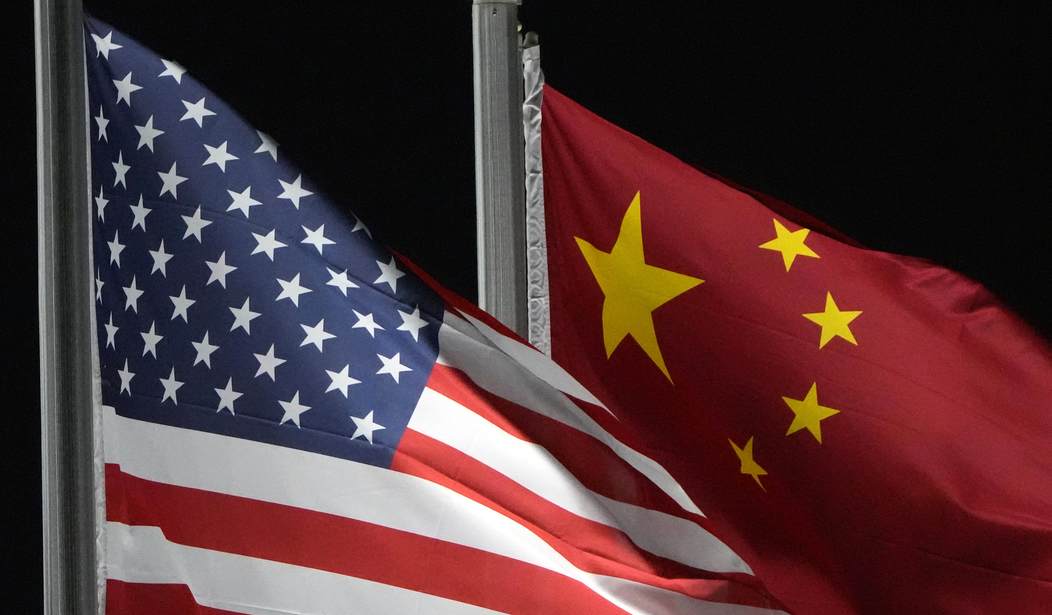
The distinguished political scientist Graham Allison, author of the 2015 Atlantic article "The Thucydides Trap," argued that often in history an established power will stage a preventive war against an ascendant adversary – for fear that otherwise it will soon lose its primacy.
His title derives from two passages in the first book of the ancient Greek historian Thucydides (460-400/395? B.C.), author of "The Peloponnesian War."
Thucydides, on these two occasions, felt that the most likely cause of the Spartan-Athenian war (431-404) was Spartan fear of an increasingly powerful rival Athenian empire. That anxiety supposedly prompted a Spartan preventive invasion before, so Sparta believed it would be insidiously eclipsed by its more dynamic Athenian competitor.
Allison and others argue that this paradigm now applies to the United States. It is the supposed jittery established power – and a rising Communist China is the upstart contender. His theory implies that the U.S. might, like Sparta, take provocative steps to abort an inevitable Chinese-dominated world.
There are, however, a number of problems, ancient and modern, with Allison's intriguing thesis.
First, Thucydides left his history unfinished and unrevised. And so often he offers analyses that are contradicted by his other observations elsewhere in history.
For example, in a variety of passages, the historian contrasts the antithetical Spartan and Athenian systems. He does this to explain why they often fell into disputes even before the Peloponnesian War – such as after their shared successful effort against the Persians (480-479) and during the prior 15-year conflict, the so-called "first" Peloponnesian War (460-445 BC).
Sparta was oligarchic, Dorian, and an infantry power. It was a parochial landlocked society, overseeing a vast population of enserfed helots. Athens, in contrast, was radically democratic, Ionian, and slave-owning, with a huge navy and maritime empire. It was as cosmopolitan a city as Sparta was a closed society.
So there were many long-standing, deeply rooted differences that sparked tensions and war, besides the Spartans' fear of Athenian expansionism.
Moreover, the time-honored hegemon Sparta won the war, as do most such established superpowers.
The centuries-long dominance of the British Royal Navy explained why Britain was able to stop the upstart Hitler's blitz and planned invasion of Britain. The economy and resources of the established U.S. took only four years to crush the aspiring new hegemon, imperial Japan.
The same was true in the Cold War, when the U.S. wore down a supposedly ascendant Soviet Union.
Often, it is not even the traditional superpower that instigates the wars that they win. It is just as common in world history for a would-be new power to initiate hostilities or launch a war against a traditionally dominant nation. Compare the foolhardy conflicts that they often lose, like the wars, either hot or cold, that would-be hegemons Germany, Japan, and the Soviet Union all started against the dominant U.S.
Moreover, great-power rivalries between a veteran powerhouse and a newcomer often never result in war. The U.S. gradually replaced the British Empire in the postwar era as the global policeman without a war. Britain and France peacefully accepted the "German miracle" of postwar West Germany's ascendance as Europe's dominant economic power.
A better prognosticator of the likelihood of war, ancient and modern, is whether the adversaries' political, economic, and cultural systems are similar or antithetical. If they are different, the chances of war between such opposing systems mount. (Contrast Athens and Sparta, Nazi Germany and Britain, imperial Japan and the U.S., etc.)
Finally, how does the supposed "Thucydides Trap" apply to the U.S. and China?
Despite the recent summit hype, not at all.
America is the traditional global power but is also radically ascendant; China is the upcoming challenger but is currently stumbling.
In all the key indicators – oil and gas production, food self-sufficiency, fertility, innovation, weaponry, constitutional stability, personal freedom, university STEM programs, naval carrier groups, air power, nuclear arsenals, space exploration, GDP per capita, and alliances – America continues to widen its advantages.
Thus, the U.S., as the status quo superpower, has no need to launch a preventive war against a struggling China.
Why?
One, Beijing is not ascendant vis-à-vis America in the key areas that count.
Two, both countries are nuclear powers, and neither wishes Armageddon.
In sum, there is historically no universal "Thucydides Trap" phenomenon of asymmetrical rivalries leading inevitably to war.
The titular "trap" is not even a complete analysis of all the major causes of the Peloponnesian War, as outlined by Thucydides himself.
Moreover, ascendant powers start as many wars as do fearful, stronger, and established nations. And the upstarts more often than not lose their risky gambits against the established powers.
So, we are not caught in a "Thucydides Trap." We can prevent any challenges from a weaker China from escalating to war through deterrence, alliances, maintaining a balance of power, occasional respectful negotiations – and our far greater power and resilience.
Victor Davis Hanson is a distinguished fellow of the Center for American Greatness. He is a classicist and historian at the Hoover Institution, Stanford University, and the author of "The Second World Wars: How the First Global Conflict Was Fought and Won," from Basic Books. You can reach him by emailing authorvdh@gmail.com.
Editor’s Note: Thanks to President Trump and his administration’s bold leadership, we are respected on the world stage, and our enemies are being put on notice.
Help us continue to report on the administration’s peace through strength foreign policy and its successes. Join Townhall VIP and use promo code FIGHT to receive 60% off your membership.


Join the Conversation
VIP members get the ability to comment on articles.