





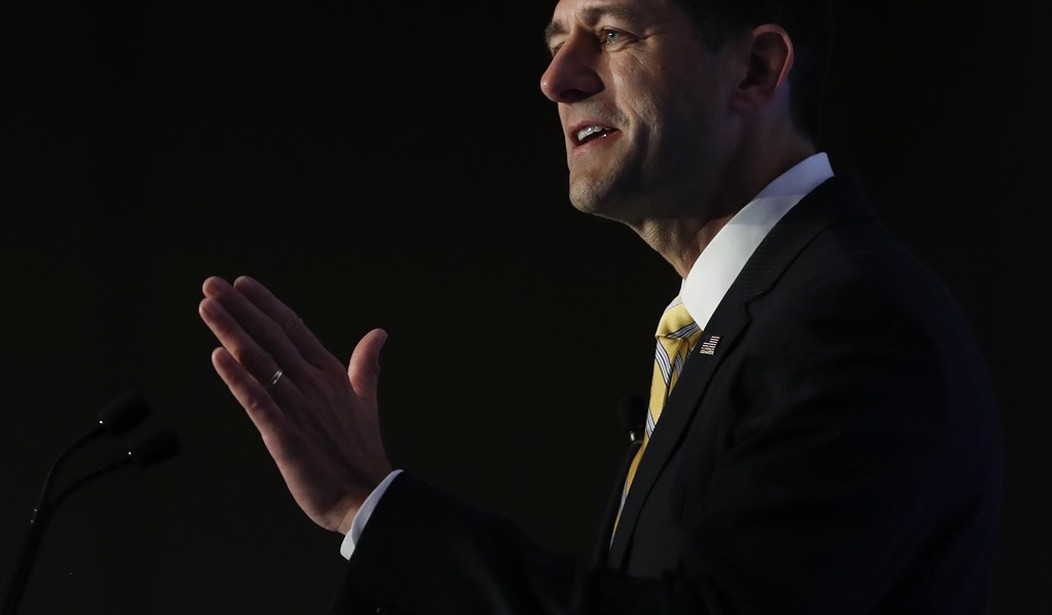
House Speaker Paul Ryan just made his pitch to the country about tax reform. He wants it, and he wants it before the end of 2017 because, as he said in his prepared remarks, "we cannot let this once-in-a-generation moment slip by." That's all well and good, except that the main factor holding up tax reform is the speaker's insistence that the United States adopt a distortive and unfair border adjustment tax to pay for the reform.
In the best of circumstances, fundamental tax reform is difficult, but now it seems even harder, thanks to Ryan's refusal to move away from a proposed 20 percent tax on imports while giving a free ride to exporters. The whole point of fundamental reform is to cut taxes and grow the economy. Though the rest of the Republican tax plan is pro-growth, according to scores of the plan, the border adjustment tax wouldn't create any growth. Its only purpose would be to raise revenue, as Republicans are apparently once again refusing to pay for tax reform with spending cuts.
Though the speaker tried not mentioning the border adjustment tax, his speech made clear his commitment to his blueprint as originally proposed, which includes the BAT. Concocted by economists in the comfort of the frictionless world of an academic paper, it would allegedly raise $100 billion per year from importers and consumers while handing out more subsidies to giant companies such as Boeing and General Electric. If you think it reeks of the export mercantilism that plagues Washington, you're right, and that's hard to square with Ryan's talking point about the need to turn away from granting tax favors to special interests.
The plan is also sold as a way to undermine tax competition by putting an end to tax avoidance -- the legal way companies structure their operations to send as little money to Uncle Sam as possible. This may not sound too bad when the tax rate is 20 percent or 15 percent. It's a terrible idea, however, when the rate is raised to 30 percent or more by lawmakers who desperately need revenue to mitigate their inevitable failure to reform entitlement spending.
Those pushing for the plan also have the notion that the adjustment of the dollar resulting from the tax's implementation would compensate for the added tax burden. As a currency trader noted recently, building "an intergenerational tax reform based on the assumption of what the (foreign exchange) market will do is a laughable notion." If you think it sounds very risky and distortive, you're right. The result is a measure that has divided the business community, the Republican caucus and the free market policy world. And it has little chance of getting out of the House, let alone passing the Senate.
Yet Ryan and House Ways and Means Committee Chairman Kevin Brady continue to hang on to the divisive measure. In a new twist, they're now hoping they can fool the opposition by phasing in the tax over several years, as if implementing a bad idea slowly makes it any better. As Stan Veuger of the American Enterprise Institute recently observed, we shouldn't count on a phase-in improving it. The phase-in would be more distortive and increase the trade deficit for the first five or six years without increasing whatever little chances exist of reaching whatever currency adjustment would be necessary to offset the tax pain for importers. If anything, the prospect of trade deficit growth makes it even less politically acceptable to the Trump administration, which is already opposed to it.
Finally, border-adjusting our corporate income tax as Ryan wants to do presents massive implementation challenges. In particular, it would be a nightmare for a bunch of industries, including finance and insurance. So now BAT proponents are talking about putting in place targeted rules for a whole swath of industries -- making the tax code more complicated, not less.
I agree with Ryan that it would be a shame to miss this once-in-a-lifetime opportunity to implement fundamental tax reform. Yet he's the one who is derailing the effort with his insistence on the BAT's being part of his tax plan. If he dropped it, we could finally unite and start looking for alternatives (including spending cuts) to pay for the good reforms. If he doesn't, Republicans may have to add tax reform to their list of broken promises.

Join the Conversation
VIP members get the ability to comment on articles.