


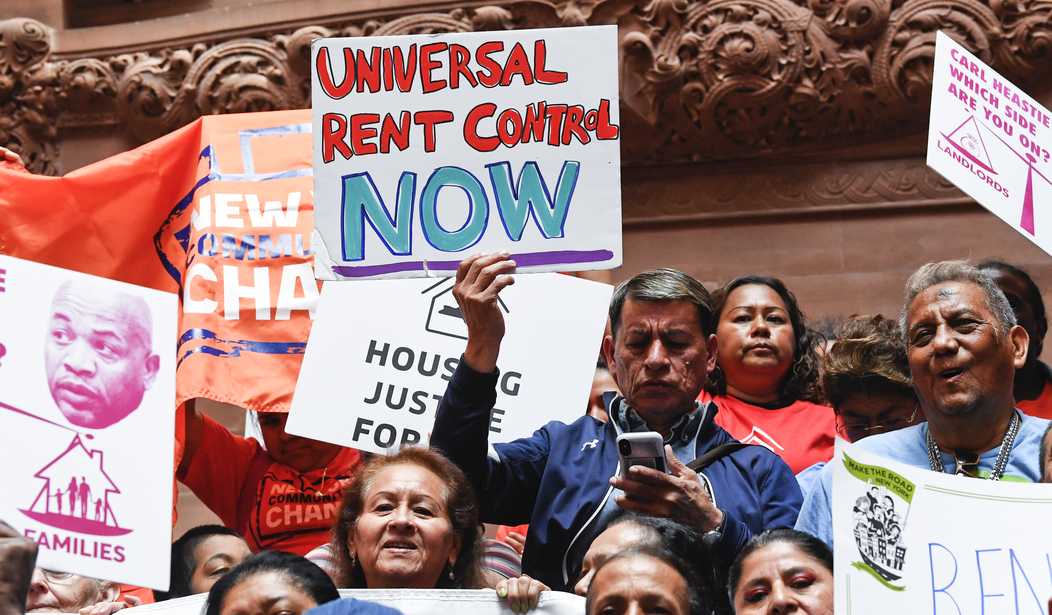
The issues of housing shortages and rising rents are becoming increasingly contentious around the world. One of the central demands of left-wing parties in many countries is a rent freeze. This sounds appealing to many people who are struggling with sharply rising rents and a shortage of housing.
Economists know that this does not work. As early as 1992, R.M. Alston, J.R. Kearl, and M.B. Vaughan showed that 93 percent of the economists surveyed agreed that “a ceiling on rents reduces the quantity and quality of housing available.”
A new academic study now shows that this is exactly what happened in practice: A rent cap introduced in Berlin in 2020 produced precisely the consequences that the overwhelming majority of economists had predicted almost three decades earlier. From 2016 to 2023, Berlin was governed by a left-wing coalition (and it seems likely that another such government will soon take power in the German capital). On February 23, 2020, this government introduced a so-called rent cap.
Put simply, the measure froze rents and also forced landlords who were charging rents above certain legally defined limits to reduce them. Depending on the year of construction and the features of the apartment, the legal rent ceilings ranged from €3.92 to €9.80 (approximately $4.50 to $11.30) per square meter per month, excluding utilities and heating costs, although certain surcharges were permitted.
Using a very large dataset, Pekka Sagner demonstrated in his doctoral dissertation, “Essays in the Economics of Housing Policy and Market Dynamics,” completed at the Schumpeter School of Business and Economics at the University of Wuppertal, that rents did indeed fall by 10.3 percent.
At the same time, however, the supply of rental apartments collapsed dramatically, falling by 52 percent. In some central Berlin districts, such as Charlottenburg-Wilmersdorf and Mitte, the supply of available apartments declined by 60 percent or more. In outlying districts such as Lichtenberg, the decline was less pronounced.
The study shows that the districts where rents fell the most also experienced the sharpest declines in the supply of apartments available for rent. The supply of two- and three-room apartments (50 to 80 square meters) was particularly hard hit. The households most negatively affected by the rent cap were therefore those consisting of two or three people, such as couples and small families.
Another consequence was that landlords reduced spending on maintenance, as these expenditures were no longer economically viable at the lower rents. Moreover, because the supply of available apartments had fallen so dramatically, tenants were increasingly willing to rent apartments even when maintenance had been neglected. Following the introduction of the rent cap, the supply of rental apartments explicitly advertised as renovated declined more sharply than the supply of unrenovated apartments. Another reason for the shortage was that some owners withdrew their apartments from the rental market and converted them into condominiums, which were then sold to owner-occupiers.
Berlin's rent cap did not remain in force for long because Germany's Federal Constitutional Court declared it unconstitutional. The main reason was that, according to Germany's highest court, individual federal states do not have the authority to regulate matters that have already been regulated at the federal level.
However, a different form of rent control, known as the "Mietpreisbremse" (rent brake), remains in force in many parts of Germany. Although it is less restrictive than Berlin's rent cap, it has led to similar negative effects on the housing market, as other studies have shown.
Ultimately, even tenants who had initially benefited from lower rents ended up suffering from Berlin's rent cap. After the Federal Constitutional Court declared the Berlin rent cap null and void on April 15, 2021, landlords were entitled to demand retroactive payment of the difference between the legally capped rent and the rent originally agreed upon in the lease.
For numerous tenants, this meant having to repay the supposedly saved rent in one lump sum, sometimes amounting to several thousand euros. This hit tenants particularly hard if they had already spent the money they believed they had saved and were suddenly confronted with substantial back-payment demands. Critics had warned of precisely this risk, but their warnings had also been ignored.
Rainer Zitelmann is the author of the book “The Power of Capitalism.”
Editor’s Note: Do you enjoy Townhall’s conservative reporting that takes on the radical Left and woke media? Support our work so that we can continue to bring you the truth.
Join Townhall VIP and use promo code FIGHT to receive 60% off your membership.


Join the Conversation
VIP members get the ability to comment on articles.