





As we gather this Thanksgiving, it's easy to take abundance for granted.
Leftovers are practically guaranteed.
It wasn't always this way.
For most of history, there were no Thanksgiving feasts. Hunger, if not starvation, was the norm.
Today, supermarkets are stocked with exotic foods from all over the world. Most of it is more affordable than ever. Even after President Joe Biden's 8% inflation, Americans spend less than 12% of our income on food, half of what they spent 100 years ago.
Why?
Because free markets happened. Capitalism happened.
When there is rule of law and private property, and people feel secure that no thief or government will take their property, farmers find new ways to grow more on less land. Greedy entrepreneurs lower costs and deliver goods faster. Consumers have better options.
Yet today many Americans trash capitalism, demanding government "fixes" to make sure everyone gets equal amounts of this and that.
But it's in countries with most government intervention where there are empty store shelves and hungrier people.
In socialist Venezuela, affordable food is hard to find.
In Cuba, government was going to make everything plentiful. But people suffered so much that, to prevent starvation, the Castros broke from communist principles and rented out state-owned land to private capitalists.
Millions still go hungry around the world. The cause is rarely drought or "income inequality" or colonialism, but government control. Corruption, tariffs, political self-dealing and short-sighted regulations block food from reaching those who need it most.
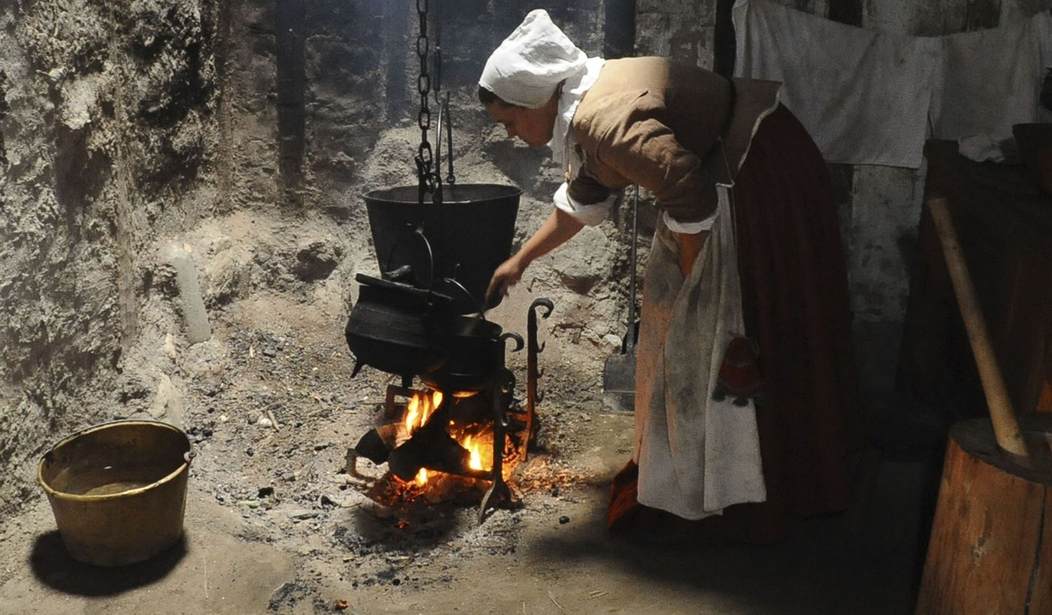
This week, we celebrate the Pilgrims, who learned this lesson the hard way.
When they first landed in America, they tried communal living. The harvest was shared equally. That seemed fair.
But it failed miserably. A few Pilgrims worked hard, but others didn't, claiming "weakness and inability," as William Bradford, the governor of the colony, put it.
They nearly starved.
Desperate, Bradford tried another approach. "Every family," he wrote, "was assigned a parcel of land."
Private property! Capitalism! Suddenly, more pilgrims worked hard.
Of course they did. Now they got to keep what they made.
Bradford wrote, "It made all hands very industrious."
He spelled out the lesson "The failure of this experiment of communal service, which was tried for several years, and by good and honest men proves the emptiness of the theory ... taking away of private property, and the possession of it in community ... would make a state happy and flourishing."
Fast forward 400 years, and many Americans have forgotten what Bradford learned.
I see why socialism is popular. The idea of one big, harmonious collective feels good.
But it brings disaster.
Family dinners already have plenty of disagreements -- children fight; adults bicker. Imagine what that would be like among millions of strangers.
Collectivist systems encourage dependency, stifle initiative and waste resources.
The same communal conceit that nearly starved the Pilgrims destroyed lives in the Soviet Union and led to mass starvation in China.
When everyone is forced into the same plan, most people will take as much as they can and produce as little as they can get away with.
Economists call it the "tragedy of the commons" referring to a common plot of land, controlled by, say, sheep owners. Each has an incentive to breed more sheep, which then eat the common's grass until all of it is gone, and everyone goes hungry.
Only when the commons is divided into private property does each owner agree to limit his herd's grazing so there will be enough for his sheep to eat tomorrow.
These same principles apply to many aspects of our lives: We thrive when individuals have a deed to their property and are confident that they can keep what they create. Then they create more.
That's what the Pilgrims learned: Incentives matter. Capitalist ownership is what creates American abundance.
Every Thanksgiving, I'm thankful for free markets and private property.
They are the ingredients of prosperity.



Join the Conversation
VIP members get the ability to comment on articles.