







Porn star Stormy Daniels says she had sex with former President Donald Trump at a Lake Tahoe hotel in July 2006. To keep her from telling that story, former Trump fixer Michael Cohen says, "the boss" instructed him to pay Daniels $130,000 shortly before the 2016 presidential election.
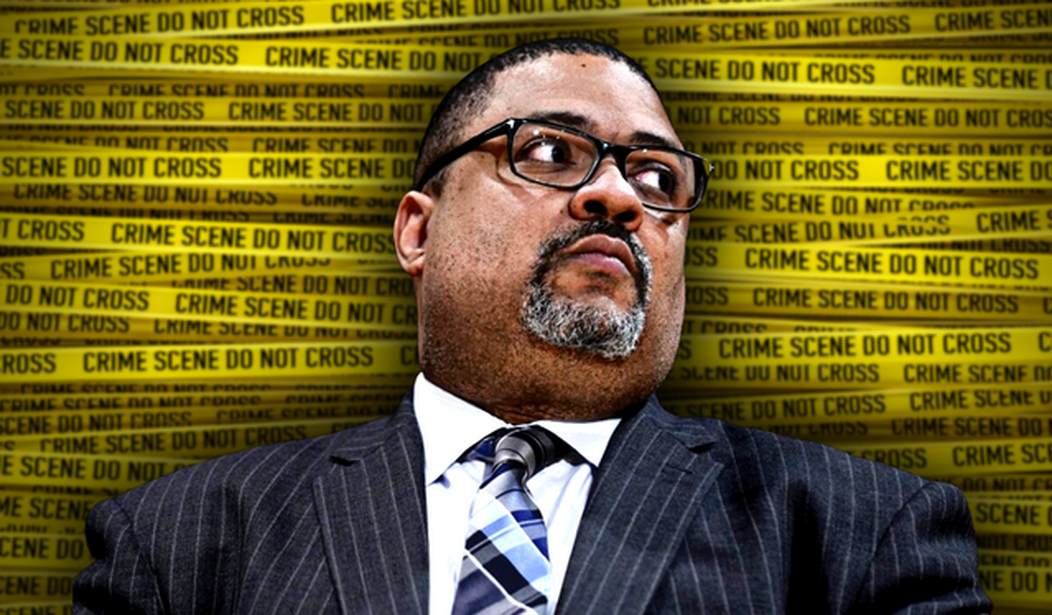
Manhattan District Attorney Alvin Bragg says that nondisclosure agreement was a serious crime that undermined democracy by concealing information from voters. Of these three accounts, Bragg's is the least credible.
"This was a planned, coordinated, long-running conspiracy to influence the 2016 election, to help Donald Trump get elected through illegal expenditures, to silence people who had something bad to say about his behavior," lead prosecutor Matthew Colangelo said at the beginning of Trump's trial last month. "It was election fraud, pure and simple."
Contrary to Colangelo's spin, there is nothing "pure and simple" about the case against Trump. To begin with, Trump is not charged with "conspiracy" or "election fraud." He is charged with violating a New York law against "falsifying business records" with "intent to defraud."
Trump allegedly did that 34 times by disguising his 2017 reimbursement of Cohen's payment to Daniels as compensation for legal services. The counts include 11 invoices from Cohen, 11 corresponding checks and 12 ledger entries.
Falsifying business records, ordinarily a misdemeanor, becomes a felony when the defendant's "intent to defraud" includes an intent to conceal "another crime." Bragg says Trump had such an intent.
What crime did Trump allegedly try to conceal? Prosecutors say it was a violation of an obscure New York law that makes it a misdemeanor for "two or more persons" to "conspire to promote or prevent the election of any person to a public office by unlawful means."
Why was the Daniels payment "unlawful"? By fronting the money, federal prosecutors argued in 2018, Cohen made an excessive campaign contribution.
Cohen accepted that characterization in a 2018 plea agreement that also resolved several other, unrelated charges against him. But Trump was never prosecuted for soliciting that "contribution," and there are good reasons for that.
Such a case would have hinged on the assumption that Trump, in paying off Daniels, was trying to promote his election rather than trying to avoid embarrassment. While the first interpretation is plausible, proving it beyond a reasonable doubt would have been difficult, as illustrated by the unsuccessful 2012 prosecution of Democratic presidential candidate John Edwards, which was based on similar but seemingly stronger facts.
Federal prosecutors would have had to prove that Trump "knowingly and willfully" violated the Federal Election Campaign Act. But given the fuzziness of the distinction between personal and campaign expenditures, it is plausible that Trump did not think paying Daniels for her silence was illegal.
In any event, the Justice Department did not pursue that case, the statute of limitations bars pursuing it now, and Bragg has no authority to enforce federal campaign finance regulations. Instead, he is relying a moribund New York election law that experts say has never been enforced before.
That attempt to convert a federal campaign finance violation into state felonies is so legally dubious that Bragg's predecessor, Cyrus R. Vance Jr., rejected the idea after long consideration. It reeks of political desperation and validates Trump's complaint that Democrats are attempting "election interference" by undermining his current presidential campaign.
As Bragg tells it, Trump is the one who committed "election interference," which the DA describes as "the heart of the case." Bragg says his prosecutors "allege falsification of business records to the end of keeping information away from the electorate."
Cohen, whom the defense team accurately describes as a convicted felon and admitted liar with a grudge against his former boss, is the only witness who has tied Trump to the production of those records. And since they were produced after the election, Bragg's narrative is nonsensical as well as irrelevant -- a point that should not be obscured by the salacious details of Daniels' story.


Join the Conversation
VIP members get the ability to comment on articles.