





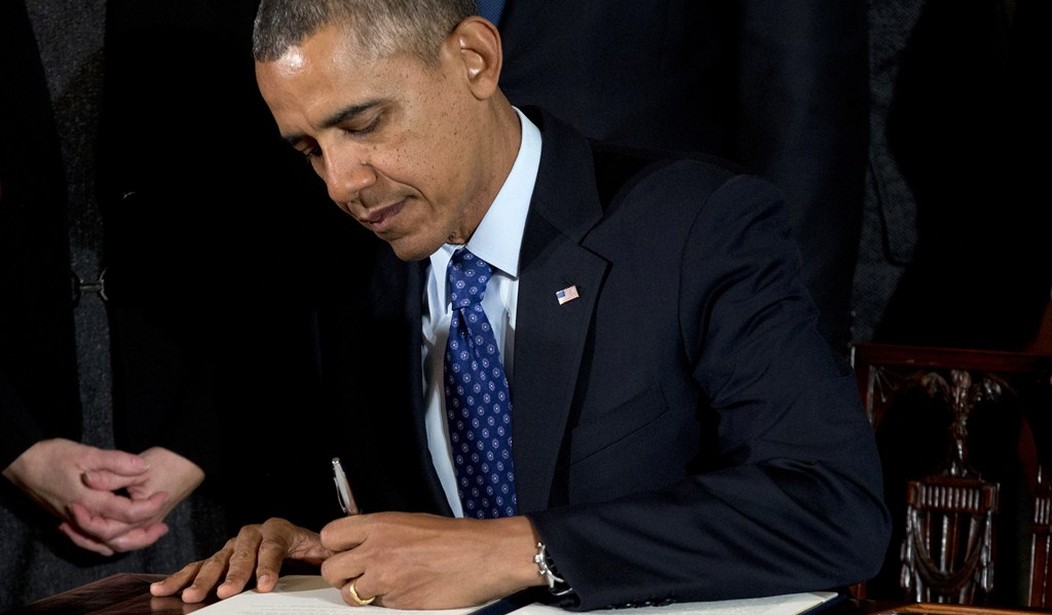
As an Illinois legislator, a U.S. senator and a presidential candidate, Barack Obama repeatedly criticized our excessively punitive criminal justice system. But after he was elected to the White House in 2008, the Obama who worried about nonviolent offenders serving outrageously long prison terms seemed to disappear, replaced by a president with one of the weakest clemency records in U.S. history.
Once he had the unilateral power to free people who do not belong in prison, Obama showed almost no interest in exercising it, shortening just one sentence during his first term. But judging from clemency criteria unveiled by the Justice Department last week, he plans to make up for lost time. If he delivers on that promise, it may be his most admirable legacy, ameliorating some of the many injustices committed in the name of the war on drugs.
To his credit, Obama supported the Fair Sentencing Act of 2010, which shrank the irrational penalty gap between the smoked and snorted forms of cocaine. The law, which passed the Senate unanimously and the House by a voice vote, reflected a bipartisan consensus that penalties for federal crack offenders, who are overwhelmingly black, were unjustifiably severe.
Despite that consensus, the Fair Sentencing Act, which Obama signed without comment, did not apply retroactively, forcing thousands of crack offenders to complete prison terms that almost everyone agrees are unjust. It seemed like an ideal opportunity for the president, who at that point had already received thousands of commutation petitions, to use his clemency power.
In November 2011, more than a year after he signed the Fair Sentencing Act, Obama issued his first commutation, shortening the prison term imposed on Eugenia Jennings, an Illinois woman convicted of selling a police informant 13.9 grams of crack, from 22 years to 10. But he made no statement about the commutation or the rationale for it.
Last December, two years after freeing Jennings and a year after winning a second term, Obama issued eight more commutations, all for nonviolent crack offenders who had served more than 15 years. This time he provided some insight into his motivation, saying the Fair Sentencing Act "began to right a decades-old injustice, but for thousands of inmates, it came too late."
If those prisoners "had been sentenced under the current law," Obama noted, "many of them would have already served their time and paid their debt to society. Instead, because of a disparity in the law that is now recognized as unjust, they remain in prison, separated from their families and their communities, at a cost of millions of taxpayer dollars each year."
Deputy Attorney General James Cole, who in January signaled that more commutations were in the offing, echoed the theme of penalties "now recognized as unjust" last week, saying "older, stringent punishments that are out of line with sentences imposed under today's laws erode people's confidence in our criminal justice system." Accordingly, Cole said, the Justice Department will give special attention to clemency petitions from "non-violent, low-level offenders" who have served at least 10 years of a sentence that probably would have been shorter under current law, "do not have a significant criminal history," have "demonstrated good conduct in prison" and have no "significant ties to large-scale criminal organizations, gangs or cartels."
An unnamed "senior administration official" told Yahoo News the new guidelines could result in clemency for "hundreds, perhaps thousands" of federal prisoners by the end of Obama's current term. If so, Obama's clemency record will be transformed from one of the stingiest ever to one of the most merciful.
Attorney General Eric Holder seems to have been floating a trial balloon for the new clemency policy last August, when he gave a speech in which he criticized "draconian mandatory minimum sentences," bemoaned America's world-leading incarceration rate and declared that "too many Americans go to too many prisons for far too long, and for no truly good law enforcement reason." He sounded like Barack Obama circa 2007.


Join the Conversation
VIP members get the ability to comment on articles.