







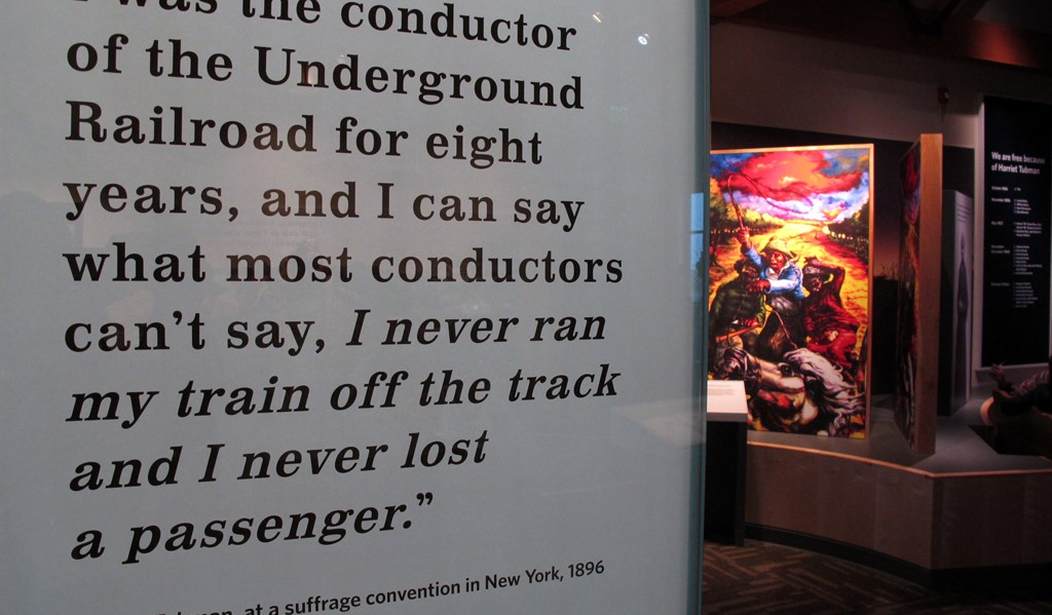
American women flexed their political muscles in the 2026 election, participating as voters and candidates, influencing outcomes, and breaking records by sending more women than ever to hold statewide elected office. Several states elected female governors for the first time. Women aren’t a monolithic voting bloc, but they are a powerful force in American politics.
This has been true since the beginning. Our country would not be what it is today without the contributions of countless women — some of whom are widely recognized in history books, but many of whom are not. This Thanksgiving holiday, we should reflect on all the freedoms and privileges we have as American women and the debt of gratitude we owe to those who came before us.
During the American Revolution, women organized boycotts of British goods, raised money for the cause, supplied soldiers in encampments, and worked as cooks, laundresses, and nurses alongside the men. Some women even acted as spies. Elizabeth Burgin, a mother of three, helped more than 200 American prisoners of war escape from the British. Women like Margaret Corbin and Mary Ludwig Hays (also known as "Molly Pitcher") even loaded and fired field cannons after their husbands fell in battle.
Throughout the 19th century, women shaped our young country. Although their direct political influence was limited, the importance of their indirect influence cannot be overstated. For example, Dolley Madison transformed the office of the First Lady into a proactive role and used her position to bring people together. She may be remembered most for hosting parties, but the result of her efforts was greater bipartisanship.
In the 1830s, Alexis de Tocqueville toured America and made observations about our democracy, comparing and contrasting it to Europe. He had a lot to say about American women, and essentially credited them with the success of our vibrant civil society. He wrote: “I have nowhere seen woman occupying a loftier position; and if I were asked…to what the singular prosperity and growing strength of that people ought mainly to be attributed, I should reply: To the superiority of their women.”
Around this same time, a woman named Sarah Josepha Hale was a writer and editor for ladies’ magazines. By today’s standards, she might not be considered a feminist because she strongly believed that women’s primary sphere was domestic life, but she advocated for new opportunities for women, including in higher education. Before and during the Civil War, she petitioned five different American presidents, asking them to establish the national holiday of Thanksgiving. Like Dolley Madison, she understood that there was power in bringing people together around a table.
Later in the 19th century, Harriet Tubman would lead dozens of slaves to freedom on the Underground Railroad. Other women, like Sojourner Truth, Lucretia Mott, and Sarah and Angelina Grimké, and many others were leaders in the movement to abolish slavery.
Many people know the suffrage movement of the early 20th century resulted in the 19th Amendment, guaranteeing women the right to vote nationwide in 1920 (thanks to women like Susan B. Anthony and Elizabeth Cady Stanton). But some don’t know that Wyoming was the first place to recognize women’s suffrage, in 1869 while it was still just a territory. The state of Montana became the first state to elect a woman to Congress, Rep. Jeannette Rankin, in 1916.
In the 1940s and throughout World War II, women’s roles evolved to meet the needs of a nation at war. “Rosie the Riveter” became symbolic of women who took on traditionally masculine roles. They welded ships, built tanks, assembled bombs, operated heavy machinery, and worked as scientists, code breakers, and engineers in the war effort. In the private sector, millions of women entered the workforce during this time, keeping the economy going while the troops were fighting abroad.
The latter part of the 20th century and the first part of the 21st century have seen enormous progress, and countless glass ceilings have shattered. Women like Ella Baker and Rosa Parks made invaluable contributions to the civil rights movement of the 1960s. Sandra Day O’Connor became the first female supreme court justice in 1981. Sally Ride became the first American woman to go to outer space in 1983. Kamala Harris became the first female vice president of the United States in 2021.
All along, we’ve had political debates about the status of women and the roles we should play. While many women achieve greatness in their professions, many more make contributions to their families, neighborhoods, and communities through consistent acts of service and love. We may not always “have it all” if that means having the perfect work-life balance. But we do have the freedom to make choices, to participate as citizens, and to pursue happiness as we see fit.
America should be proud of its women. And American women should be proud of our country. This Thanksgiving, I’m thankful for the women who’ve come before me, and I’m committed to serving my country, as they did, and paying it forward to those who’ll come after me.
Hadley Heath Manning is a senior fellow at Independent Women.
Editor’s Note: Do you enjoy Townhall’s conservative reporting that takes on the radical Left and woke media? Support our work so that we can continue to bring you the truth.
Join Townhall VIP and use promo code FIGHT to receive 60% off your membership.
Join the Conversation
VIP members get the ability to comment on articles.