





Among the many things that frustrate Americans about Washington, D.C., is the unwillingness -- not inability, but unwillingness -- to solve problems.
One of many examples is the U.S. national debt, now more than $22 trillion and counting.
As Heritage Foundation President Kay Coles James has written, "The federal budget is at the core of our political system. Everything the federal government does, from taxing, to regulating, to providing services, to protecting our very freedoms, it does through the federal budget."
Liberals might dismiss the foundation's "Blueprint for Balance: A Federal Budget for Fiscal 2020," but they shouldn't. The document is based on verifiable facts. If implemented, Heritage claims, it would save trillions of dollars compared to projections by the Congressional Budget Office and produce a budget surplus by 2025.
Everyone knows "entitlements" are the main drivers of debt and that politicians don't want to reform them because they fear attacks by the media and by their political opponents.
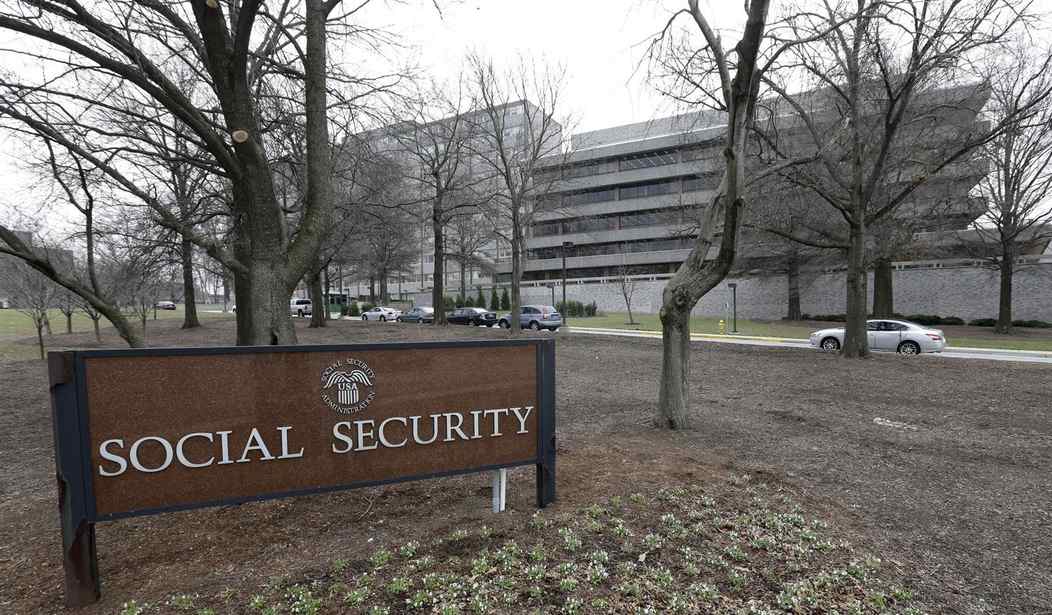
The "Blueprint" summarizes the problem: "Entitlement programs in the United States have expanded more than tenfold since their inception, but workers are nowhere near 10 times better off as a result ... they often make them worse off, depriving them of autonomy, personal choice, and higher incomes and saddling them with a mountain of debt. Medicare and Social Security carry $70 trillion worth of unfunded obligations over the next 75 years -- the equivalent of a $445,000 credit card bill placed on every U.S. worker."
Ponder that for a moment as you look at your credit card statement.
Most people appear ignorant that the amount they pay into Social Security and Medicare does not come close to covering the programs' actual costs.
"According to the Urban Institute," says the Blueprint, "the average worker retiring in 2020 will have paid $135,000 in Social Security taxes and will receive $193,000 in Social Security benefits. The gap for Medicare is even larger; the average retiree in 2020 will have paid $36,000 in Medicare taxes and will receive $229,000 in Medicare benefits (excluding premiums paid by the retiree). This means that the average retiree in 2020 will receive about 2.5 times as much in benefits as he or she paid into the systems."
There's much more and Members of Congress should read it, along with the proposed fixes, which are as follows:
-- Increase Social Security's retirement age and index it to life expectancy so that Social Security's benefits would automatically adjust to reflect individuals' longer life spans and additional work capacity. This would save $32 billion over 10 years and reduce Social Security's 75-year shortfall by 29 percent.
-- Shift toward a flat antipoverty benefit so that the program could better align its resources with individuals' needs and help to prevent more elderly people from living in poverty. This would save $645 billion over 10 years and reduce Social Security's 75-year shortfall by 84 percent.
-- Modernize the program's spousal benefit to account for the fact that most women earn Social Security benefits based on their own work history. This would save $2 billion over 10 years and reduce Social Security's 75-year shortfall by 3 percent.
-- Use the chained consumer price index (CPI) for Social Security's benefit calculations to provide a better adjustment for inflation. This would save $12 billion over 10 years and reduce Social Security's 75-year shortfall by 11 percent.
-- Reduce the payroll tax to give workers more choice in deciding how to spend or save their earnings.
Reducing the debt and reforming entitlements is simple, but not if you are a Member of Congress. Too many prefer the issue to a solution, because their primary goal is re-election. Sufficient numbers of voters must demand reforms if there are to be any. Unfortunately, too many have become addicted to government. Their addiction, unless it is broken now, will cost future generations and risk economic collapse.


Join the Conversation
VIP members get the ability to comment on articles.