





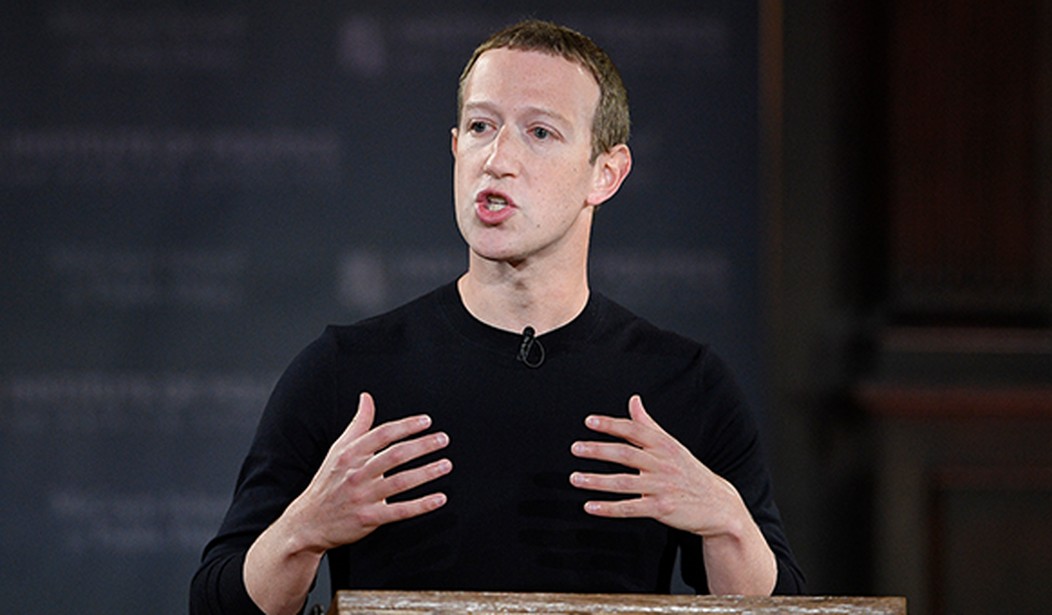
In 2004, Mark Zuckerberg launched a website known as “TheFacebook” based on the value of enhanced human connectivity. Two decades later, however, Zuckerberg has a new project based on the complete opposite idea, something he calls “metaverse.”
More than just “a place,” Zuckerberg intends for metaverse to be the centerpiece of “immersive digital worlds [that] become the primary way that we live our lives and spend our time.” In other words, Zuckerberg’s vision for the future is one in which humans are permanently tethered to digital technology, while the physical world becomes a secondary distraction around them.
It would be easy to dismiss his vision as the moonshot project of a Big Tech CEO long detached from reality, but Zuckerberg’s comments should instead be viewed as a red flag that his nihilistic perspective of “living” is now entering the mainstream, especially and most concerning, among young people.
The evidence of this is undeniable. Online dating, sex robots, remote work and schooling, and “streaming” church services have become popular alternatives to in-person experiences. While some do have benefits, for instance remote work helping save the economy from the worst ravages of Democrats’ COVID “lockdowns,” their cumulative cultural impact undermines the very essence of human-to-human connectivity.
The use of technology as a surrogate for actual experience is rapidly turning into the same type of synthetic-sensory experience as that of “Feelies,” movie-like events in Aldous Huxley’s Brave New World, where people are exposed to manufactured, full-sensory environments wherein they become conditioned against the ability to experience truly genuine emotion. When highly customized, on-demand experiences can be delivered instantly in a digital world, it dulls the imperfect yet nonetheless genuine experience of living.
This makes digital existences akin to a drug habit (actual government-provided “soma” in Huxley’s dystopian novel). Users keep looking for new stimulation – which is quick, easy, and seemingly without consequence – to stay entertained (a product of dopamine rushes that are notable parts of Big Tech social engineering). This inevitably spirals downward, with digital experiences becoming darker and more dangerous, resulting in behavioral changes that follow users into the real world.
For example, social media has normalized grotesque personal attacks on individuals because digital targets of harassment seem less real, so the “high” from attacking them is not dulled by the guilt of harming a living person. The harm, however, is most certainly real, and psychologists are discovering mental health disorders, particularly in children and teenagers, tied directly to social media use. Additionally, numerous studies have shown the growing prevalence of online pornography has created unrealistic expectations in relationships that lead to unsafe sex practices, disappointment, and even domestic violence.
This is just scratching the surface. What else is in store for our society when the true meaning of living – found in acts of creation, cooperation, production, and achievement – become just a matter of clicking a button or the output of an algorithm, as opposed to challenges that forge character and build crucial developmental skills? Moreover, what happens to critical societal guardrails, including morality and religion, when we all become gods of our own digital worlds chasing only what makes us feel good, including simulated violence and rape, because there is no readily apparent consequence to it?
Perhaps Zuckerberg believes all of this is controllable in a digital world with code tweaks and algorithm updates, but stopping fondling attacks by implementing “personal spaces” (yes, this was a real problem on metaverse) is meaningless if the root cause is deteriorating behavioral standards of users beyond Zuckerberg’s code. In fact, it is a problem that will worsen exponentially with the weakening of human relationships as society moves towards his “immersive digital worlds.”
Human-to-human connectivity is the foundation of essential social systems like religion, family, and friendships, which in turn serve to limit deviant behavior.
This may not be of consequence to nihilists like Zuckerberg who have given up on the real world in favor of a digital one (which they control), but for the rest of us who must endure rising crime, violence, and a general environment of anger and incivility, it is a very real problem that cannot be repaired with a simple code patch.
Metaverse may promise Utopia, but as Mark Bauerlein notes in his most recent analysis of Millennials in the digital age – The Dumbest Generation Grows Up – Utopia’s reality is much darker.
Bob Barr represented Georgia’s Seventh District in the U.S. House of Representatives from 1995 to 2003. He served as the United States Attorney in Atlanta from 1986 to 1990 and was an official with the CIA in the 1970s. He now practices law in Atlanta, Georgia and serves as head of Liberty Guard.

Join the Conversation
VIP members get the ability to comment on articles.