
The Trump administration has reversed course on a federal ban on kratom, which some claim is a highly addictive substance.
Meanwhile, state and local governments are still wrestling with how to regulate the substance, which is used by millions of Americans.
From The New York Times:
Three months ago, federal health officials announced that the government planned to ban a potent opioid that Health Secretary Robert F. Kennedy Jr. said “put American lives at risk.”
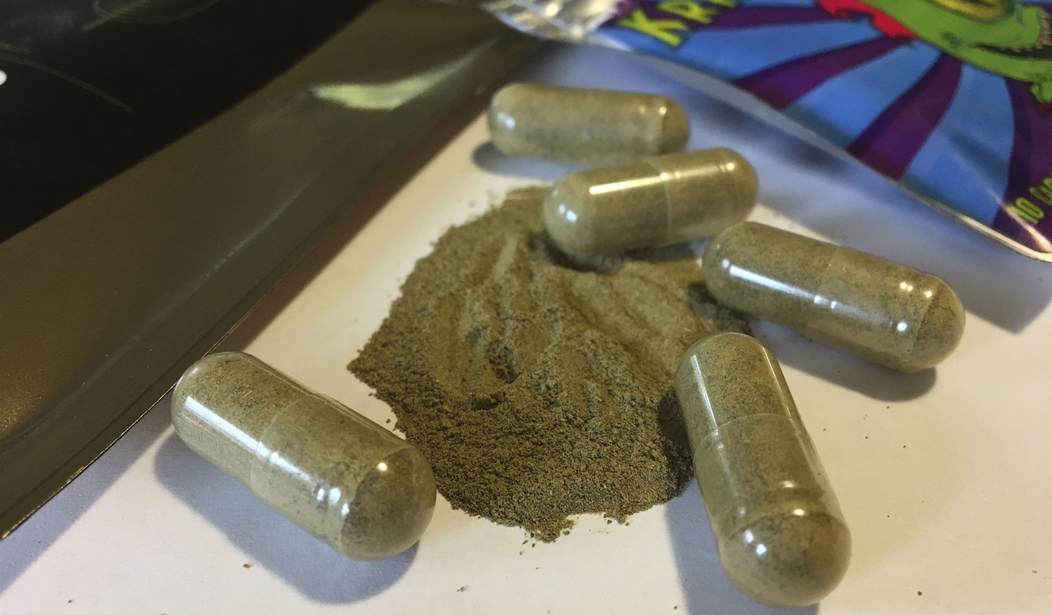
The substance was a highly addictive compound derived from the kratom leaf, a plant from Southeast Asia that is in powders and tinctures sold as energy boosters and pain relievers in convenience stores and vape shops across the United States. The ban was crucial, the officials said, “to avoid an imminent hazard to public safety.”
This month, the government reversed course.
Mr. Kennedy announced Oct. 9 that his department had “followed the science” and decided to allow some levels of the compound.
The policy U-turn came after a number of kratom companies discovered the substance in products marketed as “natural” in recent months. The manager of a large kratom distribution company, faced with evidence of the compound in products at the center of several wrongful death lawsuits against him, mounted a concerted lobbying push.
The executive, David Gabbay, and his wife, Maya, had been giving steadily to Republican candidates and campaign committees this year, reaching about $2.9 million on Oct. 12. Mac Haddow, the leader of an advocacy group funded heavily by the company Mr. Gabbay manages, said he went to the White House to plead his case.
Then Mr. Kennedy and officials from the Drug Enforcement Administration announced that the opioid, called mitragynine pseudoindoxyl, or MGPI, would be allowed at certain levels, reasoning that “trace” amounts appear in otherwise natural products.
The new policy still bans the most concentrated and dangerous levels, but the allowable amounts are hardly traces: They are 25 to 500 times the levels currently found on the market, the senior author of a study cited by the Trump administration said in an interview.
Natural kratom and dangerous, enhanced opioid products are NOT the same. HHS is following the science and drawing a clear line between the two. HHS' new recommendation gives @DEAHQ precise, science-based thresholds to target concentrated 7-OH and MGPI products without sweeping natural botanical kratom into Schedule I.
— HHS (@HHSGov) October 21, 2026
Dr. Andrew Kolodny, the medical director for the Opioid Policy Research Collaborative at Brandeis University, claimed the administration isn’t “doing this because the science supports it” but “because the industry and the lobbyists are basically writing the policy.”
The effort to ban kratom has seen a spirited debate. The Drug Enforcement Administration (DEA) in 2016 tried to classify the herbal supplement as a Schedule I drug. However, the agency withdrew its emergency notice after receiving over 23,000 public comments, according to Florida Politics.
“Georgia Attorney General Chris Carr called on state lawmakers Friday to completely ban kratom from store shelves following a surge in emergency calls and fatal overdoses tied to the substance.” https://t.co/wpVH2pGuoP https://t.co/pB4lGUcfPh
— Dr. Michelle Au (@AuforGA) October 26, 2026
Massachusetts recently banned kratom and its synthetic derivatives for one year after 107 deaths. Erin E. Walsh, a staff director for a Massachusetts state representative advocating for kratom regulation, noted the difficulty in banning the substance. "A lot of times, a bill has to be filed a few times before it becomes law.”
Similar localized efforts are succeeding elsewhere. The Saratoga County Board of Supervisors in New York voted 17-4 to ban the sale and distribution of kratom in October 2026.