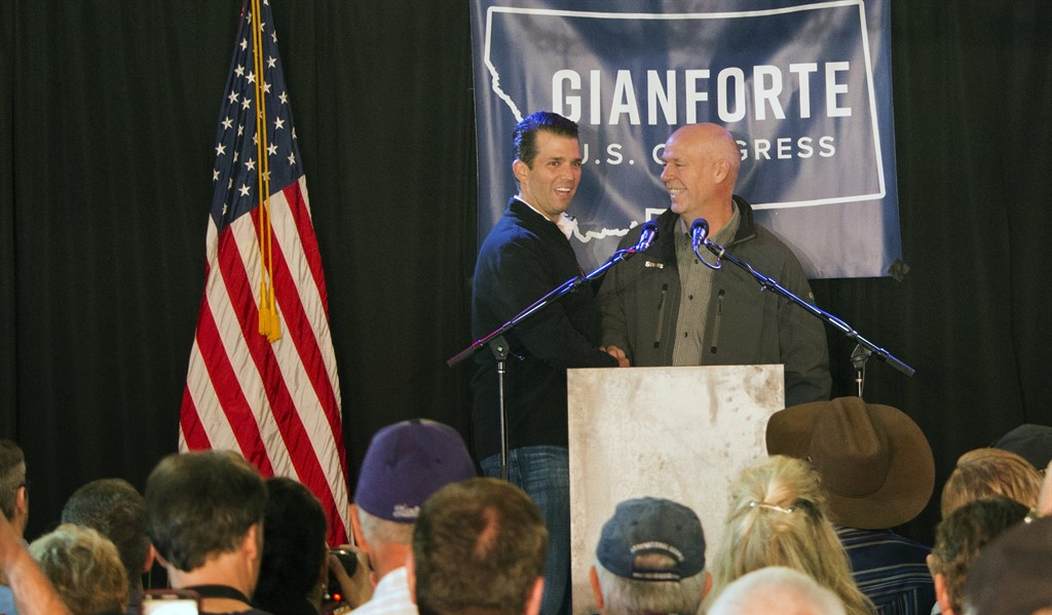

Montana’s Republican governor, Greg Gianforte, found himself at the center of an online controversy earlier this week, one that raises a troubling question: Are some Republicans, in their bid to fix the country, slipping into grievance politics? That shift deserves to be called out before legitimate policy debates become an excuse for bigotry.
Gov. Gianforte revealed on Monday, that he had traveled to India to “secure stable markets for our agriculture producers and establish new relationships that will lead to investment and jobs for Montanans.” The comments under the post were unhinged. One user shared an AI-generated image of Gianforte in Indian clothing, implying that he had sold out Montanans to Indians. Others branded him a traitor or accused him of trying to recruit H-1B workers. In general they were unfriendly, and accused the governor of putting India's interests over those of hardworking Americans.
Great to be in India to secure stable markets for our agriculture producers and establish new relationships that will lead to investment and jobs for Montanans. https://t.co/K4jCrWVJwN
— Governor Greg Gianforte (@GovGianforte) October 5, 2026
The reality, of course, was very different.
Gianforte went to India to persuade buyers to purchase American, specifically Montanan, lentils, peas, and chickpeas. India is the world’s biggest market for those crops, and Montana grows more of them than any other state. In other words, the trip was intended to benefit Montana farmers directly.
Even that drew objections, with commenters questioning why Montana should deepen ties with a country they accuse of “stealing” American jobs, college seats, and prosperity. But what, exactly, is being stolen when an Indian buyer pays a Montana farmer for American crops? The farmer gains a customer. The buyer gets food. India benefiting from the transaction does not mean Montana loses.
The "we don't produce enough" America First crowd just watched a governor go sell American crops abroad and decided the problem was the customer. Gianforte went to India to sell American lentils, peas & chickpeas, yet the replies are treating it like he went there to hand out H-1Bs. India is the biggest market in the world for those crops and Montana grows more than any other state. If American farmers don’t close the sale, Canadian & Australian farmers will. H-1Bs abuse is real — it’s a gov’t policy so blame gov’t for the rules. But when grievance makes you oppose your own stated goal, grievance itself has become the politics.
— Will Ricciardella (@WillRicci) October 6, 2026
That is the basic point missing from this debate: putting Americans first does not require everyone else to lose. If Indian customers want what Montana farmers grow, the governor should help those farmers reach them, not reject their business to satisfy people who mistake hostility toward foreigners for economic patriotism. Apparently, American prosperity is a valiant goal only until a foreigner benefits, too.
Complain about unfair trade practices. Demand better terms. But shutting American producers out of foreign markets is not a remedy for unfair trade. It is simply a recipe for bigotry, and bad economics.
If the objection is not to the deal itself but to the nationality of the people buying the crops, then this is no longer a trade debate. So where does that bigotry come from?
Much of it flows from the H-1B visa debate, where frustration with the program, and the fact that Indians hold the vast majority of those visas, has hardened into a convenient catchall belief: Indians are “stealing” American jobs. Never mind that H-1B workers account for a fraction of American employment, or that selling Montana crops to Indian buyers has nothing to do with importing workers.
When did Americans become so devoid of nuance?
This bigotry may come from a small subsection of the right, but that does not make it harmless, or something conservatives should excuse. This is a warning sign.
Legitimate opposition to a broken immigration system, abuses of skilled-worker visas, or a particular anti-western religious doctrine must not become a permission slip for bigotry. Conservatives should be able to demand immigration reform without treating Indians as enemies, debate religion without condemning every believer, and support American workers without attacking the foreigners who buy their products.
If “America First” becomes an excuse to abandon that nuance, it stops being a call to correct years of failed government policy and becomes a slogan for the very bigotry Democrats so often accuse Republicans of embracing.