
Seldom does the mainstream media, or even conservative media, dare to discuss a core principle of democratic socialism, one that many of its ideological allies find especially appealing. It is also the principle that poses the greatest risk to the country, because it wouldn't just reshape our government; it could dismantle our entire private sector, which stands as one of the most powerful checks on the tyranny of a central government.
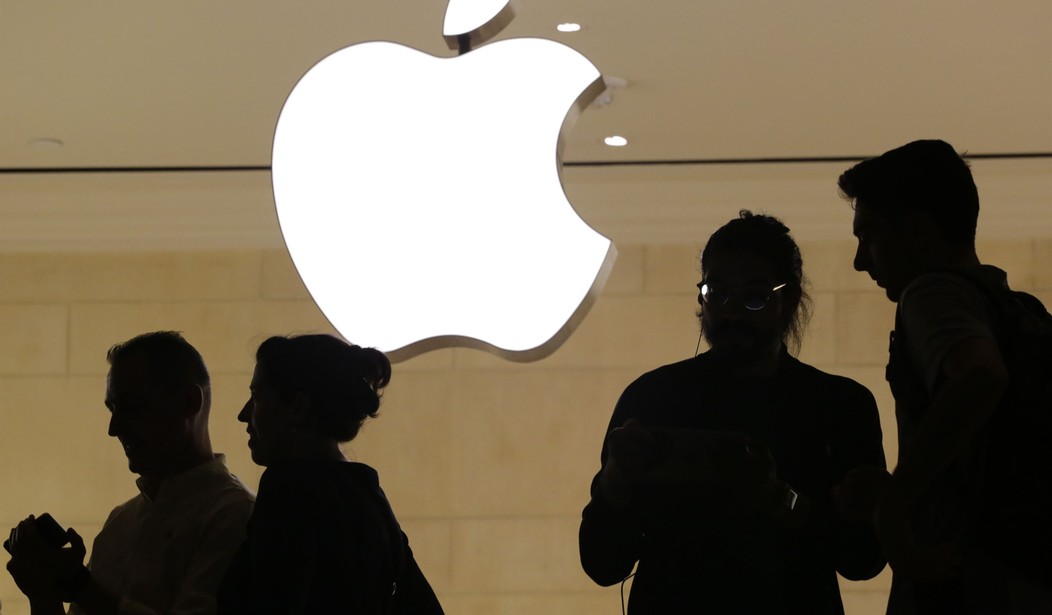
Last week, Michael Smerconish interviewed socialist Bhaskar Sunkara, president of The Nation, founding editor of Jacobin, and author of The Socialist Manifesto, about what it means to be a democratic socialist and what that world would look like. In particular, Sunkara was asked to explain what a company like Apple would look like under democratic socialism.
Under democratic socialism, who would own a company like Apple?
— Michael Smerconish (@smerconish) September 4, 2026
Full discussion with @sunraysunray about what democratic socialism actually means beyond campaign slogans: https://t.co/HLfKoEQTmu pic.twitter.com/Oe59lJN2CT
"In your view of the world, who owns Apple?" Smerconish asked.
"I think that in my view of the world, Apple would probably be owned 100 percent by the employees of Apple, who would elect a, so they would be the shareholders," Sunkara said. "In other words, they would work in conjunction with a series of public banks that would be able to provide the credit they need and coordinate with expansions, but they'd be driven by the people who work there. Not unlike the current system, except the shareholders wouldn't be external shareholders and the financing wouldn't be private through their shareholders. The financing would be in conjunction with public banks."
But the explanation goes even further: Apple would function as its own sort of democracy. Every worker would get to vote on every policy the company wants to pursue. This is problematic in and of itself. Democracy is notorious for being a terrible way to run things, but great in making everyone feel like they have equal say. It's a chief reason why the Founding Fathers embedded its principles into the American government. It's a good way to end in deadlock, and deadlock is a good way to prevent tyranny.
However, business doesn't have the same goal as government. A business's goal is to be productive and provide the best-quality goods or services to consumers at the lowest price in the pursuit of self-interest. Importing democratic voting into corporate decision-making would take the one thing business is good at, efficiency, and crater it.
When progressives speak of democratic socialism, that term doesn't just imply a more robust direct democracy; it is the means by which they seek to seize control of the means of production. This is one of the greatest dangers to the United States if ever implemented. Those with the skills and work ethic to build enterprises like Apple, Amazon, Meta, or Nvidia are not common, despite what many may think. Handing the reins to a workforce whose chief inclination is likely to be pocketing money for themselves through hoarding capital, rather than using it to provide for society, is a recipe for disaster.
Democratic socialism, like every other progressive ideology, promises empowerment but will undoubtedly result in stagnation. It trades the dynamism of entrepreneurship for the lesser desires of man, the facade of equality and the hope that within each worker lies an inner Jeff Bezos, naturally inclined toward production, not failure.
The reality is far less flattering. Most people are not born CEOs, and even fewer are willing to shoulder the risk, sacrifice, and relentless drive that building something from nothing demands. Replace that drive with a mob, and you don't get a fairer economy, you get a slower, poorer one, where innovation is smothered by consensus and the very engine of prosperity is left to rust.