
There's this idea that people commit crimes solely out of desperation. The Left, especially the socialist class, argues that if we just spent trillions on "free" housing, healthcare, schools, and government-run grocery stores, crime would go away. That's naive thinking, at best, and downright dangerous thinking at worst. That's because this ignores some blunt truths about human nature and particularly what drives crime: the anti-social behavior of people with poor impulse control, including those with mental illnesses.
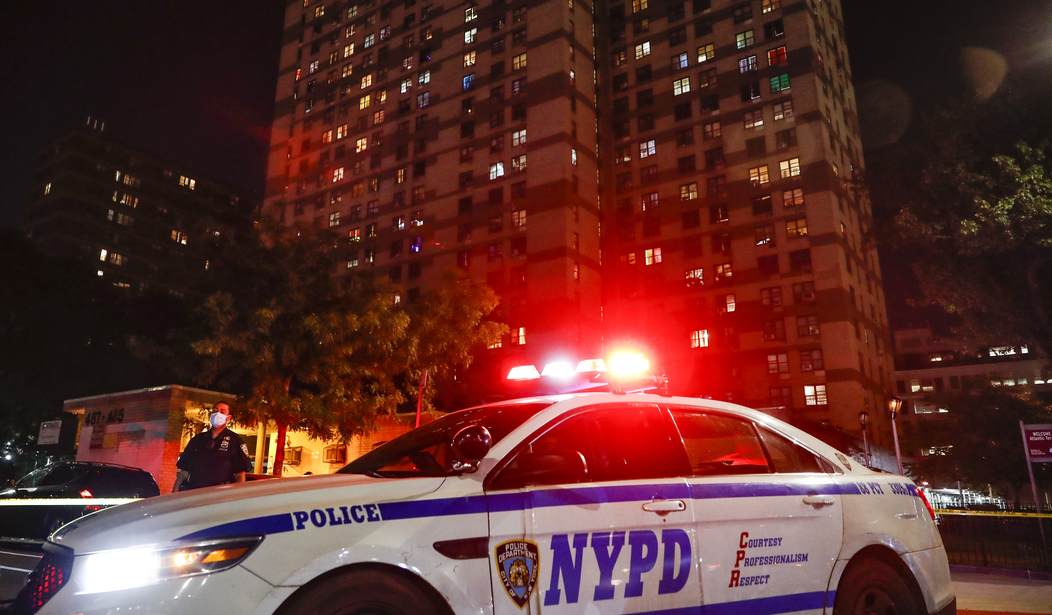
I think about the recent stabbing in New York City. Erin Piacenti, a 32-year-old Bank of America vice president, was randomly stabbed by Pamela Cisneros, 49. Cisneros reportedly had a history of mental illness, but in a video showing the moment Cisneros was shot and killed by police officers, she appeared to be neatly dressed and carrying a handbag. In short, she was not poor and living on the street. Piacenti recently celebrated her second wedding anniversary and had just returned to work after giving birth to her first child.
How would reducing poverty have stopped Cisneros? It wouldn't have.
So it's disappointing to hear Joe Rogan spout the same nonsense as Democratic Socialist Francesca Hong.
Joe Rogan: “Just imagine how much less crime there would be if no one was ever starving, no one was ever desperate, no one was ever worried about where their next meal was gonna come from or whether or not they’re gonna have a roof over their head. What if there’s no more… pic.twitter.com/iNTScyiCnZ
— Marco Foster (@MarcoFoster_) September 1, 2026
If this were remotely true, crime should have been orders of magnitude worse during the Great Depression than it is now.
At its peak, unemployment hit 25 percent, and a large share of American households had no wage earners. In 1933 — the same year unemployment hit 25 percent — homicides in America peaked at around 9.7 per 100,000, then fell through the rest of the 1930s while unemployment remained high.
In 1991, 60-plus years after the stock market crash, homicides peaked again at 9.8, despite much greater prosperity. The 2025 homicide rates are now around 4.1 per 100,000, per the FBI.
About five to 10 percent of all people account for the largest volume of crime, and a Swedish study showed that about one percent of the population was responsible for 60 percent of all violent crime, while about 3.9 percent of the population had any violent convictions.
Meanwhile, the current U.S. poverty rate sits at about 10.6 percent for 2024. So let's connect the dots on that, too. Much in the same way, crime rates should have been much higher during the widespread poverty of the Great Depression, so too should crime rates be higher if nearly 11 percent of the population lives in poverty. But it's not. Even if that one percent of criminals who are responsible for 63 percent of violent crime are poor, poverty is not the main driving factor. Of course, there's a correlation between the behaviors that drive crime — impulsivity, low self-control, addiction, early family breakdown — also make working harder, and increase the risk of poverty. But those behaviors, and not the poverty they cause, drive the crime.
Meanwhile, socialists like Hong oppose the one thing that's been proven to alleviate poverty and reduce crime: school choice. The Left opposes spending on private schools, instead putting kids in failed public schools where — thanks to poor literacy rates — they have a 70 percent chance of being poor or ending up in prison.
It's simplistic to say that crime can be solved by giving more money to the poor, and it's an insult to the agency and reputation of the poor to assume they're incapable of following the laws because they happen to live in poverty. My maternal grandparents, both born in 1928, had their early years formed by the Great Depression. They made shoes out of old tires; they ate maggoty meat and lard sandwiches. They learned to mend clothes and make do with little.
What they did not do is turn to crime, and it's ridiculous to claim people today — who live in far greater prosperity — have no choice if they happen to be poor.