





Congress loves to wrap legislation in the language of the public interest. This year's surface transportation reauthorization bill is no exception. Supporters describe the House Transportation Committee-passed package as a major safety bill designed to make America's transportation system more secure and efficient.
Beneath their rhetoric lies the familiar Washington story of a bill shaped less by evidence than by the demands of organized interests.
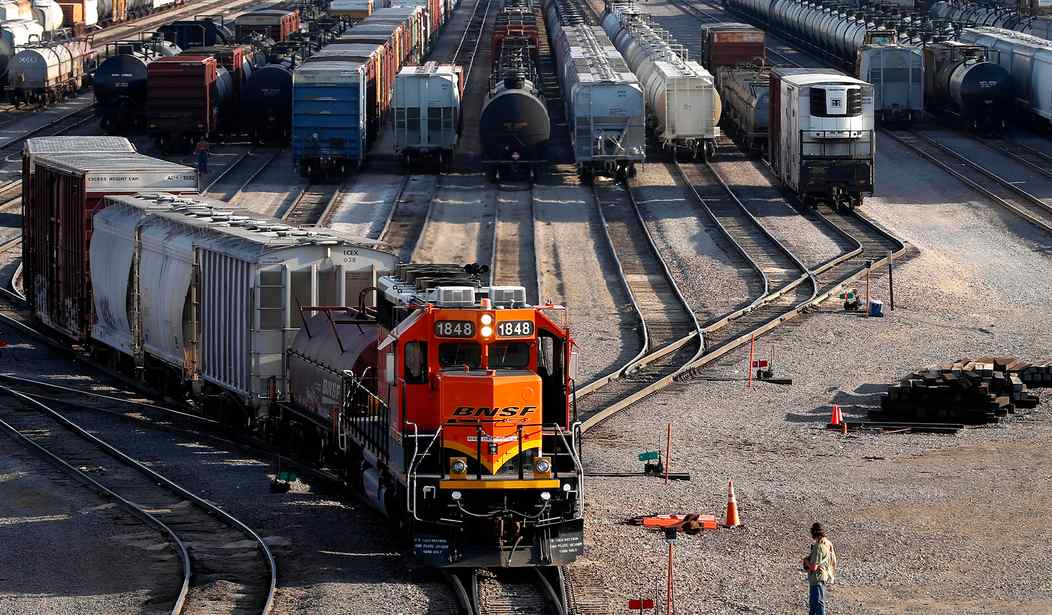
Perhaps the clearest example comes from the rail provisions. If the bill is being driven by a coherent safety philosophy, why would legislators soften rules requiring the faster replacement of old hazardous-materials tank cars, despite repeated recommendations from the independent National Transportation Safety Board? Some safety recommendations are treated as essential, while others become negotiable once influential people object.
The reason, of course, is politics, which comes with clientelism.
Much of the debate over freight-car inspections didn't center on the frequency, timing or type of inspections required — things the conversation would focus on if safety was the overriding goal. Instead, most of the argument centered on who would perform inspections.
Labor organizations pushed provisions that would narrow who counts as qualified to inspect freight cars, thereby reserving those jobs for organized carmen. They opposed railroads' de facto practice of routing inspection volume to non-carmen staff (conductors) as a cost-saver that didn't affect safety. Legislators ultimately crafted a compromise that reflects the competing interests of these two powerful stakeholders more than measurable safety outcomes. This is regulatory capture in action.
The role of organized labor is especially revealing. At a recent Senate hearing, Teamsters officials openly acknowledged that autonomous trucking is going to happen and that workers have historically adapted to technological changes. Rather than trying to prevent deployment of the technology altogether, they argued that policymakers should proactively focus on worker transition issues. This is sensible enough. Yet many of the same labor groups strongly oppose automation and technology deployment in freight rail, including with systems believed to improve safety and detect defects far earlier than traditional inspection methods.
Why is automation acceptable in trucking but unacceptable in rail? The distinction, once again, is less about safety than politics. Where technological change threatens existing, strongly pro-labor work rules, opposition is intense. Where resisting new tech is less practical, the conversation shifts to something else. That may be understandable from a labor-relations perspective, but legislators should not treat it as a sound basis for national transportation policy.
The broader bill suffers from a litany of problems. Together, they point toward the same influence issues.
Fiscal conservatives, assuming there are still enough of them to be heard in Congress, should be particularly concerned about a package that authorizes roughly $580 billion in spending while doing little to address the long-term insolvency of the Highway Trust Fund. Legislators are instead choosing to promise more spending while avoiding the structural reforms necessary to put transportation funding on sustainable footing.
Meanwhile, they inserted a controversial new federal registration fee structure for electric and hybrid vehicles. Progressives oppose it because they believe it discourages EV adoption. Many conservatives oppose it because it expands federal fee collection and further entangles state governments in administering federal policy.
The growing coalition of critics extends well beyond those issues. Transit advocates argue the bill underfunds transit and passenger rail. Environmental groups oppose permitting and climate-related provisions. Labor unions object to autonomous-vehicle language. Federalism-minded Republicans question federal preemption provisions.
When a bill generates opposition from nearly every direction, it is worth asking whether legislators are solving problems or trying to accommodate too many competing interests.
That's the deeper lesson here. Congress increasingly treats transportation policy as an exercise in stakeholder management. Instead of establishing clear goals and allowing innovation and competition to deliver results, legislators pile on mandates, carveouts, protections and special-interest provisions designed to satisfy whichever constituency has secured a seat at the table.
The result is predictable: Every organized interest receives something of value. Taxpayers inherit the costs.
The Senate will have an opportunity to reject this approach. Senators should evaluate every one of the House's mandates and favors using a simple test: Does it produce a measurable public benefit that likely exceeds its cost? If the answer is no, it should be removed.
Transportation policy should be guided by safety outcomes, economic efficiency and fiscal discipline — not by whichever stakeholders have the strongest lobbying operations. Unfortunately, Washington still struggles to distinguish between the public interest and the interests of those who are in the room.
Veronique de Rugy is the George Gibbs Chair in Political Economy and a senior research fellow at the Mercatus Center at George Mason University.
Editor’s Note: Do you enjoy Townhall’s conservative reporting that takes on the radical Left and woke media? Support our work so that we can continue to bring you the truth.
Join Townhall VIP and use promo code FIGHT to receive 60% off your membership.

Join the Conversation
VIP members get the ability to comment on articles.