





"The more things change, the more they stay the same" is the best way to describe the lack of original thinking that is prevalent in politics. Take the recent resurgence of calls from politicians on both sides of the aisle to implement industrial policy.
These calls are motivated to address the (mythical) decline in American manufacturing — and because other countries are doing it. These policies are tired, utterly uninspiring schemes that governments around the world have tried and, invariably, failed at.
The latest example is a proposal by Sen. Gary Peters, D-Mich., to create a new federal agency called the National Institute of Manufacturing. Not to be confused with the National Institutes of Health, the senator explains, "This will be an executive branch agency that will house our national manufacturing programs under one roof," and effectively coordinate a strategic vision for manufacturing.
But let's examine the problems this scheme is supposed to address. The first is the supposed decline of American manufacturing. In reality, while manufacturing employment has gone down significantly over the last 40 years, U.S. manufacturing output is now near an all-time high. Ironically, it recently dipped a bit because of the trade war now being waged by the same government Peters thinks is necessary to revive manufacturing.
Industrial capacity — the existing ability of American factories and workplaces to produce industrial output — is also higher than at any time in the past, thanks to productivity growth brought about by labor-saving innovation. Contrary to popular belief, this transformation is beneficial, as the increased productivity fuels the significant wage growth enjoyed by those still employed in manufacturing.
As for the notion that "other countries are doing it," I'm curious to hear what great successes have come out of, say, China's industrial policies. In his latest book — "The State Strikes Back: The End of Economic Reform in China?" — Nicholas Lardy of the Peterson Institute for International Economics shows that China's growth since 1978 has actually been the product of market-oriented reforms, not state-owned programs.
Lardy notes that in 2012, about 70% of China's GDP was produced by private firms. He details the toll taken on the Chinese economy by the recent increase in ambitious industrial policies and the growth of the state-owned sector. His conclusion is that unless China reverses course and the growing weight of state-owned enterprises, government debt, and malinvestments, China's growth will wither away.
Why should we want America to become more like China? Here's yet another politician thinking that somehow, the same government that started a war in Iraq on faulty intelligence, botched the launch of HealthCare.gov, gave us the Solyndra scandal, and can't keep either Amtrak or the Postal Service solvent, can effectively coordinate a strategic vision for American manufacturing.
There are already 58 existing federal programs that offer manufacturing funding through 11 federal agencies. These programs include the crony Export-Import Bank, which props up the bottom line of large domestic companies by offering taxpayer-backed loans to equally large, often state-owned, foreign firms. The senator believes that these agencies' apparent failures are due merely to the fact that they aren't all in the same place. Somehow, moving them all under the care of a manufacturing czar is supposed to unleash their magical powers.
U.S. industrial policies launched in response to the rise of Japan in the 1980s and the USSR before that failed, not because American policy mavens weren't smart enough to do things right. The real problem with industrial policy, economic development strategy, central planning or whatever you want to call these interventions is that government officials are inescapably plagued by ignorance of localized knowledge. Government officials cannot outperform the wisdom of the market at picking winners. In fact, government intervention in any sector creates distortions, misdirects investments toward politically favored companies, and hinders the ability of unsubsidized competitors to offer better alternatives. Central planning in all forms is poisonous to innovation.
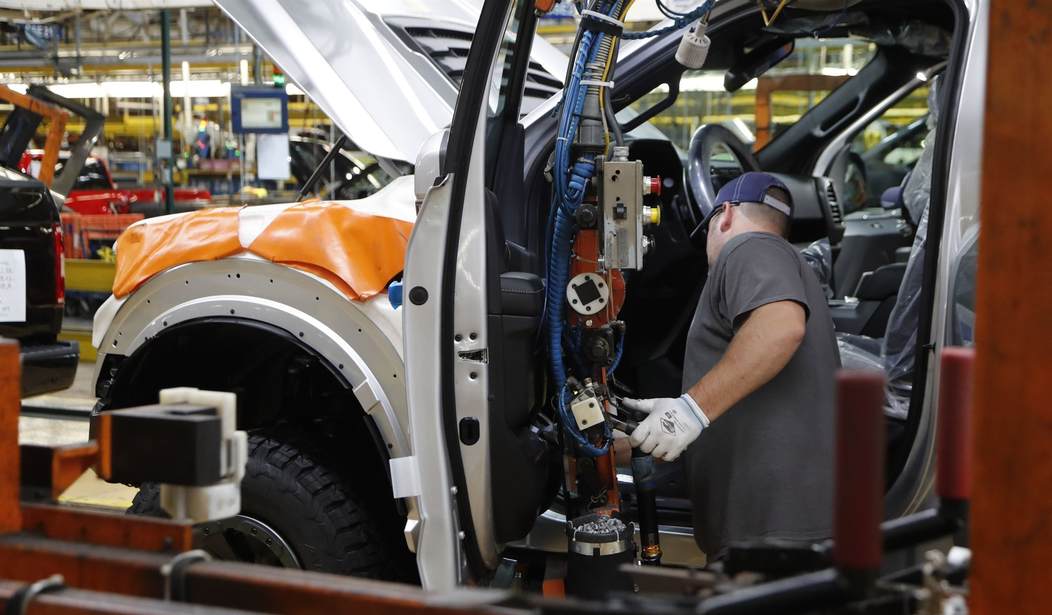
As Peters notes, "If you go on the factory floor in Michigan, it's not your father's or grandfather's factory." Indeed! American companies are in fact fantastically innovative and productive on their own. They have evolved to produce more of what consumers want at lower costs — most of them without a central planner directing them from Washington. Old ideas that have never worked are no way to foster more innovation. Lighter regulations, a better tax code, more immigrants and freedom to do what they do best are what entrepreneurs need.



Join the Conversation
VIP members get the ability to comment on articles.