





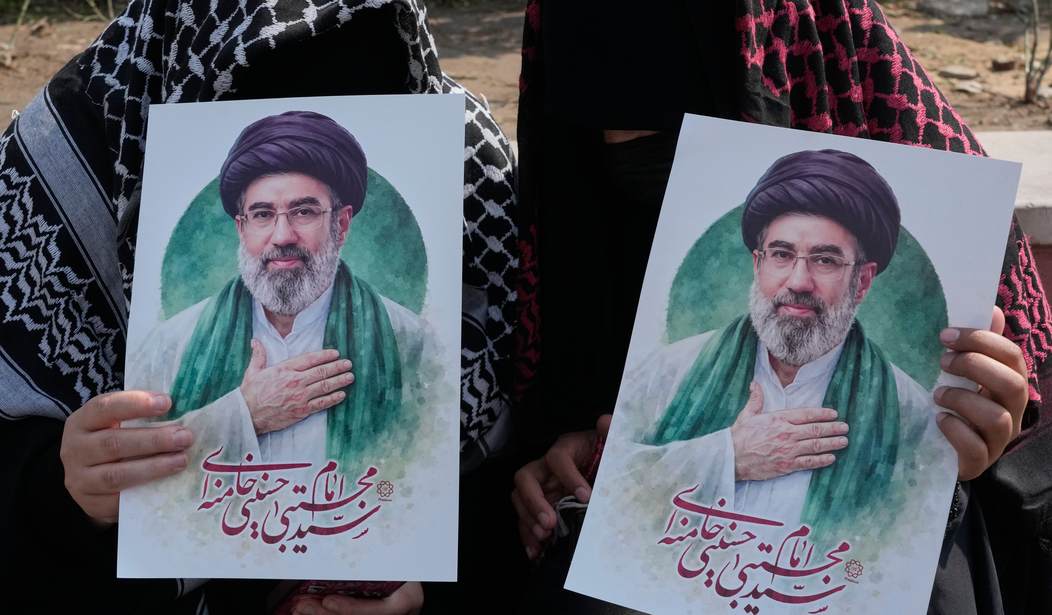
Mojtaba Khamenei inherited the most powerful office in the Islamic Republic. Yet six months into his tenure, a question once considered unthinkable is surfacing in Tehran. When the Supreme Leader speaks, who still listens?
For almost five decades, the answer was obvious. Ayatollah Ruhollah Khomeini created a system in which factional warfare could rage beneath the surface, provided everyone ultimately bowed to the Supreme Leader. Ali Khamenei preserved that arrangement for more than three decades. Presidents came and went. Clerics competed. The Revolutionary Guards (IRGC) accumulated power. Yet one principle remained sacrosanct. The Supreme Leader had the final word.
Today that principle is under strain. On August 28, Mojtaba Khamenei warned officials against creating false choices between war and negotiation, compromise and confrontation. He urged them to avoid publicizing weaknesses and declared that anything damaging social cohesion was forbidden. The message appeared designed to impose discipline on a deeply divided regime. Within hours, President Masoud Pezeshkian was making the opposite argument. He has repeatedly highlighted the devastating consequences of sanctions, war, and economic isolation. Reuters reported on August 28 that he acknowledged a 35 percent decline in foreign trade.
The contrast was extraordinary. The Supreme Leader was telling the regime to stop advertising weakness while the president described it in stark terms. His adviser and Executive Vice President Mohammad Jafar Ghaempanah went further. He argued that if abandoning uranium enrichment could prevent further American attacks on Iranian infrastructure, enrichment should be abandoned. Iran's people, he suggested, should not become martyrs merely to preserve the nuclear program. The Paydari faction and state-run newspaper Kayhan take the opposite position. Mahmoud Nabavian argues that the fundamental conflict with Washington concerns Velayat-e Faqih (the guardianship of the Islamic jurist). Kayhan has denounced limits on enrichment as “surrenderist thinking” and warned that concessions would lead to demands concerning missiles and other pillars of the regime.
The Pezeshkian camp says reality must constrain ideology. The hardliners say ideology must triumph. Both positions undermine the man at the top.
On June 18, Mojtaba Khamenei acknowledged that he had held a different view on the U.S.-Iran memorandum. Yet after Pezeshkian accepted responsibility, Khamenei authorized it. That should have ended the argument. It did not. Kayhan and other hardliners continued their revolt, claiming the agreement violated the Supreme Leader's red lines. The implication was extraordinary. Supporters were claiming the right to decide what the Supreme Leader meant, even after he had authorized the agreement. On June 30, Ghaempanah argued that if every statement by the Supreme Leader were automatically implemented, there would be little purpose in Parliament or the Supreme National Security Council. He suggested that his views could be examined by experts and accepted or rejected accordingly. Kayhan reacted with fury, accusing the Pezeshkian camp of attempting a political coup against the authority of the Supreme Leader.
In the Islamic Republic, it strikes at the foundations. Velayat-e Faqih depends upon supreme clerical authority. Once senior officials suggest that the Supreme Leader's decisions can be examined or rejected by subordinate institutions, the ideological foundations of the Islamic Republic begin to crumble. Foreign Minister Abbas Araghchi said in July that he had never met Mojtaba Khamenei, before or since his elevation. He also acknowledged that communication with the leadership had sometimes been difficult during critical periods. That hardly resembles an all-powerful Supreme Leader exercising unquestioned command. Mojtaba's physical absence compounds the problem. His August 28 message came through official channels, while questions continue about his visibility and control over communications.
Inflation is surging. Foreign trade is contracting. Oil exports face severe pressure. Government finances are being squeezed as sanctions and the blockade of Iranian crude exports bite deeper. This matters because authoritarian regimes can survive poverty. They can survive sanctions. They can even survive military defeat. A dictatorship becomes vulnerable when its rulers begin arguing publicly about the meaning of their own supreme authority. For almost 50 years, the Supreme Leader was the pillar holding Iran's rival factions together. He never eliminated factional conflict. He controlled it, establishing the boundaries within which competing power centers could fight. Mojtaba Khamenei increasingly appears unable to perform that function.
The crucial question is therefore no longer what the Supreme Leader says.
It is what happens afterward. If Pezeshkian can argue publicly for negotiations, officials can question the nuclear program, ministers can put economic survival above ideology, hardliners can reject agreements authorized by the Supreme Leader, and senior officials can admit communication with the leadership is difficult, something fundamental has changed. The old command structure is beginning to fracture.
This could prove more consequential than another argument over enrichment, missiles, or the Strait of Hormuz. The Islamic Republic survived enormous crises because its factions understood that obedience to the Supreme Leader was essential to the system. That obedience can no longer be taken for granted. Mojtaba Khamenei may occupy the throne. He may command the Revolutionary Guards. He may carry the title of Supreme Leader. But titles are worthless when obedience evaporates.
The real test of power is what happens when an order is issued. Does parliament obey? Does the president obey? Do ministers and the Revolutionary Guards obey? Do the clerics obey? Most importantly, do hardliners who claim to defend the Supreme Leader obey him when his decisions conflict with their ambitions? If the answer becomes uncertain, Iran's crisis has entered a new and potentially decisive phase. The Supreme Leader may still sit at the summit of the Islamic Republic. But the mountain is beginning to move beneath him. And when the Supreme Leader speaks, the most dangerous sound for the regime may be the silence that follows.
Struan Stevenson was a member of the European Parliament representing Scotland (1999–2014), president of the Parliament’s Delegation for Relations with Iraq (2009–14), and chairman of the Friends of a Free Iran Intergroup (2004–14). He is an author and international lecturer on the Middle East.
Editor’s Note: Thanks to President Trump and his administration’s bold leadership, we are once again respected on the world stage, and our enemies are being put on notice.
Help us continue to report on the administration’s peace through strength foreign policy and its successes. Join Townhall VIP and use promo code FIGHT to receive 60% off your membership.

Join the Conversation
VIP members get the ability to comment on articles.