





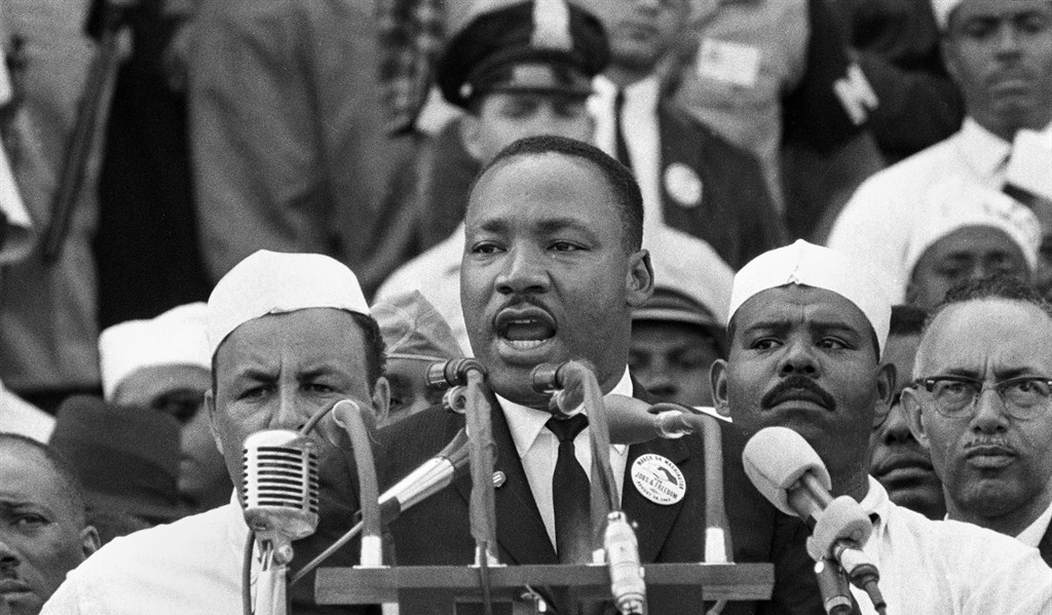
We are approaching the 55th anniversary of Dr. Martin Luther King Jr.'s famous "I Have a Dream" speech, delivered Aug. 28, 1963, in Washington, D.C.
Reading through the speech, it's hard not to be in awe, like those who stood and heard King then, by the greatness and truth of his words.
He captured with precision what America is about, what was wrong then, and what needed to be done.
And because timeless truth is what made that speech great, it is still relevant to today's considerable challenges.
This was not the speech of a political activist. This was a sermon of a pastor, enlightened and inspired by his God, to fix what was broken in America and lead us all to better world.
I see three great messages from King's speech that are important to grasp and apply today.
First, King said that they were in Washington that day to cash in and "demand the riches of freedom and the security of justice."
Second, he communicated that freedom and justice are of divine origin, as he quoted from the prophet Isaiah.
And third, of particular relevance and importance today, was King's appeal to not drink "from the cup of bitterness and hatred" and to "conduct our struggle on the high plane of dignity and discipline."
I doubt that there is anyone that would not recognize the widespread failure in today's America to honor this last appeal for civility. The level on which our national discourse is now taking place is disappointing.
And I would relate the widespread decline of mutual respect to the extent to which we have purged the presence of God -- as vital today as it was to King's message in 1968 -- from our nation's public spaces.
Looking over the last 55 years, there have been failures but also great successes regarding black life in America.
I think the successes tie to the extent to which black life has followed the principles that King laid out in the "I Have a Dream" speech, and the failures tie to departures from those principles.
A new study from the American Enterprise Institute in Washington, D.C., captures this.
The study, "Black Men Making It In America: The engines of economic success for black men in America," reports the good news that 57 percent of black men today have made it into America's middle class or higher, compared to 38 percent in 1960.
And that "the share of black men who are poor has fallen from 41 percent in 1960 to 18 percent in 2016."
What are the "engines of success" for black men, according to the study? In addition to higher education and full-time work, the study ties three institutions to successful black men -- military service, church attendance and marriage.
Fifty-four percent of black men who served in the military versus 45 percent who did not reached the middle class at midlife. Fifty-three percent of those who attended church at a young age, compared with 43 percent who did not, reached the middle class. And 70 percent of married black men, compared with 20 percent of never-married and 44 percent of divorced black men, are in the middle class.
Another critical factor is what the study calls "individual agency." This is the sense of personal responsibility for and control over one's life. Fifty-two percent of black men with a high sense of "agency," compared with 44 percent without, achieved at least middle-class status by age 50.
King did not lead a revolution. He led a national wake-up call. He pushed the nation to take responsibility for what it was and is -- a free nation under God.
And the justice he sought was that government secure life, liberty and property, in the name of freedom, for "all of God's children."

Join the Conversation
VIP members get the ability to comment on articles.