





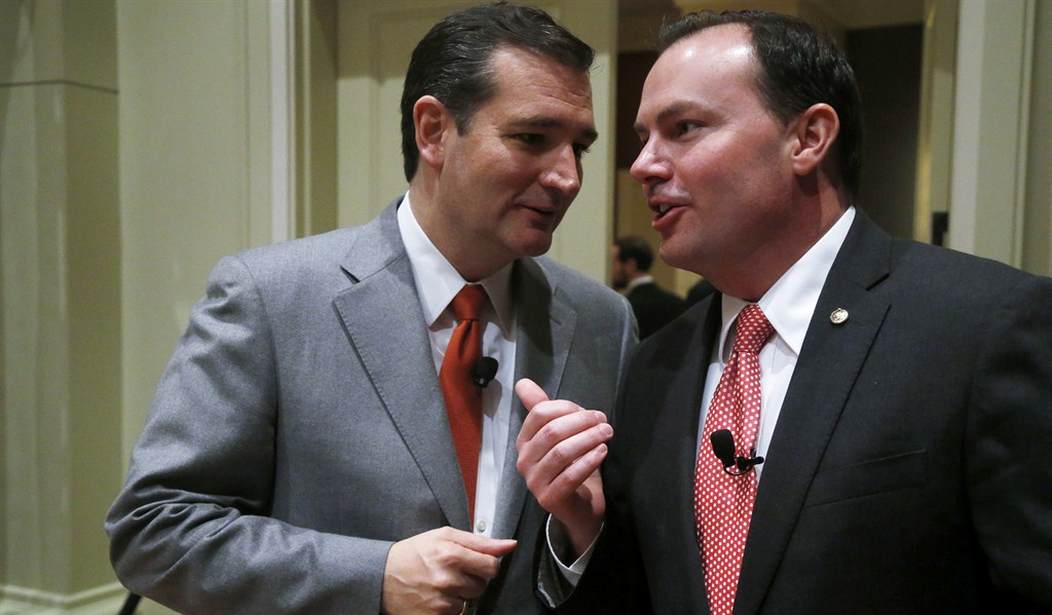
Senators Mike Lee of Utah and Ted Cruz of Texas and Congressman Luke Messer of Indiana have introduced a bill that could produce positive, badly needed change in American K-12 education.
The bill allows for Title 1 education funds “to follow low-income students to any public or private school of their choice.”
What is Title 1 funding?
It goes back to President Lyndon Johnson’s War of Poverty. In 1965 Johnson signed into law the Elementary and Secondary Education Act. Title 1 of the Act provides federal funds to schools with the target being low-income students. The motivation is special assistance to students from low-income families to close the performance gap in reading and math between them and national averages.
Needless to say, as is characteristic of all government programs, the real performance gap is between taxpayer funds that are spent and what politicians and bureaucrats who enact and direct these expenditures claim the spending will achieve.
The most basic logic provokes questions about how, even with the best of intentions, tens of billions in federal spending distributed to school districts and schools nationwide, with the intent of helping tens of millions of low income students, can be allocated effectively and efficiently and how success can be measured.
Not surprisingly, if we break the picture out racially, with racial gaps representative of income gaps, meaningful gaps remain in reading and math scores between black and white students and Hispanic and white students. Although there appears to be a somewhat narrowing of these gaps over recent years, large gaps persist.
Also, not surprisingly, over the years since enactment of the Elementary and Secondary Education Act, there have been many changes in how Title 1 funds flowing from the federal government are distributed.
The most recent significant round of changes occurred under President Bush’s No Child Left Behind program, where the attempt was made to introduce school performance standards that would condition receipt of federal funds.
Title 1 federal spending currently stands at $14.4 billion.
Now we have a new widely publicized report, released from the Southern Education Foundation, showing that the percentage of poor students in our public schools is growing and in the 2012-2013 school year, the percentage of poor students is now the majority, amounting to 51 percent.
What the report does not point out is the dramatic changes in racial make up of students in our public schools nationwide.
Data from the National Center for Education Statistics, compiled by the Pew Research Center, shows that the percentage of white students in 2014 dropped to an estimated 49.7 percent from 63.4 percent in 1997 and the percentage of minority students increased from 36.6 percent to 50.3 percent.
Pew projects that by 2022, the percentage of white students in public schools will be down to 45.9 percent and the minority percent will increase to 54.7 percent.
Meanwhile, as of 2009, the percentage of white students in private schools stood at 73 percent.
The bottom line is that with all the howling from those on the left about income gaps in America, those gaps are likely to just get worse and more persistent as increasing percentages of low-income minority students are trapped in government and union controlled public schools, that those on the left want, and higher income white students escape into better neighborhoods and to private schools.
Enter Senators Lee and Cruz and Congressman Messer with a courageous proposal.
Yes, let’s care about educating our children, and about helping disadvantaged poor, minority students. But liberate these kids from control of bureaucrats and unions.
Let America’s most powerful institution, freedom, operate in education.
Let low-income parents send their children to school wherever they want and provide tuition assistance with the Title 1 funds allocated for that child. Freedom is the best help government can provide to low-income parents.



Join the Conversation
VIP members get the ability to comment on articles.