





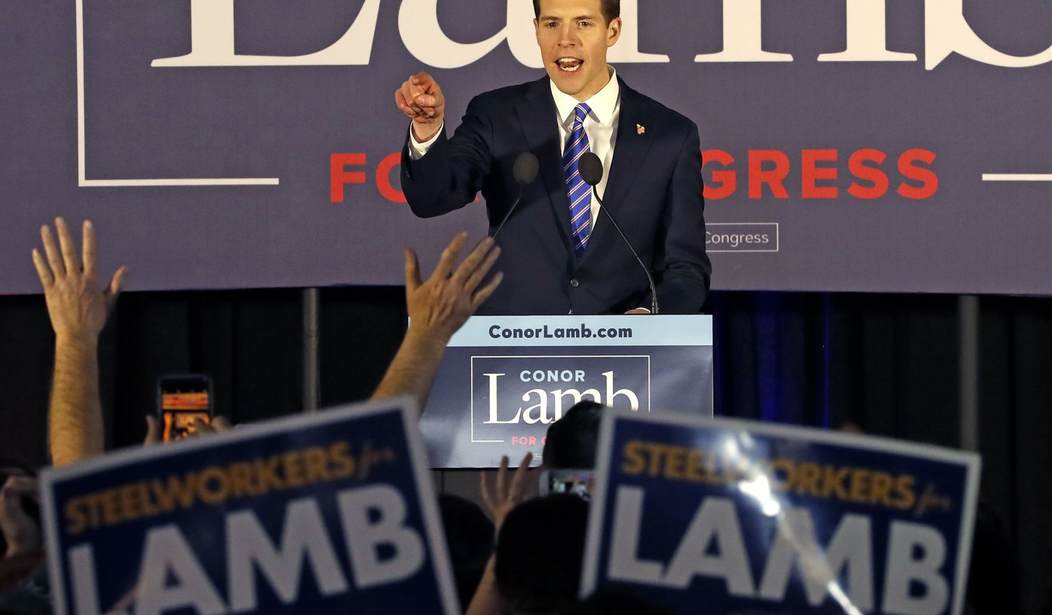
WAYNESBURG, Pa. -- When Democrat Conor Lamb stood in a sea of United Mine Workers of America here in early March, it was clear that Democrats had found a way to bring the blue-collar worker back into their camp.
Lamb would go on to win the special election in this southwest Pennsylvania district that President Donald Trump had carried by nearly 20 points.
The two questions now: First, will that union support materialize in other races and thus elect Democrats in swing districts across the country? Second, why had Democrats lost these blue-collar areas in the first place? What was missing from Democrats' messages over the past 10 years that made blue-collar workers stay home or vote Republican?
The union voters I talked to said they didn't feel that Democrats in Washington had their back, that they were too progressive, too strident and way out of touch with their lives and needs.
"I think there were two factors at play with how union members, many union members turned away from the Democratic Party," said Mike Mikus, a Western Pennsylvania Democratic strategist who does campaign work for several unions. "One is that they didn't feel their economic issues needed to be addressed and pretty frankly it was in the Democratic playbook to play to the center meant taking on organized labor rather than any other Democratic constituency."
Democrats would try to appear moderate, Mikus says, by placing other interests on the left ahead of organized labor.
Unions can play a big role in the race to snag Pennsylvania congressional seats away from Republicans. They already have a head start thanks to the February decision by the Pennsylvania State Supreme Court to interfere in state redistricting -- a blatant political maneuver that ultimately led to gerrymandering the seats heavily in favor Democrats.
Mikus says: "I think that organized labor could help in races in this state that may not be on the radar for a lot of people right now. Districts like the 16th in northwestern Pennsylvania, the 14th in southwestern Pennsylvania."
Mikus doesn't discount that Republican Rick Saccone was unique in the race. In contrast to Tim Murphy, the Republican congressman who held the seat until he resigned in scandal, Saccone had a history in the state Senate of not being a friend to labor. Murphy had always had good dialogue with local organized labor and worked with it on issues that were important to it.
Lamb wisely seized on this and reminded those voters he had their back on Social Security, Medicare and pension issues.
In a race decided by a handful of votes, it is clear they could have easily been the difference. The blue-collar voters haven't left Trump, but they are up for grabs in a congressional election. They have proved themselves to be happy to vote for someone who inspires them to show up and vote, and isn't tied to the establishment of either party.
"Look, I think this year is different," Mikus said. "In 2016, (Democrat-tied labor leaders) tried different tactics that obviously did not work. Whereas as we saw in the special election in Pennsylvania 18, they knocked on doors, they had conversations with their members, listened to their members, and educated them about the issues, from an issues standpoint rather than a partisan standpoint. And it had some clear, positive results for organized labor."
Mikus calls the relationship between Democrats and the union vote in 2016 a joke.
"What we did that year did not work, and we need to fix it," he says. "And the most interesting part of this was organized labor. It's not some new technology, it's not some fancy gadget that is fixing it for them. It's them doing what they've always done in the past, turning out their own vote and that of the communities they live in, person to person."
Labor can help deliver a Democratic victory, but it's also incumbent upon the candidates to fit the district in which they are running, Mikus warned. "Everybody from Democratic activists to the parties, both at the local, state and national level, needs to understand that a candidate has to reflect their district," he said.
And if they're able to do that, allies like organized labor can help them get across the finish line.

Join the Conversation
VIP members get the ability to comment on articles.