





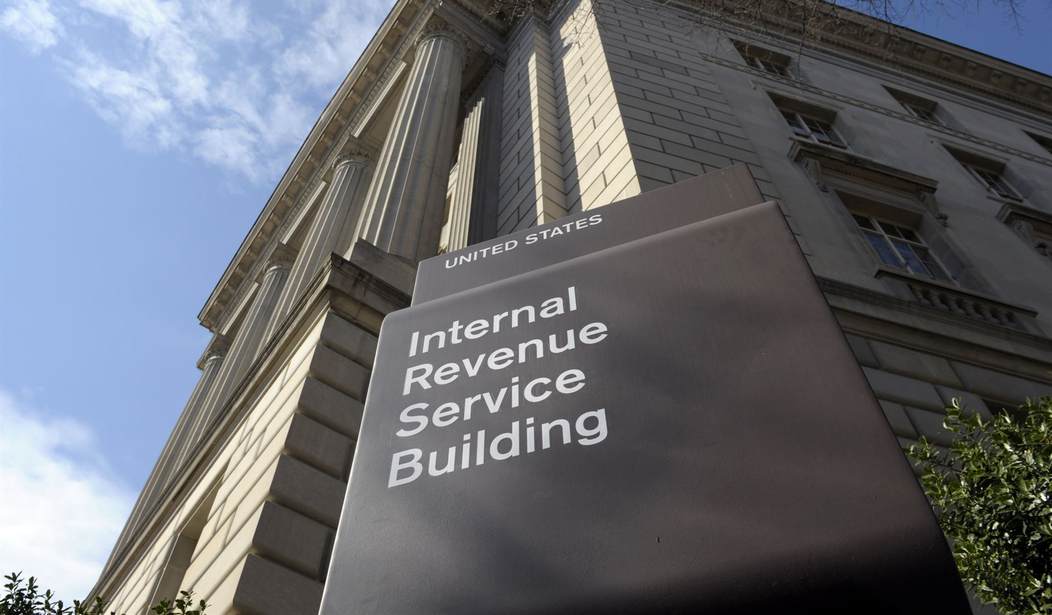
With Tax Day in the rearview mirror, any proposed legislation to reform the beleaguered Internal Revenue Service (IRS) is unlikely to attract much fanfare. But, the Taxpayer First Act of 2019, sponsored by Reps. John Lewis (D-Ga.) and Mike Kelley (R-Pa.), is no ordinary IRS reform bill. In addition to laudable reforms such as the creation of an Independent Office of Appeals to save taxpayers from litigation, the legislation enshrines an agreement that lets software companies take the lead in free filing programs for low-income taxpayers. In other words, the IRS won’t be building out its own “free” tax-filing software anytime soon.
This legislative language caught the attention of Democratic members of Congress, including California Democrats Reps. Katie Hill and Katie Porter, who have urged the bill’s sponsors to remove provisions related to free-filing software from the bill. But these lawmakers should be leading the fight to keep the IRS from entering the filing business, rather than the other way around. IRS filing would mean that low-income taxpayers would get the raw end of the deal as deductions are not-so-mysteriously minimized. Until the tax code is further simplified, lawmakers need to do everything in their power to keep government hands off of taxpayers’ hard-earned paychecks.
Imagine giving the IRS the power to file millions of Americans’ taxes every year. Not surprisingly, the agency prides itself in claiming as much cash as possible from vulnerable Americans, rule of law be damned. Even after the Supreme Court decided in 2010 that the government needs a warrant before forcing email providers to turn over messages, the IRS continues to insist that they can read emails that are older than 180 days without one in order to help carry out existing operations.
Agency officials are hardly going after large, questionable deductions that are the most easily fudgeable. In fact, according to University of Texas and Ekiti State University, so-called “tax expenditures [i.e. 401(k) contributions and charitable deductions] do not appear to prompt IRS enforcement activities…” But, a recent analysis shows that Americans residing in poor, rural counties are more likely to be audited than the well-to-do inhabitants of wealthy coastal counties. The most audited county, Humphreys County, Mississippi (where the median income is under $24,000) is hardly Beverly Hills. Whenever the IRS has increased resources or political discretion granted by Democrats in power, they audit more and target the Americans who don’t have the time or legal resources to defend themselves.
Everyone remembers the more well-publicized instances of IRS overreach, such as when the agency selectively targeted conservative groups’ tax-exempt statuses during the Obama administration. E-mails revealed the investigations were done for blatantly political reasons. And then there are the less-publicized cases that are no less scary, like when IRS agents stormed into a Dallas wedding boutique in 2015, abruptly shut down the business, and sold off the entire inventory (worth $615,000) due to an IRS claim that the couple owed less than $35,000 to the government.
With these skewed priorities and a tendency to focus on vulnerable Americans, one can only imagine the IRS taking liberties with the tax returns of hard-working taxpayers and “erring on the side of caution” (i.e. higher taxes) in taking the (now doubled) standard deduction. But, contrary to the claims of some lawmakers and reporters, the bill doesn’t quite bar the IRS from creating their own service.
ProPublica reporter Justin Elliott argued in his April 9 “exposé” that the bill effectively bans the IRS from creating its own free-filing software, but the analysis missed some much-needed detail. Rep. Kelly hit back in an op-ed, pointing out that if the IRS wants to create their own system in the future, they just need to notify their private competitors and give them the ability to terminate existing agreements with the IRS. But no one would dispute that the bill keeps private companies in charge of free-filing software, a status-quo that leads companies such as TurboTax and Intuit to offer free services to low-income filers; an arrangement that has saved tax filers millions of dollars.
As the Taxpayer Advocate points out, this system of free privately-provided filing is not without its issues and the web interface guiding taxpayers to free service should be cleaned up. But at least private companies have an incentive to win consumers over (and upgrade to paid services) with features that minimize, not maximize, taxes paid. In an ideal system, taxes would be simple enough where payers wouldn’t need to go through any middleman to file. Tax reform in 2017 simplified the code, and future reforms can build off of that success. But in the meantime, lawmakers should keep the government from preying on pocketbooks.
Ross Marchand is the director of policy for the Taxpayers Protection Alliance.

Join the Conversation
VIP members get the ability to comment on articles.