





PARIS -- Does anyone else miss the days when intelligence agencies were permitted to operate covertly and it was considered totally acceptable that they do so? It seems to be increasingly the case that Western countries are perceived as less than democratic if their traditionally covert operations aren't fully transparent to the public.
It's one thing for wrongdoing to be exposed and debated, but the bar for what constitutes "wrongdoing" by intelligence agencies has been lowered so drastically that it has become prohibitive. It's being publicly defined by the loudest whiners who believe in transparency at all costs. Whether or not critics realize it, transparency makes intelligence work ineffective. They're called "secret services" for a reason. Yet anyone who argues in favor of keeping them "secret" these days is considered a statist or an enemy of freedom instead of someone who realizes their inherent value in a democracy.
Pursuant to last October's terrorist attack on Canadian Parliament, Prime Minister Stephen Harper has introduced new legislation that would, among other things, authorize the Canadian Security Intelligence Service to remove suspected terrorists from flights or interfere with their banking transactions. The new legislation would also increase the sharing of national security information across federal agencies.
In response, top-secret-intelligence leaker turned Russian resident Edward Snowden told Toronto students via video this week that Canada is setting up a "new secret police." Snowden could stand to learn a thing or two from his Russian hosts and their world-class counterterrorism operatives, who managed to quietly kill Islamic terrorist leader Doku Umarov of the North Caucasus after he took credit for orchestrating pre-Olympic civilian bombings.
Snowden was joined by journalist Glenn Greenwald, who pointed out how rare terrorist attacks are in Canada. And why might that be? Perhaps it's because of the good work of the intelligence services. How is the lack of terrorism in Canada a valid argument against the secret services being dedicated to stopping it?
Would critics prefer that the intelligence services stand down in the face of "new secret police" labeling? Would citizens prefer to find out just how effective intelligence agencies have been by seeing whether there's an increase in terrorism after the agencies have been handcuffed?
If there are any cases of "secret police" action, no doubt the Snowdens and Greenwalds will be there to tell us about it. But why preemptively predict malfeasance or attribute malice?
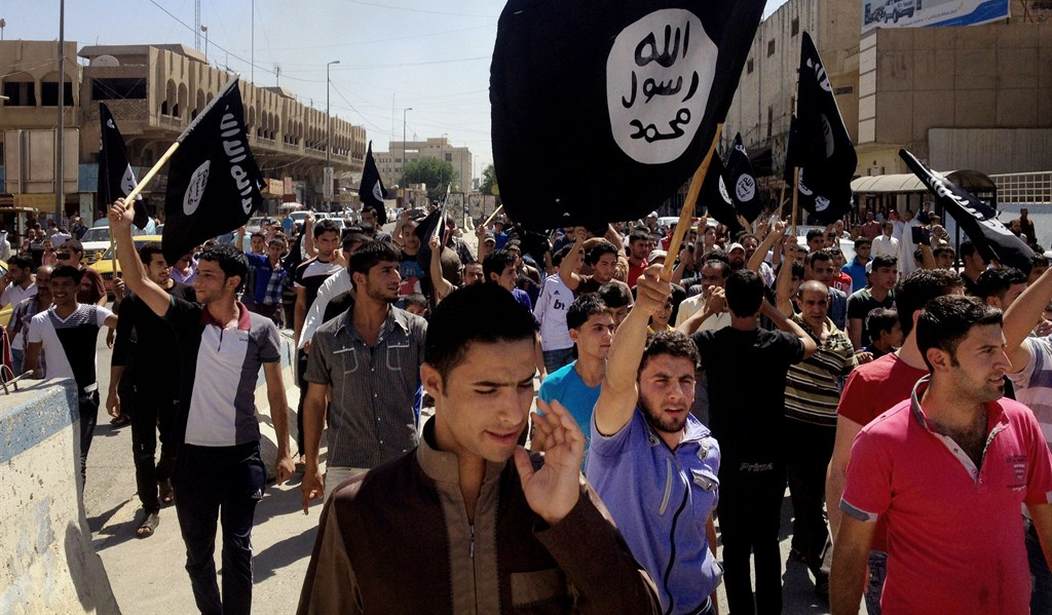
Transparency is the nemesis of operational security -- even for the enemy. Perhaps the only good thing about Islamic State terrorists trying to set up a caliphate is that it moves what has largely been an ideological ghost-war against terrorism without geographic boundaries back into the realm of a definable battlefield. Likewise, the Islamic State propaganda and recruitment machine that operates over social media allows for the group's methods and tactics to be readily viewed, researched and assessed so that their vulnerabilities can be exploited.There are two fronts on which terrorism has to be defeated: Enemy combatants must be stopped on foreign soil, and domestic sleeper cells must be wiped out. In both cases, operational secrecy is the key to eradication.
The Washington Post recently ran a story detailing a successful secret counterterrorism operation in which the CIA and Israel's Mossad cooperated in the assassination of Hezbollah commander Imad Mughniyah with a car bomb in Damascus, Syria, in 2008. Mughniyah was believed to have helped plot terrorist operations against the U.S. and Israel dating back to the 1980s, including the bombings of the U.S. Marines barracks and the U.S. Embassy in Beirut, Lebanon, in 1983, and the hijacking of TWA Flight 847 in 1985. More recently, Mughniyah had been deemed a threat to U.S. troops operating in Iraq.
So Mughniyah was quietly snuffed out. The operation was a total success -- right up until it was splayed out in the Washington Post because someone apparently couldn't keep the details a secret. The only difference between that operation and targeted drone strikes is that drones carry out the same sort of assassinations even more publicly -- and we're worse off as a result. A lack of discretion in counterterrorism matters, whether it's highly visible drone kills or the ridiculous idea of trying enemy combatants captured on a foreign battlefield in Western courts of law, means that you're soliciting a counterproductive reaction and attention to your modus operandi.
So let the secret services do their job -- in secret. The opportunity to point fingers at a legitimate screw-up will always exist.

Join the Conversation
VIP members get the ability to comment on articles.