





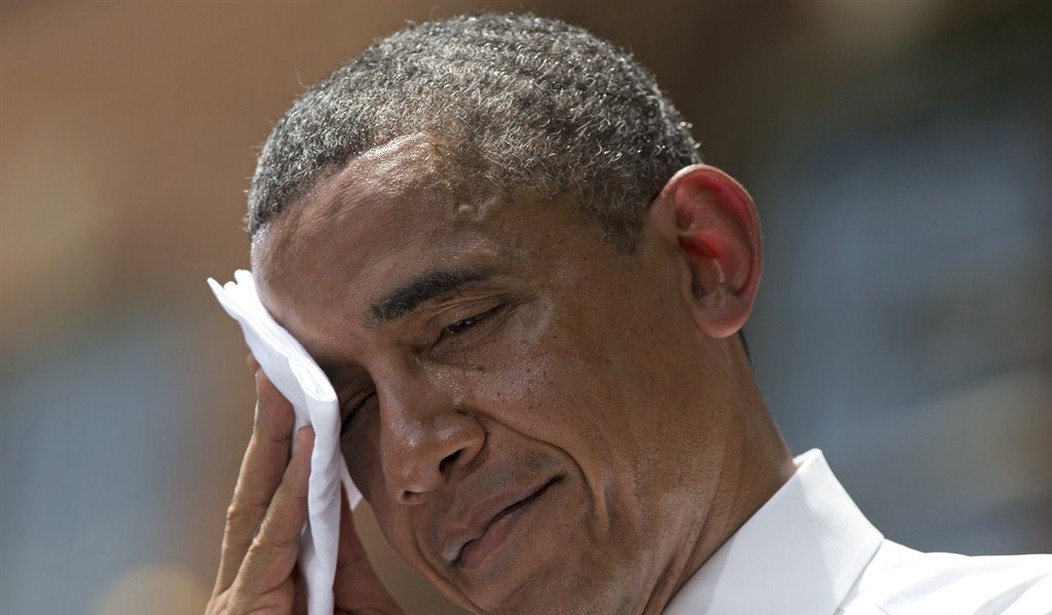
Despite another seemingly good jobs report, President Obama’s approval rating is lower than a snake’s belly, and Republicans could retake the Senate in November.
Missteps in the Ukraine, Iraq and elsewhere weigh on voters’ minds but the economy—especially the jobs picture—is not what Obama cracks them up to be.
Obama has managed to increase employment only 5.5 million or about 4 percent but measured against other presidents facing similar challenges, his performance is hardly stellar.
Ronald Reagan was dealt a tough hand by history too. He weathered a deep recession early in his first term and unemployment peaked at 10.8 percent. He cut spending and taxes, eliminated much unnecessary government meddling in business and boosted employment 8.4 million, or more than 9 percent, his first five and a half years.
The 5.9 percent unemployment rate is a fraud. The percentage of adults working or seeking employment is the lowest since women began entering the labor force in larger numbers in the 1970s.
Were the labor force participation rate the same today as when Obama took office, unemployment would be about 10 percent. Wages remain stagnant and household incomes are well below pre-crisis levels.
The earnings of women, especially young women, have fared somewhat better than men, but increasingly women have to support their husbands, sons and boyfriends. One in six men between the ages of 25 and 54—too old for college and too young to retire—are without jobs. Many have quit looking altogether and sit around the house all day watching ESPN.
Perhaps that’s Hillary Clinton’s vision of a better America, but it doesn’t sit well where most people live.
The economy is creating too many low paying jobs in industries like retailing and hospitality, but industries where men find good paying jobs are languishing. Since Obama took office, manufacturing has shed 400,000 jobs and construction nearly 500,000.
New labor saving technologies are a problem but so are lousy liberal policies.
American manufacturers continue to cede markets to Chinese imports but Obama’s policy of appeasement toward Beijing precludes taking any meaningful actions against its unfairly subsidized products—actions advocated by Democratic economists like Peterson Institute founder Fred Bergsten and Noble Laureate Paul Krugman.
The housing industry has not recovered to pre-recession levels, because Millennials want to live closer to their jobs—not in distant suburbs—but cities with excessively burdensome building regulations and bureaucracies, unrealistic minimum wage laws, heavy taxes, and underperforming public schools make building housing affordable for young families awfully difficult.
The president likes to blame Republicans in congress for slow economic progress, but the congress gave him much of what he wanted during his first five years—Obamacare, Dodd-Frank financial reforms, more generous Pell grants and student loans, solar energy and high speed rail projects, and higher taxes on upper income Americans.
Most of that has not worked out very well—too many American employers are eager to take even more jobs to Asia or relocate their corporate headquarters outside the United States. Now House Republicans can’t really be blamed for wanting different approaches, and in November they will be validated when voters return a GOP majority to the lower house.
Republicans are ahead in most key Senate races but whether they pick up the six seats needed to win a majority will likely be known early on election night when results come in for North Carolina. If Democrat Kay Hagan holds on, the math gets tough for the GOP.
Senator Hagan, like several other moderate Democrats, has supported the president on the Affordable Care Act and key budgets and taxes votes but has managed to maintain a business-friendly record on regulatory issues.
Still like other moderate Democrats, the very first vote Hagan would cast in the 114th Congress would be to re-elect Harry Reid majority leader. How that could ever help create jobs or reverse the failing fortunes of working families is beyond this economist’s ability to comprehend.
Peter Morici is an economist and professor at the Smith School of Business, University of Maryland, and a national columnist.



Join the Conversation
VIP members get the ability to comment on articles.