







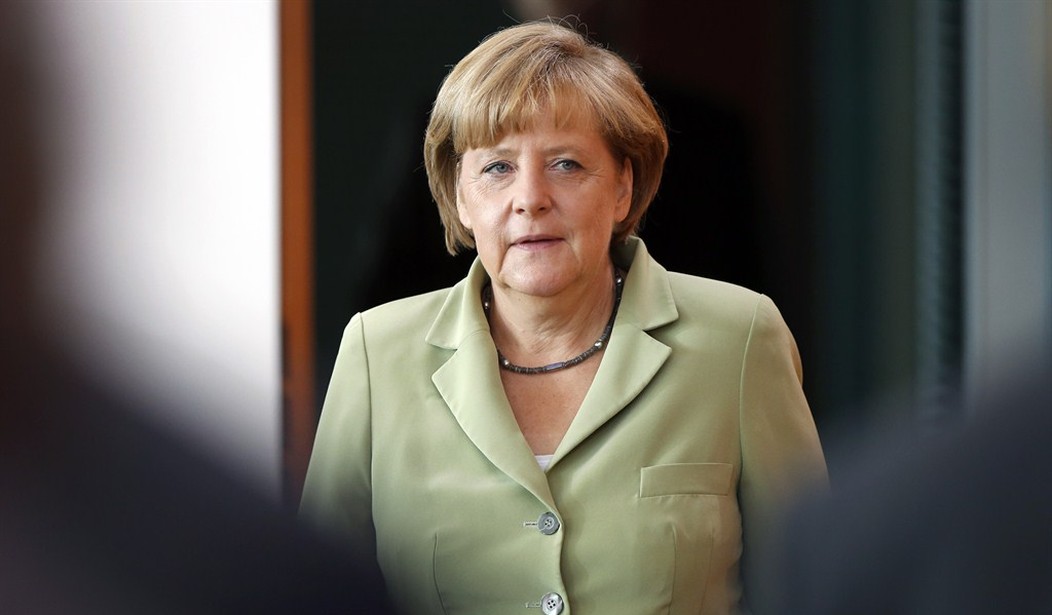
On August 11th, German media got hold of and published an
internal Bundesbank report which maintained that Greece would likely need
further relaxation of the terms of its rescue bailouts. The report contained
revelations that could be deeply embarrassing to the government of Angela
Merkel that has maintained forcefully that German taxpayers would face no
further commitments. The revelations could potentially be a potent weapon for
her political opposition in the upcoming election. More broadly, the
revelations reveal a wide gap between economic reality and the sunny face of EU
optimism.
The Bundesbank is widely considered to be the epicenter of Germany's notoriously conservative banking culture. Unlike central banks in other countries, such as the Federal Reserve and the Bank of England, the Bundesbank has been known to operate with actual political autonomy. The leaked report claims that the Greeks have been "barely satisfactory" in their compliance to prior commitments. In addition, the Bank harbored "substantial doubt" that Greece would be able to implement the required reforms and that Greek approval of the process resulted from "political necessity".
In late September Germans will go to the polls for a national election to determine the makeup of their national parliament, the Bundestag. Some believe that Chancellor Merkel's ruling coalition may be vulnerable. There is a very strong, and growing, belief among rank and file Germans that the country should reject open ended financing of southern EU members who cannot put their fiscal houses in order as the Germans themselves have managed to do. This sentiment puts them at odds with the current ruling coalition in Berlin.
The 'dream' of a European Union demands the eventual yielding of complete sovereignty to the EU by every member nation. But each nation faces a different cost/benefit. To the southern tier nations access to the sound euro currency, appeared as a huge opportunity. It most cases EU membership was well supported on the street. For the major core 'contributing' nations the rationale was not so simple. It varied not just between member nations but also between their leaders and people.
The French leaders and even those of the 'Buffer' countries saw the EU as hobbling Germany and preventing intra-European war. German elites have long been the most extreme champions of EU integration, which would doubtless put the Germans in a position of extreme power across the entire Continent. However to such a political victory will require sacrifices that the German "volk" do not appear willing to make.
Having failed three times to secure an empire by force of arms, German political leaders have seen the EU as the chance of achieving one through financial muscle. Apparently, they are prepared to pay vast sums of money to achieve this grand aim. This aim is no doubt supported by domestic industrialists who are keen to secure captive markets.
Germany's EU dilemma stems from the unwelcome fact that the chronic debt problem of the so-called 'periphery' nations, occurred before the EU has secured full sovereignty over its member states.
Greece gained admittance to the EU and remarkably to the Eurozone by falsifying its financial statements. But, desperate to gain memberships and credibility, the Eurozone ignored the deception. Most members felt also that Germany and the ECB would cover any shortfalls.
However, when the Greenspan asset boom collapsed with the U.S. and EU economies sinking into recession, periphery nations of the Eurozone were unable to resort to their habitual currency debasement. They financed their ballooning deficits with massive hard euro currency loans.
As the recession deepened, Eurozone banks were ordered, and other EU banks 'encouraged' to invest in the euro denominated debt of periphery Eurozone member nations. As conditions worsened, bailouts were organized by the so-called Troika of the EU, ECB and IMF. There can be little doubt that these negotiations were controlled by the Germans, who ended up with the lion's share of the liability, 122 billion euro to be exact.
The Germans however demanded an Austrian School-influenced austerity solution to the profligacy of the periphery Eurozone members. As expected, this policy drove Europe into corrective recession, which appears to be having some success.
In this light the Bundesbank revelations could not come at a worse time for Merkel. German citizens, encouraged by opposition politicians, are becoming increasingly angered by their political leaders apparent willingness to sacrifice their hard earned wealth to gain European dominion.
In an attempt to calm the situation, Merkel said, "We don't have to do everything in Brussels." While many correctly recognize this shift as a desperate means to shore up electoral support, this dramatic apparent rebuff of the key EU dream of centralized power could temporarily weaken international support for the Eurozone. If the Chancellor retains power, look for such rhetoric to dissipate. However, a rebuff at the polls could severely reshuffle the current balance of power in the entire Eurozone, and begin a shift towards decentralization.
A small nation, Greece continues to threaten the euro, the EU dream and with them the German drive for empire. This should remind us all how fragile the experiment remains.
Subscribe to Euro Pacific's Weekly Digest: Receive all commentaries by Peter Schiff, John Browne, and other Euro Pacific commentators delivered to your inbox every Monday!
Order a copy of Peter Schiff's new book, The Real Crash: America's Coming Bankruptcy - How to Save Yourself and Your Country, and save yourself 35%!
John Browne is a Senior Economic Consultant to Euro Pacific Capital. Opinions expressed are those of the writer, and may or may not reflect those held by Euro Pacific Capital, or its CEO, Peter Schiff.


Join the Conversation
VIP members get the ability to comment on articles.