





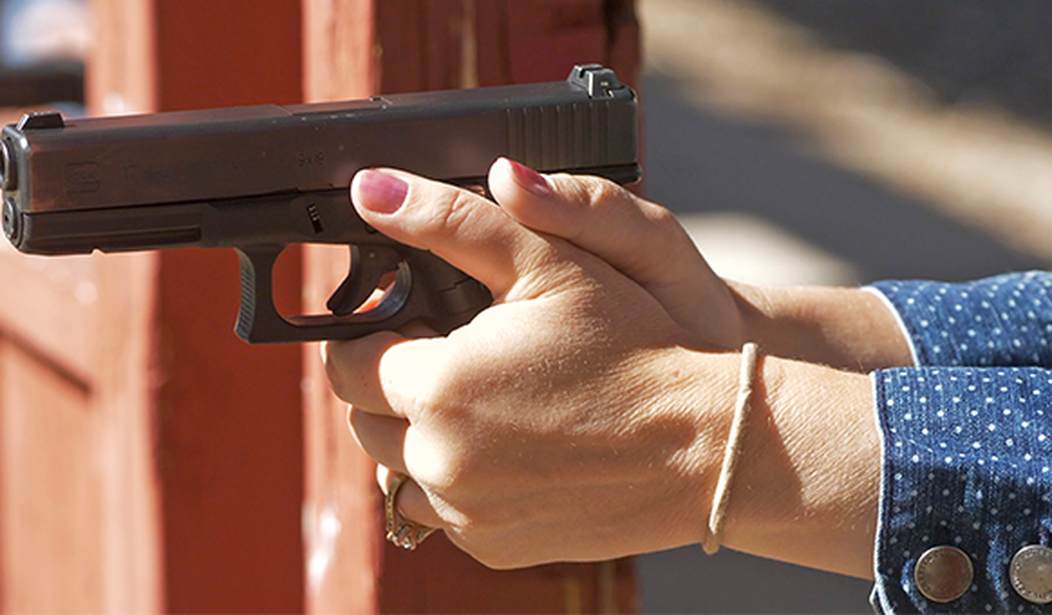
The Second Amendment is the most litigated right in the Constitution right now. That's not because the doctrine is unclear. It's because several states have decided the Supreme Court's rulings are inconvenient and have organized their legislative calendars around working past them.
Three decisions settled the questions that mattered. Heller (2008) established an individual right to keep and bear arms. McDonald (2010) applied it to the states. Bruen (2022) replaced the interest-balancing framework lower courts had used to uphold almost every gun restriction with a historical-tradition test: regulations must be consistent with America's historical tradition of firearm regulation, and the government bears the burden of proving they are. Those are the holdings. California, New York, and Illinois have spent the years since treating them as starting points for the next workaround.
I'm a Marine Corps OCS graduate with 30 years in institutional investment management. My son graduated from West Point and flies Army aircraft. My brother retired from Army Special Forces as a Green Beret. I'm also a Life Member of the NRA. My family has carried firearms professionally in service to this country. That's the credential here.
Before Bruen, lower courts evaluated gun restrictions through a two-step interest-balancing test. At step two, courts routinely deferred to the government's stated public safety interest, and most restrictions survived. Bruen eliminated that deference. Justice Thomas's 6-3 majority required governments to identify historical analogues to their modern restrictions, regulations from the founding era or Reconstruction period that are relevantly similar in purpose and burden.
The state response wasn't compliance. California passed new restrictions on carry in expanded 'sensitive places,' effectively rebuilding a near-total carry prohibition through categories Bruen had acknowledged as legitimate but hadn't quantified. New York passed the Concealed Carry Improvement Act days after Bruen was decided, adding dozens of sensitive places and a 'good moral character' requirement that functioned as the old discretionary system under a new name. Illinois added similar restrictions. Each law was designed to produce litigation, not to comply.
United States v. Rahimi (2024) gave the states some judicial support. Chief Justice Roberts wrote for an 8-1 majority that Bruen required only a "relevantly similar" historical regulation, not a historical twin. That's a real qualification that gives regulators more room. It didn't restore the pre-Bruen deference. The government still has to find historical analogues. Several of the state restrictions enacted after Bruen are still being litigated, and the outcomes aren't certain.
One gap the Court's decisions left is the patchwork problem, and it's one Congress can close directly. A law-abiding gun owner with a valid concealed-carry permit from her home state may find that permit legally worthless the moment she crosses into a state that doesn't recognize it. The constitutional right doesn't change at the border. The state's willingness to honor it does.
The National Constitutional Carry Act (H.R. 645) requires states to recognize valid carry permits issued by other states. The model is driver's license reciprocity: every state recognizes every other state's license to drive. No state demands re-licensure when a visitor crosses the border. No constitutional principle places the Second Amendment below the right to drive in the hierarchy of rights that interstate travelers can exercise. H.R. 645 applies the same common sense to a constitutional right that has been affirmed by the Supreme Court three times.
Polling on this question is consistent: support for carry reciprocity routinely exceeds 70% in surveys that cross party lines. The people most burdened by the current patchwork are law-abiding gun owners who travel, precisely the population least likely to be a public safety concern. The argument for H.R. 645 doesn't require a particular view on gun policy. It requires only recognizing that a constitutional right the Court has repeatedly upheld deserves the same cross-state recognition we give to a driver's license. We don't make visitors from other states pass a new driving test. We shouldn't make them surrender a constitutional right at the border either.
The Founders wrote the Second Amendment for citizens. My brother was a weapons Sergeant in Army Special Forces. My son carries one now as an Army aviator. Both of them took an oath to defend a Constitution that includes the rights they exercised as their profession. The civilian version of that right doesn't need a cultural argument. Three Supreme Court decisions have supplied the constitutional one.
It’s worth stating clearly: the population most affected by the current patchwork isn't the population any legislator is actually worried about. Permit holders went through background checks, paid fees, completed whatever training their state required, and carry legally because they've done everything asked of them. That population doesn't become dangerous at a state line, and it wasn't dangerous before it crossed one. The argument for H.R. 645 doesn't require defending anyone's right to break the law. It requires only that Congress treats a constitutionally protected right with the same cross-state respect we give to a driver's license.
The question is whether the states that disagree with those decisions will eventually accept the answer, or whether they'll spend the next decade generating litigation designed to look like compliance while achieving the same practical result as defiance.
Jay Rogers is a financial professional with more than 30 years of experience in private equity, private credit, hedge funds, and wealth management. He has a BS from Northeastern University and has completed postgraduate studies at UCLA, UPENN, and Harvard. He writes about issues in finance, constitutional law, national security, human nature, and public policy.
Editor's Note: Do you enjoy Townhall's conservative reporting that takes on the radical left and woke media? Support our work so that we can continue to bring you the truth.
Join Townhall VIP and use promo code FIGHT to receive 60% off your membership.


Join the Conversation
VIP members get the ability to comment on articles.