





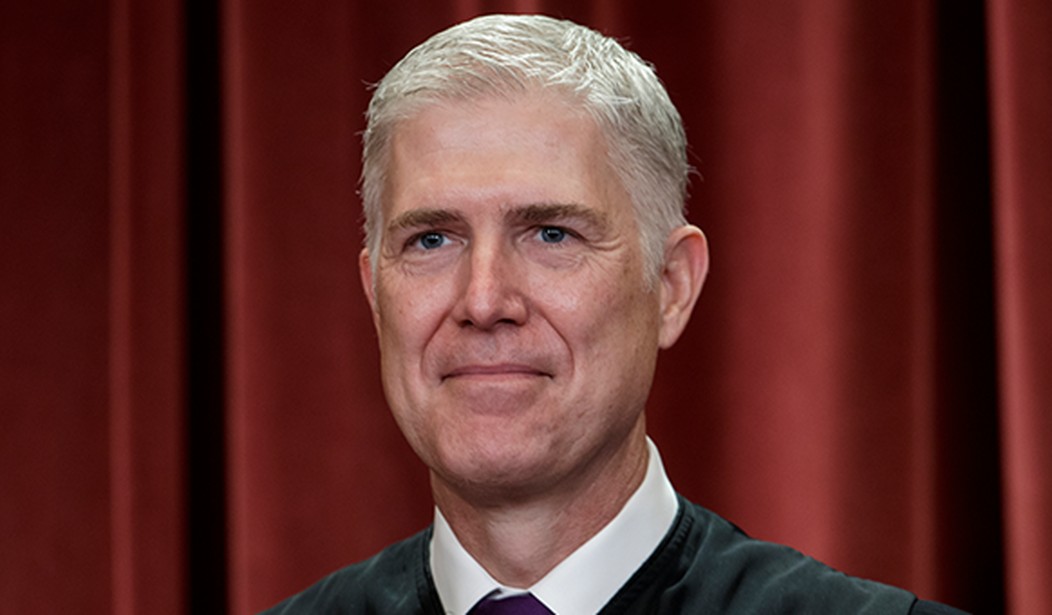
"Almost anyone can be arrested for something," Justice Neil Gorsuch observed in a case the Supreme Court decided last month. Mike Chase, a lawyer who has been cataloging federal offenses on his @CrimeADay Twitter feed for five years, likewise notes that "the specter of criminal liability hangs over all of us all the time."
Chase's new book, "How to Become a Federal Criminal: An Illustrated Handbook for the Aspiring Offender," is a work of humor. But he is making the same disconcerting point as Gorsuch: When statutes authorizing criminal penalties are so numerous, obscure, complicated, broad and vague that no one can say for sure what the law requires, the average citizen despairs, while bullies and tyrants rejoice.
"When the country was founded," Chase notes in a recent Reason TV interview, "there were basically three federal crimes," treason, counterfeiting and piracy. Today there are so many that no one has managed to count them. "The Department of Justice said that they couldn't do it," Chase says. "They tried in the '80s and quit." It's true.
Some estimates put the total in the vicinity of 300,000. "If I do one a day," Chase deadpans, "I'll only need like 800 years to finish the job."
The vast majority of those federal offenses are regulatory violations that can be prosecuted as crimes. They include some of the more amusing examples highlighted in Chase's book, such as selling runny ketchup, removing llama manure from a quarantine facility and making an "unreasonable gesture" at a passing horse in a national park. But such regulatory wrinkles are not so funny if you happen to be prosecuted for accidentally operating a snowmobile in a National Forest Wilderness Area after getting lost in a storm or for discharging oil into a U.S. waterway because of a mistake someone else made.
Part of the problem is that Congress has ceded its lawmaking powers to executive branch agencies while broadly declaring that violations of whatever regulations they happen to write can be treated as crimes. Chase argues that prosecutable offenses should be limited to those specifically identified by Congress.
Overcriminalization also afflicts state legal codes, as the Manhattan Institute has documented. In 2016, the five states the think tank had just studied were adding new crimes to their books at an average rate of 42 per year.
These proliferating crimes can result in custodial arrests, with all the attendant risk, humiliation and loss of liberty, even when the offense is not punishable by incarceration. In 2001, the U.S. Supreme Court upheld the handcuffing, booking and jailing of a woman who violated a Texas law requiring drivers and front-seat passengers to wear seat belts.
The Texas group Just Liberty found that "more than 45,000 Texas drivers were arrested at traffic stops for Class C misdemeanors" in 2018. That amounted to less than 1 percent of traffic stops, which suggests the potential for retaliatory arrests. Other things being equal, the people arrested for conduct that rarely leads to arrest will tend to be the people who annoy cops the most.
In the case that the Supreme Court decided last month, a man arrested by Alaska state troopers for disorderly conduct (a vaguely defined, highly elastic crime) argued that they violated his First Amendment rights because they were punishing him for expressing opinions that offended them. Most of the justices thought that claim was blocked because police had probable cause for the arrest.
Justice Gorsuch dissented, saying, "criminal laws have grown so exuberantly and come to cover so much previously innocent conduct" that such a rule would pose a grave danger to freedom of speech. "If the state could use these laws not for their intended purposes but to silence those who voice unpopular ideas," he warned, "little would be left of our First Amendment liberties, and little would separate us from the tyrannies of the past or the malignant fiefdoms of our own age."
Jacob Sullum is a senior editor at Reason magazine. Follow him on Twitter: @jacobsullum.


Join the Conversation
VIP members get the ability to comment on articles.