





Federal officials say Mateen bought the weapons he used in the attack -- a Sig Sauer MCX rifle and a Glock 17 pistol -- at a local gun shop on June 4 and 5, respectively. He passed a background check, meaning he did not have a criminal or psychiatric record that legally disqualified him from owning a gun.
The day after the massacre, Senate Democrats argued that the gun sales could have been prevented by the Denying Firearms and Explosives to Dangerous Terrorists Act, a bill the Senate rejected last December. "If that legislation had been in effect," said Sen. Chuck Schumer (D-N.Y.), "it is very likely that the FBI would have been able to block the purchase of these two weapons."
The bill, introduced by Sen. Dianne Feinstein (D-Calif.), would authorize the attorney general to block a gun purchase by someone "appropriately suspected" of involvement in terrorism based on "a reasonable belief" that he "may" use the gun "in connection with terrorism." If Schumer is right that Mateen met those criteria when he bought his guns, that only shows how easy it would be to strip people of their Second Amendment rights under Feinstein's bill.
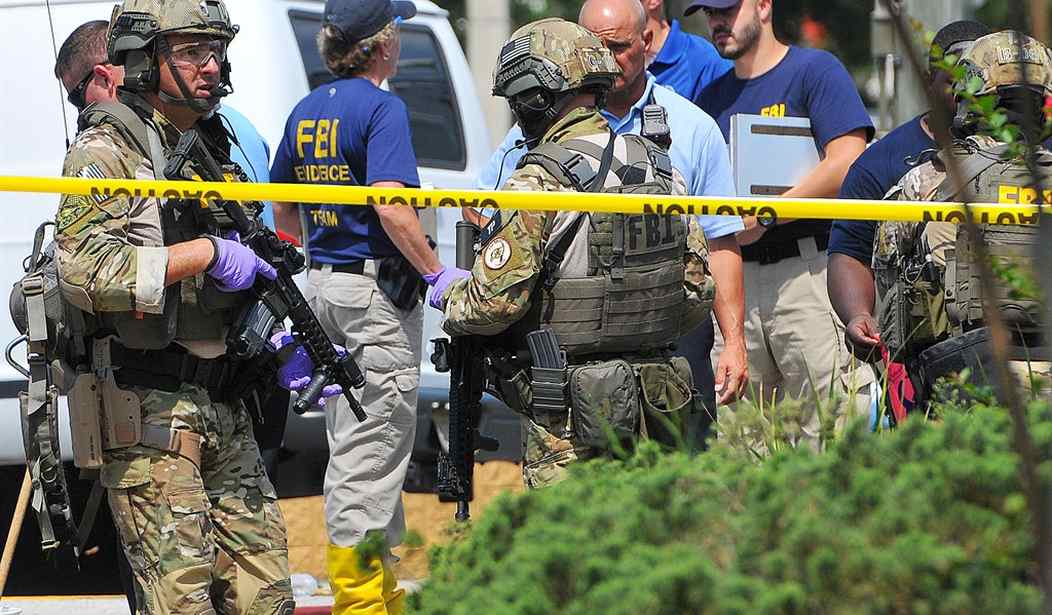
In 2013, the Los Angeles Times reports, Mateen, the son of Afghan immigrants, "was questioned by FBI agents after they were told he had made inflammatory comments that co-workers worried were sympathetic to terrorists." Nothing came of it: "The FBI agents determined that Mateen had not broken any laws and closed the investigation."
The following year, the Times says, the FBI interviewed Mateen again "because agents had learned he had contact with an American who later died in a suicide bombing in Syria." They "closed that investigation because they concluded the contacts with the suicide bomber had been minimal."
At that point, according to the Times, Mateen's name was removed from the FBI's so-called Terrorist Watchlist. It is hard to see how a man who was cleared twice by the FBI and was no longer on a watch list could have been "appropriately suspected" of involvement in terrorism, or even how the FBI would have noticed that he was buying a gun.
But it's true that Feinstein's bill makes it very hard to reverse such a determination. A would-be gun buyer who tried to get his Second Amendment rights back might not be able to see the evidence against him, and he would lose as long as the government could show it was more likely than not that the attorney general's decision met the statutory criteria. The upshot is that people could permanently lose the right to keep and bear arms based on nothing more than unsubstantiated suspicions.
The American Civil Liberties Union, which estimates that the FBI's watch list includes more than one million names, describes it as a "virtually standardless" dragnet that "ensnares innocent people and encourages racial and religious profiling." Although the list is supposedly limited to people "reasonably suspected of being involved in terrorist activity," something like two-fifths have "no recognized terrorist group affiliation."
The presumptive presidential nominees of both major parties nevertheless think people on watch lists should not be allowed to buy guns. "If somebody is on a watch list," Donald Trump told ABC News last November, "I would keep them away, absolutely." Hillary Clinton dismisses constitutional concerns, saying, "If you are on that list and you believe you should not be on that list, we have a process to actually raise your objections."
But that process is stacked against people mistakenly linked to terrorism, who are forced to prove their innocence. Americans should not have to dispel secret suspicions before they can exercise their constitutional rights.



Join the Conversation
VIP members get the ability to comment on articles.