





Some 2 million people, worldwide, were on the U.S. government’s Terrorist Screening Dataset (TSDS) as of the beginning of 2024. Among those 2 million people are about 6,000 Americans with suspected ties to international terror groups. Ndiaga Diagne, a naturalized U.S. citizen, was not among the Americans on TSDS’s watchlist.
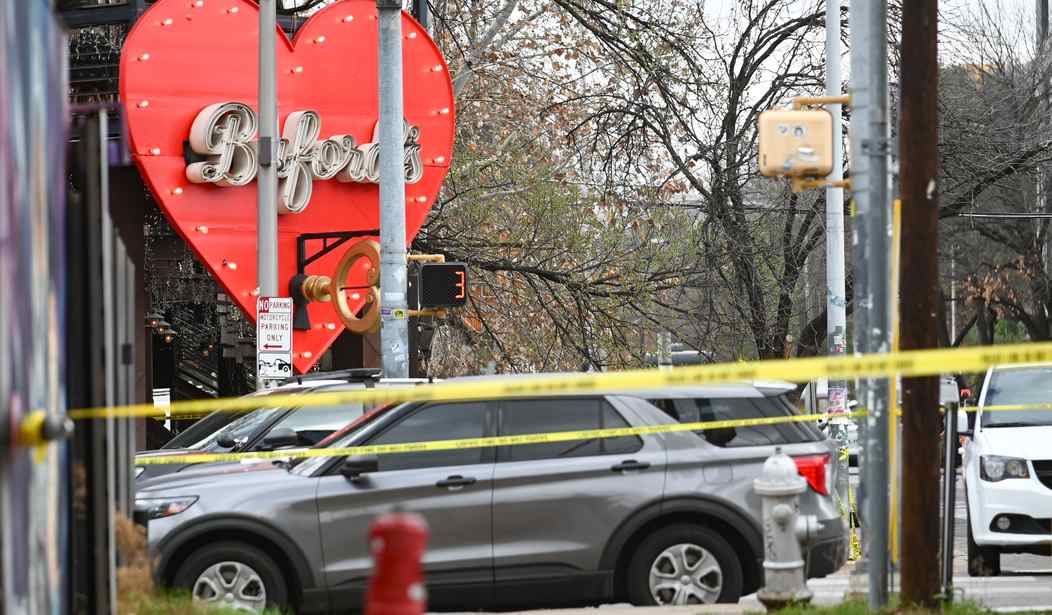
In the early hours of March 1, Diagne opened fire on a bar in Austin, Texas, murdering three people and wounding 13 others. The attack occurred a little more than 24 hours after the United States and Israel launched Operation Epic Fury in response to Iran’s growing threats to regional and international security.
Local and federal law enforcement are investigating the shooting as a “possible terrorist” incident, although the “Property of Allah” hoodie and the t-shirt with the revolutionary flag of Iran he was wearing, along with the Quran found in his car, might provide some clues to his motive.
Then there were his social media posts. “THE ISLAMIC REVOLUTION IS ETERNAL AND HERE TO STAY UNTIL THE END OF TIME, you Zionist and islamophobes can be angry all you want but you can’t do a d--- thing about it, no matter what,” he posted on X last August.
Diagne was not among the 2 million illegal alien “gotaways” who entered the country during the Biden administration and took the trouble to elude the Border Patrol at a time when nearly everyone being apprehended was given a plane ticket to their preferred destination within the United States and authorization to work here. Rather, he was a migrant who was vetted by our government, not once, but three times.
Diagne, a Senegalese national, arrived in the U.S. in 2000 on a B-2 tourist visa. Senegal is not part of the Visa Waiver Program, which means in order to have been issued a visa, he had to present himself to the U.S. Embassy in Dakar, where a consular officer interviewed him and ran a background check before signing off on his visa.
More than six years into his 180-day tourist visa, Diagne became a legal permanent resident after marrying a U.S. citizen. The process of adjusting to green card status entails another round of government vetting, a hurdle he managed to clear in spite of the fact that he had clearly violated the terms of his tourist visa and had been arrested in New York City for illegal vending in 2001.
Finally, in 2013, Diagne became a naturalized U.S. citizen – a step that requires yet another background check. According to media reports, after obtaining his green card, Diagne racked up a “string of other arrests” in New York that were either not uncovered or ignored during this third round of vetting.
No system is ever foolproof but clearly there are holes in the “rigorous” vetting process that applicants for immigration benefits are supposed to undergo. Even under the best of circumstances, it is extremely difficult to carry out meaningful background checks on people who hail from nations whose governments are hostile, corrupt or just downright incompetent.
The consular officer who issued Diagne’s tourist visa, or the embassy staffer in Cairo who granted a tourist visa to Mohamed Sabry Soliman, an Egyptian national who firebombed a Boulder, Colorado, march in support of the Israeli hostages in Gaza last June, may have done the best they could with the limited information available to them. In the past, the benefit of the doubt seemed to work in favor of the applicant over the security of the country.
Steps taken by the Trump administration now shift the element of doubt in favor of protecting the interests and security of the American people, restricting visa issuance to citizens of 39 countries and the Palestinian Authority. On his first day back in office, the president signed an executive order instructing various federal agencies to “vet and screen to the maximum degree possible all aliens who intend to be admitted, enter, or are already inside the United States, particularly those aliens coming from regions or nations with identified security risks.” Most of those countries “continue to exhibit woeful inadequacies in screening, vetting, and provision of information,” states a presidential proclamation issued in December.
Additionally, the State Department announced in February that it has “paused all visa issuances to immigrant visa applicants” from 75 countries. These policy changes affirm that entry to the United States is a privilege, not a right, and that foreign governments must serve as reliable partners in the vetting process.
The imperative to prevent the entry of people with dangerous ideological beliefs or ties to terrorist groups has never been greater, as is the need to find and remove those who are here. By all indications, Diagne was a lone wolf and a rank amateur with gun who, nevertheless, succeeded in murdering three Americans. Far more dangerous are organized sleeper cells that are widely acknowledged to be here because of years of open borders or who slipped through the same large cracks in vetting processes that allowed Diagne to enter the country and eventually become a citizen.
Join the Conversation
VIP members get the ability to comment on articles.