





Whether you consider yourself pro-regulation, anti-regulation, or something in between, chances are you’re in favor of clear, open rules. Whatever the policy a particular government agency is following, it should be transparent to all, right?
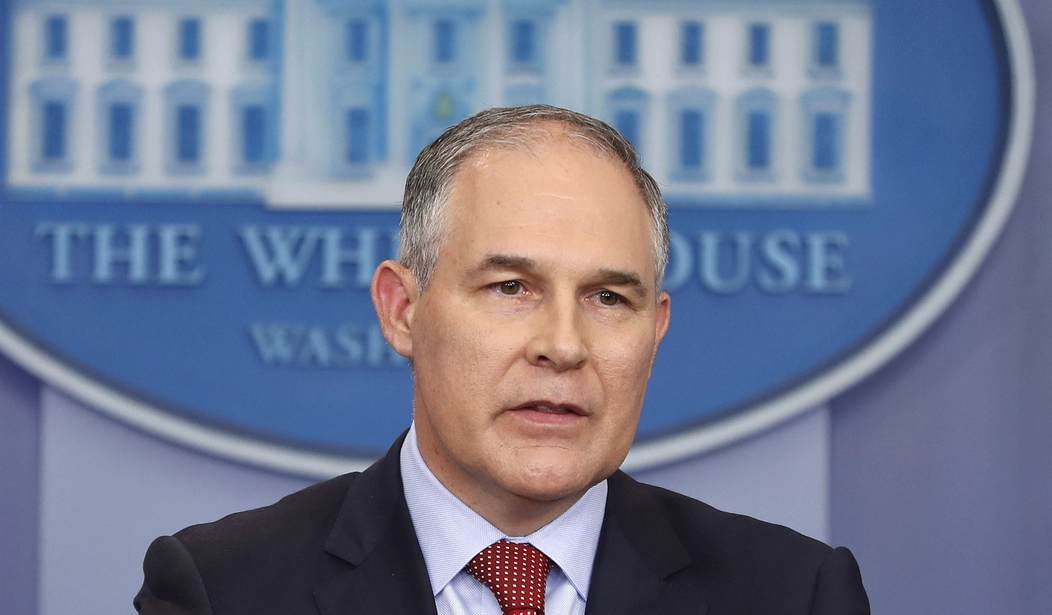
That’s why we should be grateful that Scott Pruitt, head of the Environmental Protection Agency, recently announced the demise of “sue and settle.” It’s a legal strategy that environmental groups have been using for years to impose new regulations quietly and to enrich their allies in the process.
The practice predates the Obama administration, but under the 44th president, “the sue-and-settle gambit was raised to an art form,” Rob Gordon and Hans von Spakovsky write in National Review.
“The administration would invite special-interest groups to sue the EPA over a regulation that it wanted to change but couldn’t, at least not expeditiously,” they add. “Instead of fighting the lawsuit, the EPA would then almost immediately surrender, agreeing to settle. Inevitably, the settlement entailed consenting to whatever outrageous demands were being made by the agency’s handpicked ‘adversary.'”
A clever little trick, and one that completely circumvented the way regulations are supposed to be imposed. Rules that affect the way an agency does business, especially ones that could saddle Americans with significant costs, are intended to be proposed and debated openly. The public is supposed to have ample opportunity to comment before being subjected to new rules that can affect their livelihoods.
But under “sue and settle,” that’s not the case. Agencies simply caved, unable or unwilling to fight the lawsuits. Worse, they would agree to make changes that went beyond what the law required, paying out tens of thousands of taxpayer dollars to cover the plaintiff’s legal bills.
The EPA waved the white flag in 60 such lawsuits between 2009 and 2012. The result, according to Gordon and von Spakovsky: more than 100 new federal rules estimated to impose $100 million in annual compliance costs.
Think those costs are merely eaten up by the companies that get hit with them? Not a chance. They pass those costs on to you and me and all the other consumers out there.
Small wonder that Pruitt felt the need to put a stop to this. Nor is it any great mystery that on Oct. 25, the House of Representatives passed the “Sunshine for Regulations and Regulatory Decrees and Settlements Act of 2017.” It requires agencies to publish any sue-and-settle consent decrees and legal settlement agreements at least 60 days before they're filed in court.
Incredibly, some critics actually want us to believe that shining a spotlight on the sue-and-settle sham is a bad thing. The Sierra Club, for example, denounced Pruitt’s actions and called “sue and settle” a “myth” that is allegedly “a way of refusing to enforce our nation’s critical environmental laws.”
Rep. John Conyers Jr. (D-MI) meanwhile, condemned the House bill, claiming it would threaten public health and put safety protections at risk. Wrong. It would do nothing of the sort. It would, instead, make it so that rule changes don’t happen in the dark, away from public eyes, which is apparently where those who like “sue and settle” prefer it.
Adds Rep. Jerrold Nadler (D-NY): “The real conspiracy here is the Republican plot to destroy the regulatory state.” Please. Making sure that regulations are decided in public, with actual input from the people who would be affected, would “destroy” the regulatory state? Step away from the hyperbole, if you don’t mind.
What are critics afraid of? If the rules and regulations being imposed via “sue and settle” are defensible, if they can be shown to promote public safety, then there’s nothing to fear from a little sunshine.
But if they aren’t, then the jig is up. Thanks, Mr. Pruitt.


Join the Conversation
VIP members get the ability to comment on articles.