






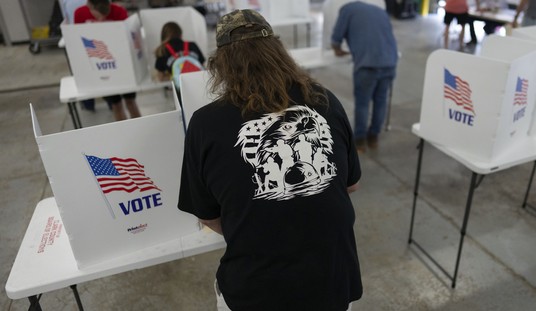
Iraq's most recent elections were a sight for sore eyes. Independent observers agree they were free, fair and valid. Iraqis voted less for sectarian parties and more for individual candidates. Extremists did not fare well. Sunnis, Shias and Kurds all participated in large numbers. Iraq is today - and at least for now -- more free and democratic than almost any of its Middle Eastern neighbors. Those who think Arabs incapable of decent governance may yet be proven wrong. Those convinced that pluralism is impossible to sustain in a Muslim majority country also may turn out to have been mistaken.

All that is encouraging for people like me who believe freedom must either advance or retreat, and that Americans have a vital interest in which way the global tide turns. But even more important is the fact that Iraq's third national elections since 2005 were an unmitigated disaster for both al-Qaeda and Iran's proxies in Iraq. Their forces have been decimated - the U.S. military under the leadership of Generals David Petraeus and Ray Odierno saw to that. They were not able to either influence or intimidate large numbers of voters. Nor did they manage to stage terrorist attacks to disrupt the voting. (Four years ago, by contrast, there were nearly 300 such terrorist attacks.)
When America's sworn enemies are frustrated in their ambitions anywhere else in the world, it counts as a battle won.
That doesn't guarantee victory in the larger conflict against militant Islamists. It does, however, allow America's military to wind down in Iraq more quickly than would be the case had conditions on the ground not improved.
Iraqis are increasingly taking responsibility for their own security, with American troops providing strategic and logistics support, as well as advanced training. According to current plans and agreements, America's combat forces will be out of Iraq's cities by this summer and out of the country by 2011. My guess is that President Obama will stand up to those on the Left who are pressuring him to withdraw more precipitously. Yes, he promised to get out of Iraq within 16 months of entering the Oval Office. But he also promised a "responsible and phased" withdrawal. The two promises were never compatible as anyone with any sense of the situation understood.
Obama has retained Robert Gates as Secretary of Defense, Gen. Petraeus as chief of Central Command and Gen. Odierno as commander in Iraq. We can be certain they are advising him against doing anything that would put hard-won progress in jeopardy. If Obama didn't intend to listen to them, why would he keep them on? If their efforts were going to be undermined, why would they stay?
Meanwhile, they and other Pentagon officials also are advising Obama on Afghanistan. According to recent reports, they are recommending that the new administration limit its objectives - that the U.S. focus on eliminating Taliban and al-Qaeda safe havens both in Afghanistan and neighboring Pakistan, ensuring that neither country can be used as a terrorist base. For Afghanistan more broadly, the goal would be stability - rather than democratic nation-building.
It's hard to argue with this approach, first because it is always better to promise less and achieve more, rather than promise more and achieve less (a rule the Bush administration too often failed to grasp).
Second, crushing the Taliban and al-Qaeda is a top-line U.S. strategic interest. Helping foster a free, democratic and prosperous Afghanistan is a more challenging and much longer-term project.
Another lesson we should have learned by now: America cannot export democracy. The best we can do is support democrats where we find them and when they are bold enough to fight for freedom. If there are no serious Afghan democrats, there will be no Afghan democracy no matter what we do. But if there are serious Afghan democrats, we have a duty to assist them, and it's in our enlightened self-interest to do so.
That said, if Petraeus, as expected, develops for Afghanistan a counterinsurgency strategy -- COIN, for short - as he did for Iraq, it will include building local governing capabilities and promoting economic development. Without that, it's not COIN.
In Iraq there is change and in Afghanistan there is the anticipation of change - though perhaps not the change some of Obama's supporters expected. That's a reason for hope.


Join the Conversation
VIP members get the ability to comment on articles.