





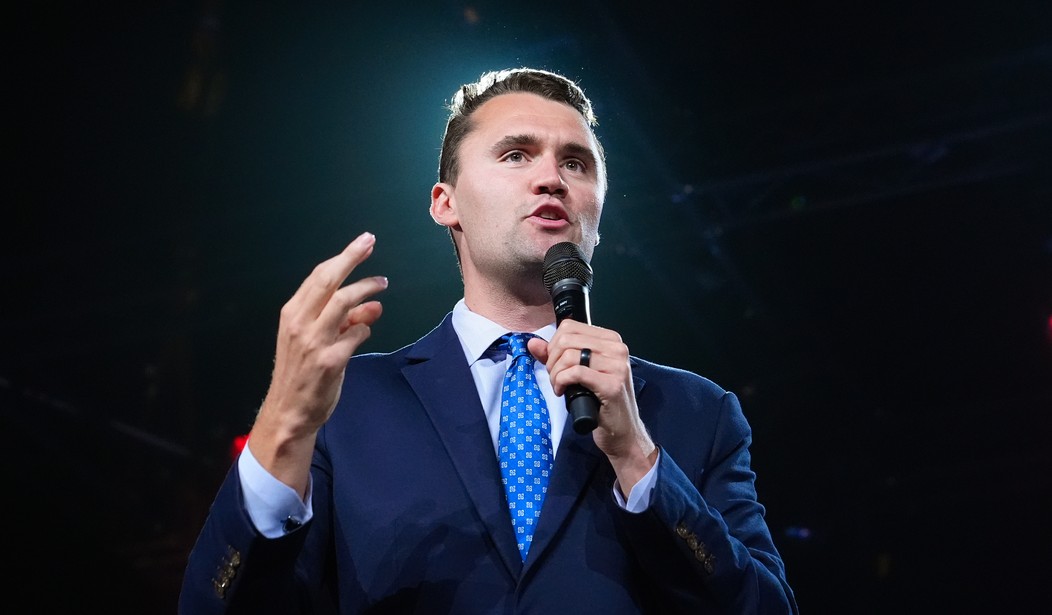
The tragic assassination of Charlie Kirk in September 2025 sent shockwaves through the young conservative and Christian movements he helped energize. His death left thousands of young believers, many of them new Christians, without one of their most influential voices. I fear this will contribute to what researchers describe as “arrested spiritual development,” where initial enthusiasm for faith doesn’t translate into deeper spiritual maturity.
Research on the stages of faith development suggests that a significant portion of believers remain in earlier stages of spiritual growth throughout their lives. Now that this current generation of young adults is experiencing a wave of new believers, the great risk for the Church will be that too many remain comfortable, never pushing forward into the challenging but transformative journey toward meaningful spiritual growth.
While I’m not a neuroscientist, my extensive research into spiritual maturity has led me to surprising discoveries about the connections between our biological design and our capacity for continuous spiritual growth and transformation. The research reveals something profound: God has wired our very neurology for transformation.
These connections between faith development and brain science are too important to ignore, especially when a generation of young believers desperately needs a roadmap for moving from spiritual infancy to mature faith.
The Crisis at the Heart of the Modern Church
We live in a time when countless believers find themselves saved but stuck—sitting in the pew week after week, yet never growing, never thriving, never maturing spiritually. This crisis lies at the heart of the modern church: Christians who have accepted Christ but have no idea what comes next, who remain spiritual infants year after year, decade after decade. The anxiety, disconnection, and purposelessness that plague even those within our churches are not random afflictions but byproducts of spiritual stagnation.
Research shows that when people accept Christ but don’t follow His teachings in their daily lives, their mental and physical health is detrimentally affected. Studies indicate that individuals who identify as religious but have low engagement with religious practices and community show different health patterns from those who actively practice their faith.
The Duke University Center for Spirituality, Theology and Health has conducted extensive research on religion and mental health outcomes. Its reviews, spanning decades of research, consistently find that higher levels of faith-based involvement are associated with lower rates of depression and anxiety. In my work with believers over four decades, I have observed that those who maintain active spiritual practices report better coping with life stressors.
Research from various institutions has explored the relationship between religious practice and behavioral outcomes. Studies examining religiosity and risk-taking behaviors have found that active religious participation often correlates with lower engagement in certain risky behaviors, though the relationship is mediated by factors such as community support, moral frameworks, and personal accountability.
The Science Behind the Mental Health Crisis
In my pastoral experience working with believers over four decades, I have observed that individuals who struggle to integrate their faith into daily life often report difficulties with decision-making, sleep patterns, and impulse control, though these experiences are highly individual and influenced by many factors beyond religious practice alone.
Research in the psychology of religion suggests that congruence between professed beliefs and lived practice may contribute to psychological well-being, while significant discrepancies between belief and behavior can create what psychologists call “cognitive dissonance,” an internal tension that some studies associate with increased stress and reduced well-being.
When we fail to grow in our faith, we experience the same kind of dysfunction as a brain that remains frozen in infancy. Just as our physical brains are designed to develop beyond infancy, enabling us to learn how to talk, walk, and connect meaningfully with others, our spiritual lives are designed for continuous growth and transformation.
The remarkable truth is that your brain, with its billions of neural connections and remarkable adaptive capacity, bears witness to a Creator who designed you for a deep and meaningful relationship with Him. As the psalmist declared, you are “fearfully and wonderfully made” (Psalm 139:14), engineered at the cellular level for spiritual connection and growth.
Why This Matters Now
This younger generation stands at a crossroads. They’ve watched violence silence a voice that called them to action. They’ve seen hatred attempt to extinguish the fire of truth-telling and bold faith.
And in this moment, the enemy of their souls whispers a lie: that speaking up is too dangerous, that standing for truth costs too much, that maybe it’s safer to stay small and silent.
Don’t you dare believe it.
Charlie Kirk’s legacy wasn’t built on playing it safe; it was forged in the conviction that this generation was made for something extraordinary. And that conviction didn’t die on a Utah campus on September 10. It multiplied. Because here’s what darkness never understands: You cannot kill an idea whose time has come. You cannot silence a movement when God Himself is authoring the story.
My prayer is that this generation will rise from these ashes stronger, bolder, and more convinced than ever that they were born for such a time as this. My hope is that as they explore the stunning connections between neuroscience and biblical truth, they’ll discover something that fear can never touch: You were designed by a God who doesn’t make mistakes, wired for a purpose that cannot be thwarted, and called to do immeasurably more than you could ever ask or imagine (Ephesians 3:20, paraphrased).
The world needs this generation to know God—not just know about Him, but to encounter His presence with such power that they become unstoppable. The world needs them to rise up with the kind of courage that can only come from understanding who and Whose they truly are.
I want to encourage them: This is your moment. Don’t waste it. Don’t shrink back. And whatever you do—don’t stay silent.
Chuck Coker, PhD, DMin, SPHR, is the founder and CEO of LifeThrive Performance Systems, an organization dedicated to helping individuals and teams realize their God-given potential. His latest book, “A God-Shaped Mind: The Neuroscientific Path to Spiritual Maturity,” from which this op-ed was adapted, was released by Forefront Books on June 2.
Editor's Note: Do you enjoy Townhall's conservative reporting that takes on the radical Left and woke media? Support our work so that we can continue to bring you the truth.
Join Townhall VIP and use promo code FIGHT to receive 60% off your membership.


Join the Conversation
VIP members get the ability to comment on articles.