





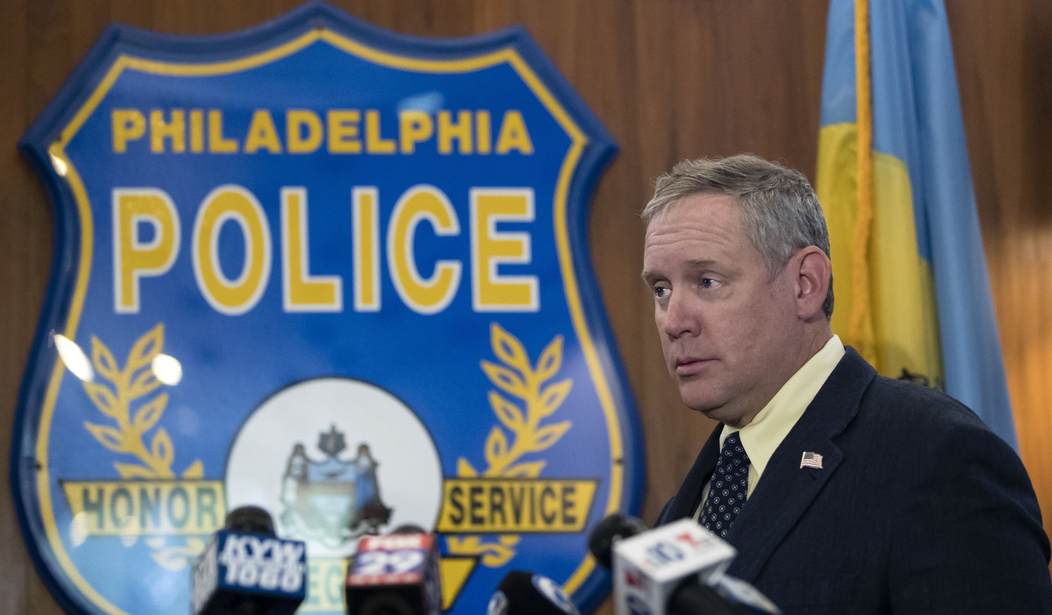
Knee-jerk responses by government officials and legislators following incidents in which individuals have been killed by police can cause lasting harm to law-abiding citizens. One of these dangerous policies is something called the “Driving Equity Act,” which is now the law in Philadelphia.
The Driving Equity Act, known also as the “Driving Equality Act,” is an overreaction to isolated incidents of alleged police misconduct, and reflects a troubling trend going back nearly a decade.
For example, following the 2014 death of Michael Brown during a confrontation with police in Ferguson, Missouri, the U.S. Justice Department launched a drive against a number of local police departments that resulted in “consent decrees” – mandatory edicts that made it demonstrably more difficult for those departments to carry out their mission of protecting the public.
Several years later, the 2020 death of George Floyd at the hands of Minneapolis police officers sparked a nationwide backlash against law enforcement generally which led to policies that reduced or defunded law enforcement agencies, causing problems that resonate still today.
Early this year in Memphis, Tennessee, members of a “special” police unit beat Tyre Nichols to death, a tragedy that revived calls for state and local governments to defund and disband specialized anti-crime units.
Often camouflaged as “restorative justice” or “reimagined policing,” legislative and executive actions to curtail police funding and powers usually are premised on the notion that traditional police powers, including traffic stops, are inherently racially biased and thus have been abused as tools to target members of racial minorities, especially Black men. It is not, however, as if there are not ways to deal with such abuses.
At the federal level, and in every state and municipality across the country, there are regulations as well as civil and criminal laws available with which to hold accountable and punish police officers who violate a person’s civil rights. The conviction and lengthy prison sentence handed down against the Minneapolis police officer whose actions caused the death of George Floyd is the clearest example.
Holding individual officers accountable for unlawfully harming or killing an individual, however, takes time and hard work by investigators and prosecuting officials. Many government officials, especially those in liberal jurisdictions or those beholden to progressive supporters, find it easier and more politically rewarding to paint with a broader brush.
Responding to police misconduct incidents by characterizing an entire police unit, or the whole department as racist, to then justify new “progressive” policies to rein in such abuses, appears the solution of choice for many local and state legislators and executives.
Tossing aside long-standing law enforcement authorities rather than tackling specific incidents of police misbehavior, reflects the adage of throwing the baby out with the bathwater -- leaving the law-abiding public at greater risk than were a more focused, incident-based solution implemented.
There is no better example of this endangering policy than the so-called Driving Equity (or “Equality”) Act signed into municipal law by Philadelphia Mayor Jim Kenney in late 2021.
The law took effect in March 2022 and prohibits city police from stopping vehicles for a number of alleged violations, including driving with an expired registration sticker or operating a vehicle with a missing headlight or taillight. These violations have been used for decades by police departments across the country to protect against unsafe drivers or vehicles endangering the public.
Certainly there have been incidents in which such traffic stops have served as a pretext for a stop not truly warranted, but the laws themselves are sound and do enable police to protect against unsafe vehicles, and at times lead to arrests for far more serious crimes (including murder).
No longer is this the case in Philadelphia (and perhaps soon in Memphis), thanks to Philadelphia Councilmember Isiah Thomas, who sponsored the Driving Equity Act simply because he saw “a history of oppression and institutional racism” in the city’s police department, predicated also on a previous incident in a different city involving a police shooting of a detained driver.
For Councilman Thomas and Mayor Kenney, thus handcuffing the police responsible for protecting the citizens of a major American city, is justified if it results in “reimagining” police behavior that will “reduce the likelihood of negative interactions between police officers and Black drivers.”
Police organizations including Philadelphia’s Fraternal Order of Police (which has challenged, thus far unsuccessfully, the Driving Equity Act), common sense, and the National Highway Traffic Safety Administration analysis of traffic fatality rates on U.S. roadways resulting from limits on police enforcement powers, paint a far more sobering picture of such feel-good policies like Philadelphia’s.
Liberals in charge of “blue cities,” however, would rather traffic fatalities and injuries continue to rise rather than allow police to continue using tried-and-true methods to keep roadways and drivers safe for the rest of us.
Bob Barr represented Georgia’s Seventh District in the U.S. House of Representatives from 1995 to 2003. He served as the United States Attorney in Atlanta from 1986 to 1990 and was an official with the CIA in the 1970s. He now practices law in Atlanta, Georgia and serves as head of Liberty Guard.
Join the Conversation
VIP members get the ability to comment on articles.