





For more than five decades, the degree to which the Second Amendment guarantees an individual’s right to “keep and bear arms,” and the extent to which that right may be “infringed,” have been among the most hotly debated issues demanding the attention of courts and governments at all levels.
Now, two months into 2023 (and 232 years since the Second Amendment’s ratification) things have not changed a bit. In fact, the battle between gun control advocates and Second Amendment supporters is hotter than ever, especially with banks and credit card companies moving toward monitoring firearms purchases.
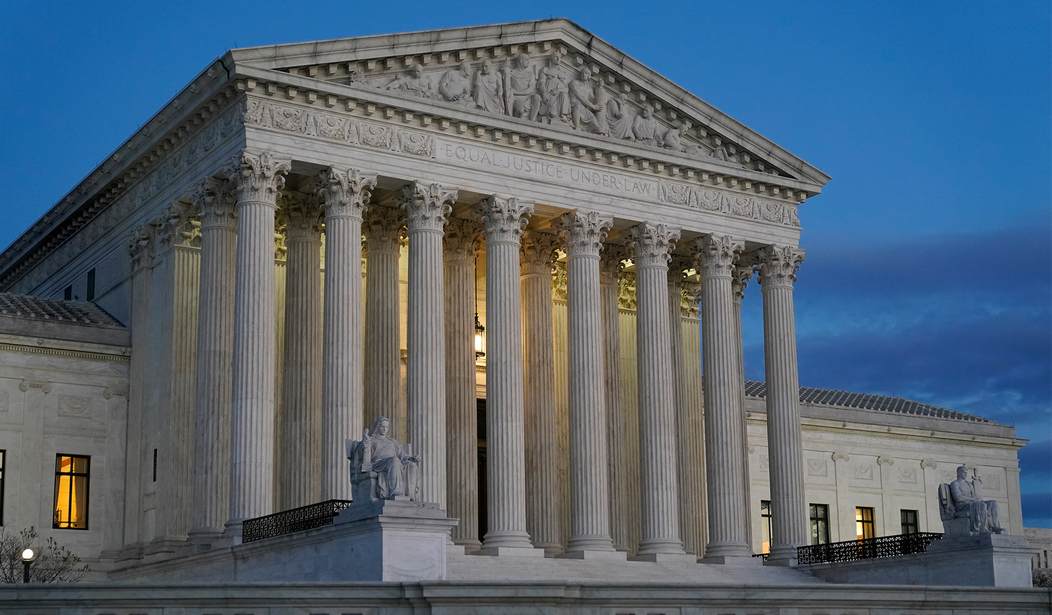
The U.S. Supreme Court threw down the gauntlet to gun control advocates last June, when it ruled in a New York case that arbitrary and absolute government restrictions on an individual’s right to possess a firearm must be evaluated based on the meaning and history of the Second Amendment. Accordingly, only those government-imposed restrictions consistent with such analysis would henceforth be deemed constitutional.
Not surprisingly, the Bruen decision has met with fervent pushback from New York and several other states where gun control proponents wield the levers of government power.
Immediately following that decision, New York openly thumbed its nose at the Supreme Court, enacting a new anti-carry law even more restrictive than the one shot down by the Court. It has become clear the High Court will again be forced to tackle the underlying and fundamental questions surrounding how individuals in 2023 and beyond may possess firearms for self-defense in the real world.
Precisely when the Supreme Court will decide to again weigh in on the Second Amendment (and hopefully slap down the arrogance and insulting manner by which New York and other states are flouting its decision) is unclear. In the meantime, however, many lower federal court judges are demonstrating that they in fact do understand what the Court said and meant in Bruen.
In one of the most recent examples of a federal appeals court interpreting Bruen correctly, a three-judge panel on the Fifth Circuit Court of Appeals, which includes Texas and Louisiana, ruled that a 1996 amendment to the Gun Control Act of 1968 prohibiting a person subject to a domestic violence restraining order from possessing a firearm, violated the Second Amendment and therefore is unconstitutional. Not surprisingly, the Biden Administration’s Department of Justice has indicated it will appeal the Fifth Circuit’s decision.
Prior to the June 2022 Bruen decision, restrictions on possession of firearms such as that considered in last month’s Fifth Circuit decision (United States v. Zackey Rahimi), were widely if not routinely found to be constitutional. As noted correctly by the judges in that case, however, and consistent with Bruen, even if a federal law restricting a person’s right to possess a firearm reflects a “laudable policy goal,” to pass constitutional muster it must also be in accord with the reasoned and historical foundation of the Second Amendment.
Elsewhere, federal courts in more liberal districts such as Chicago continue to uphold other constitutionally suspect firearm restrictions, such as those on AR-15 type semi-automatic rifles and “high-capacity magazines,” simply because governments have decided that they accomplish laudable policy goals. These are decisions that hopefully will soon find their way to the High Court to strike down under the Bruen analysis.
While the Fifth Circuit decision certainly will not be the final word on the matter, it is a refreshing example of consistency and respect for the rule of law within the arena of Second Amendment law.
Not so refreshing are moves by banks and credit card companies to begin implementing a new “merchant category code” to track credit card purchases of merchandise at retail businesses selling firearms and ammunition. The obvious goal of such a plan, despite hollow claims to the contrary by its advocates, is to be able to identify likely firearms owners for law enforcement, and to eventually build a database of such information.
As I noted last September in this publication, congressional Democrats are on record supporting this new tracking policy, and now Discover Financial Services, which handles Discover card purchases, proudly has jumped to the head of the line in announcing plans to gather and aggregate such purchases.
American Express, Visa, and Mastercard are likely to soon follow Discover’s lead, thereby teeing up the next major battle over gun rights in America.
Bob Barr represented Georgia’s Seventh District in the U.S. House of Representatives from 1995 to 2003. He served as the United States Attorney in Atlanta from 1986 to 1990 and was an official with the CIA in the 1970s. He now practices law in Atlanta, Georgia and serves as head of Liberty Guard.


Join the Conversation
VIP members get the ability to comment on articles.