





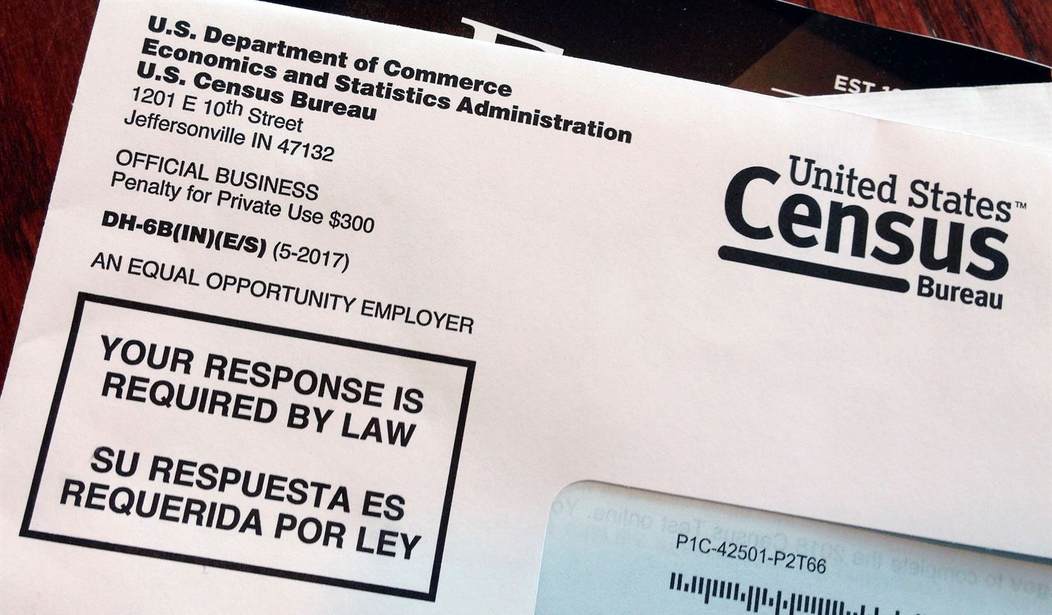
After a contentious debate between southern and northern states about how to count slaves towards the apportionment of congressional representation and taxation, known as the “Three-Fifths Compromise,” our Founding Fathers probably thought the actual mechanism of counting heads to be the easy part. In fact, the origin of what is known today as the U.S. Census comes from a single line in Article 1, Section 2 of the U.S. Constitution.
Today, in the era of Big Government and Bigger Partisanship, the Census is anything but simple and straightforward; and has become a major flashpoint in the increasing politicization of what was intended to be a mere headcount of the population. Rather than a few questions about the number of people in a residence, and basic demographics to create a broad snapshot of the American population at a moment in time, Census questions have expanded to include invasive prodding into citizens’ lives, such as when a person goes to work in the morning, and how much they pay in rent.
However, it is not the intrusiveness of the manner by which the Commerce Department (which administers the census) collects massive information on individuals that has roiled the waters in which this decennial census will be taken. Rather, it is the heretofore a simple question of “citizenship” — which was included in the census as far back as 1820 — that has caused liberals to rise up.
Short-tempered liberals are accusing the White House of ulterior motives in wanting to include the question of “citizenship” on the 2020 Census; never mind that the 2000 census undertaken by the Clinton administration asked this very thing. Democrats now in control of the House are going so far as to hold Attorney General William Barr and Commerce Secretary Wilbur Ross in contempt of Congress for refusing to kowtow to their demands to know “why” such an un-American question as “are you a citizen” is proposed to be asked as part of the census process.
Democrats allege evidence exists that proves the Trump administration might have a political reason to include a question about citizenship on the 2020 census; but this is hardly a relevant point. If the role of the census is to provide a broad understanding of America’s population today, citizenship is a straightforward, if not obvious, question to ask. Therefore, the real debate is not whether the question should be included, but rather if there are any good reasons why it shouldn’t.
Democrats fecklessly argue that the use of citizenship data could assist the GOP in gerrymandering political districts, giving them an electoral advantage – though the same argument could be made against Democrats. Additionally, Democrats fear the citizenship question could scare non-citizens, in particular illegal immigrants, into not taking the Census, leading to undercounting this population and thus, as they likely figure, fewer House seats for them. This clearly is ironic — given that Democrats are the ones accusing Trump of playing politics with the question — but does not impede their campaign in the slightest.
Regardless of motivations, the actual question of citizenship is cut and dry, requiring only a “yes” or “no” answer, and otherwise reveals nothing further about the legal status of a person in the U.S. The idea that the U.S. Immigration and Customs Enforcement agency could use this information to “round up” people is laughable, not least of all because of the practical limitations of doing so. As a question on the Census, citizenship information would provide an objective look at how the demographics of the United States have changed since 2000, when the question was last asked; being, perhaps, the real reason Democrats are so uncomfortable with it.
Without hard counts of citizens versus non-citizens in the United States, policy debates over immigration can be discussed in the abstract, with numbers that fit the narratives on either side of the issue. If we are able to actually determine how many people in the U.S. are citizens and how many are not, programs such as universal healthcare, free higher education, and many others proposed by Democrats take on new significance. Suddenly, taxpayers are able to easily see just how much these programs will cost them in supporting non-citizens.
Adding a citizenship question to the Census would potentially lift the veil on democratic socialism’s true cost to society.
The inclusion of a citizenship question on the Census is one based on objectivity and historical use that spans party lines. The exclusion of the citizenship question, however, is one rife with politics and ulterior motives, but not from the Party being accused today of contempt. Herein lies what Democrats are truly fighting; not the question itself, but the power to keep voters in the dark about the changing demographics (and societal costs) due to their intentional obstruction in working towards fixing problems at the border.



Join the Conversation
VIP members get the ability to comment on articles.