





This is precisely the opposite of how government was supposed to work.
In Federalist No. 46, James Madison posited that members of Congress would "generally be favorable to the States" from which they sprang, rather than toward the federal government. The federal government had to be part-time, given the distances between the states and the time required to travel. Politicians generally ended up in Washington, D.C., for just a few years in the early days of the Republic. That part-time government led to smaller government. Representatives showed up to vote on issues of major import to their constituents; then they went home to live among those who voted for them.
With the dramatic increase in ease of transportation and the incredible decrease in the amount of time required to travel between far-flung areas of the United States, representatives began spending more and more time in Washington and less and less time in their home districts. The first session of Congress, which lasted from March 4, 1789, to March 3, 1791, ran a grand total of 519 days. During the 109th Congress, lasting from Jan. 4, 2005, to Dec. 8, 2006, Congress was in session for a whopping 692 days.
And Congresspeople spent more of that time in D.C. Many Congresspeople spend their weeks in Washington and fly home on weekends, if that often. Approximately eight in 10 Congresspeople spend more than 40 weekends per year in their districts, according to the Congressional Management Foundation and the Society for Human Resource Management.
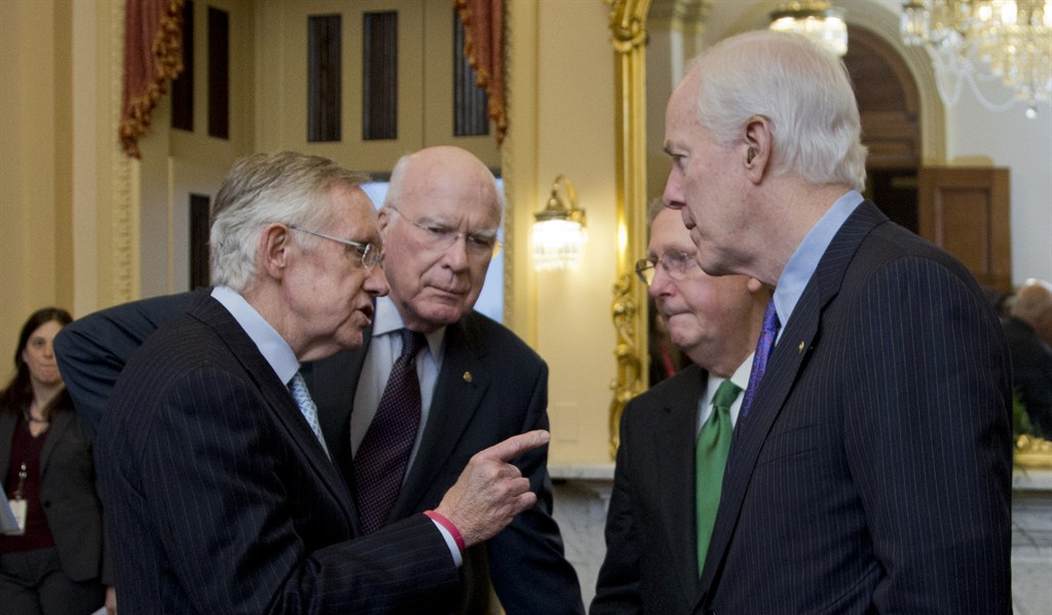
This has a predictable impact: Congresspeople do not fear their constituents. They simply don't see them often enough to fear them. That's why Democrats crammed through Obamacare in the dead of night over the Christmas holiday -- they hoped to escape the wrath of their constituents. Members of Congress have more in common with the people they hobnob in Washington, D.C., than they do with the people they're supposed to represent.
But now there's an easy solution: telecommuting. Why should Congresspeople have to visit D.C.? Thanks to Skype, meetings are possible across the country. Thanks to email, communications are simple. And we've had the technology to vote from afar for decades. Why should we have backroom deals made over cigars thousands of miles distant from those who are affected by those deals? Instead, let's put Congresspeople among those who must choose them -- and let's let them live with the consequences of their decision-making.
If Washington is the problem, then telecommuting could be the solution. It's time to make our representatives answerable to their communities rather than their dinner buddies. And the way to do that is to keep them close, rather than allowing them to roam free with our tax dollars far from home.



Join the Conversation
VIP members get the ability to comment on articles.