





History does not whisper. It warns.
Empires do not collapse because of a single moment of weakness. They erode from within, slowly hollowed out by overreach, moral ambiguity and the false belief that their power exempts them from consequence. The question before us is not whether America is strong. It is whether we are wise enough to endure the burden that comes with being the world's lone superpower.
Scores of empires have come before us. Each one believed itself indispensable. Each one believed its reach was justified. And each one eventually fell, often not at the hands of foreign enemies but by the cumulative weight of unsustainable wars and internal contradictions.
World War I alone shattered the Ottoman, Austro-Hungarian, Russian and Chinese empires, while accelerating the decline of the British and French. The so-called thousand-year German Reich lasted barely more than a decade. The Soviet Union dissolved in 1991 under the pressure of its own excesses. Even Rome, arguably the greatest empire in history, could not escape the trap of perpetual conflict.
Economist Joseph Schumpeter described Rome's fatal flaw with chilling clarity: Threats were constantly manufactured, interests endlessly expanded, and wars justified under the banner of necessity and honor. When no clear enemy existed, one would be invented. The result was a state perpetually at war, convinced it was always acting in self-defense.
We would be foolish to believe we are immune from that pattern.
The United States is still young by historical standards — just 250 years old. In its early years, our conflicts were limited and often defensive. The War of 1812 was fought to protect sovereignty. But as our power grew, so did our ambitions.
The Mexican-American War marked a turning point. Even then, voices of conscience emerged. Ulysses S. Grant would later call it "one of the most unjust ever waged by a stronger against a weaker nation." That moral clarity should not be lost on us today.
From there, expansion accelerated, with Hawaii annexed, territories seized after the Spanish-American War, and influence asserted across Latin America. By the 20th century, the United States had begun to resemble the very empires it once rejected.
After World War II, our global role solidified. With it came a new reality: the responsibility and the temptation of unmatched power. Korea, Vietnam, Iraq, Afghanistan, Libya and ongoing conflicts across multiple regions have defined decades of American foreign policy. Each engagement carried its own rationale. Each was framed as necessary.
But taken together, they reveal a pattern that demands scrutiny.
Today, the United States maintains hundreds of military installations around the world and spends more on national security than the next several nations combined. We are engaged directly or indirectly in conflicts that span continents. At the same time, our national debt approaches historic levels, with interest payments alone rivaling core government expenditures.
This is not merely a question of strategy. It is a question of sustainability and of morality.
Because while we project strength abroad, we must also ask: What is happening at home?
A nation cannot indefinitely bear the cost of external commitments while internal fractures widen. The burden of being the world's lone superpower is not just financial, it is moral. It requires restraint where excess is tempting, clarity where narratives are convenient, and accountability when decisions carry consequences measured not in headlines but in lives.
And today, the rhetoric itself reflects the danger of that imbalance.
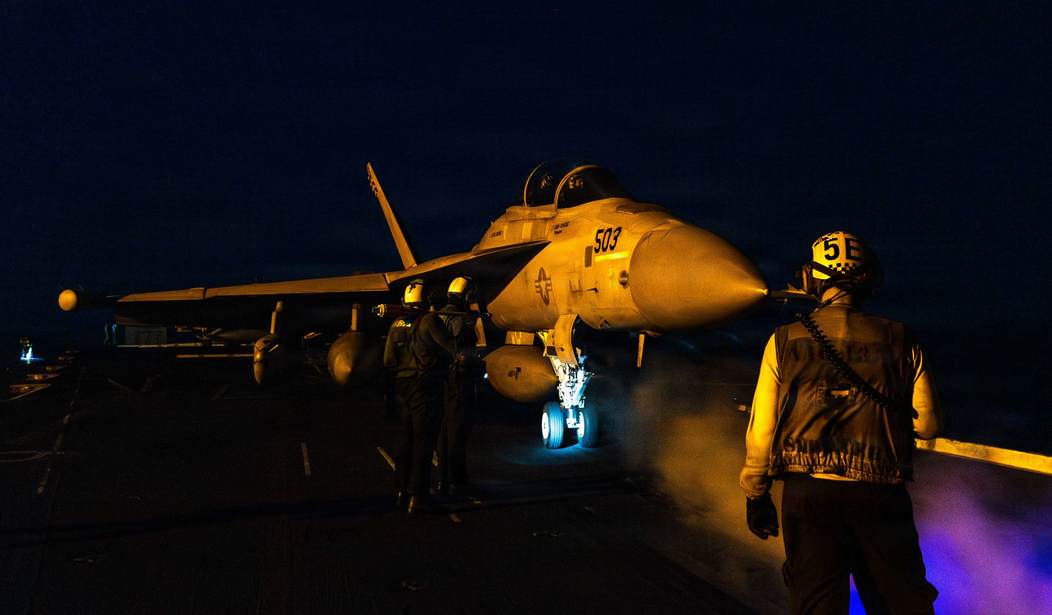
President Donald Trump has issued stark warnings of overwhelming force, signaling a willingness to escalate if adversaries do not yield. Iran, in turn, has responded with its own uncompromising threats, vowing retaliation not just regionally but against broader U.S. and allied interests. This is the language of brinkmanship, where words are no longer simply signals but accelerants.
At the same time, renewed instability surrounding Cuba, long a geopolitical flashpoint and just 90 miles from American shores, serves as a reminder that pressure points are not confined to one region. When tensions rise simultaneously across theaters, the risk is not isolated conflict but convergence.
War is never abstract. It is paid for in the blood of the young, the grief of families, and the long shadow it casts over generations. It is easy to speak of strategy in distant capitals. It is harder to confront the quiet return of flag-draped coffins and the unanswered question of what, ultimately, was gained.
We must also be honest about the danger of normalization. When a nation becomes accustomed to constant conflict, when war becomes background noise rather than a last resort, we risk losing not only our resources but our moral compass.
And that is where decline truly begins.
Empires rarely recognize their own unraveling. The British once declared that the sun would never set on their dominion. Rome believed its reach was eternal. History proved otherwise.
America stands at a crossroads. Not of immediate collapse but of cumulative consequence.
We can continue down a path of expansive commitments, rising debt and strategic ambiguity, trusting that our power will carry us indefinitely. Or we can pause, reflect and ask the harder questions:
What are we defending?
What are we sustaining?
And at what cost?
This is not an argument for isolation. The world remains interconnected, and American leadership still matters. But leadership without discipline becomes overreach. Power without restraint becomes peril.
The burden of being a superpower is not simply to act but to know when not to.
If we fail to learn that distinction, history suggests a sobering outcome: not sudden collapse but gradual decline. Not a single decisive moment, but a series of choices that lead us away from the very principles that once defined us.
Only humility, restraint and moral clarity can alter that course.
The warning signs are there.
The question is whether we are willing to see them.
Armstrong Williams is the manager/sole owner of Howard Stirk Holdings I & II Broadcast Television Stations and the 2016 Multicultural Media Broadcast owner of the year.
Editor’s Note: Do you enjoy Townhall’s conservative reporting that takes on the radical Left and woke media? Support our work so that we can continue to bring you the truth.
Join Townhall VIP and use promo code FIGHT to receive 60% off your membership.

Join the Conversation
VIP members get the ability to comment on articles.