





The ungainly term “CRomnibus bill” combines two phrases — “Continuing Resolution” and “omnibus bill” — which makes it unfortunately typical of how business is done in Washington these days.
Continuing resolutions are short-term spending measures that maintain a spending status quo, and they have been used in recent years when Congress couldn’t agree on a budget. “Omnibus” bills are comprehensive measures that cover spending throughout the government, and they have been used in recent years when Congress couldn’t pass appropriations bills.
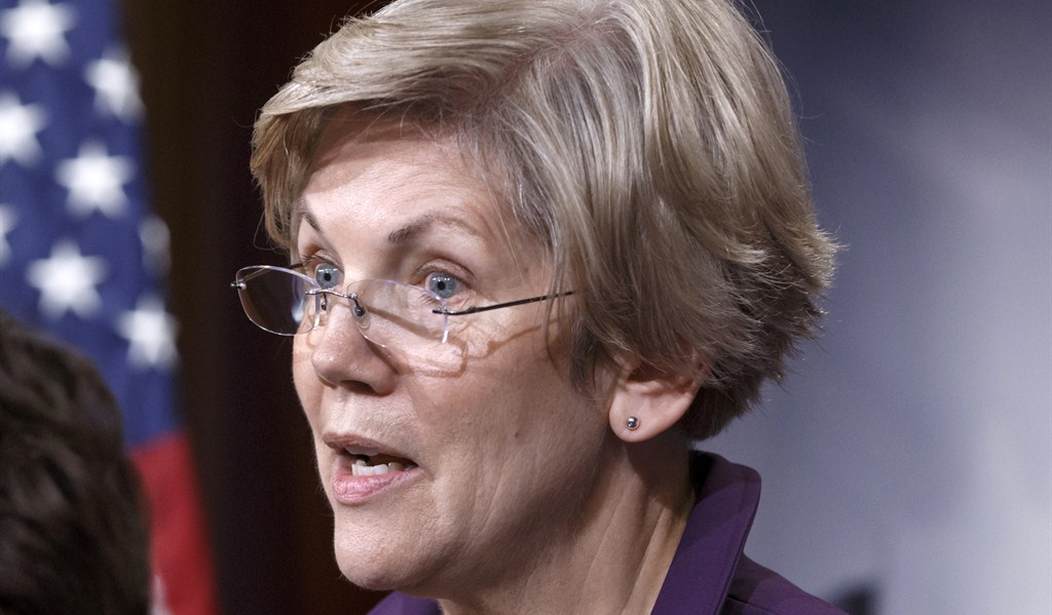
Neither is an ideal way to decide government policies and priorities. And, even apart from any linguistic offenses, the two combined ensure more bad legislation finds its way into law. Consider in depth just one example: a provision to restore FDIC insurance for high-risk trading in derivatives. Sen. Elizabeth Warren, Massachusetts Democrat, opposed that provision and “Warren Democrats” have followed her lead, coming out in opposition to the change.
By removing the Dodd-Frank separation of derivatives trading from federally insured traditional banking, the “CRomnibus” spending bill effectively restores federal insurance for the kind of high-risk derivatives trading that over-leveraged Wall Street and toppled the economy in 2008.
As a matter of policy, indemnifying bankers against losses from high-risk derivatives trading means bankers reap rewards without risk, while taxpayers assume risk without rewards.
It essentially would let derivatives traders on Wall Street gamble with taxpayer money and get bailed out by the government when their risky bets threaten to blow up our financial system. In other words: Private profits, socialized losses.
Mrs. Warren aside, this is also the sort of Wall Street / K Street cronyism that animates the spirit of the Tea Party, which was a response to a Washington Republican establishment that spouted conservative rhetoric but governed mostly in service of its own narrow interests.
This is an anti-market, anti-middle class provision due to the following: • By putting taxpayers on the hook for Wall Street losses, it raises the specter of rich-get-richer bail-out, a reverse transfer of wealth upward from middle class, at a time when the left is already exploiting stagnant middle-class wages and growing income inequality to incite class warfare.
• It undermines public confidence in the essential fairness and neutrality of a free market economic order, at a time when job losses to global competition and digitization have already rattled nerves.
• It subsidizes risky trading in derivatives. Subsidize something, and you get more of it. Indemnify losses from risky trading, and you get more risky trading — and, in turn, more losses, more taxpayer-funded bailouts … and then more risky trading, in a vicious circle.
• By insulating wealthy financiers from the costs of failure, it undermines the ethic of personal responsibility. If we ask unwed teenage mothers and young workers straining under student loan debt to take personal responsibility, the least we can do is ask the same of Wall Street bankers.
• By artificially propping up failed enterprise, we interrupt free market feedback circuits and disable capitalism’s immune system, preventing system from learning from error and gaining overall strength from localized weakness. This provision was not only bad policy from the left, but also bad policy from the right. And thus a pluperfect case of something that is indefensible in the light of day but which our governing class tucks in the dead of night into the crevasses of 1,000-page bills.
The left and the right need to come together both against these kinds of provisions but also the way of doing business that allows them


Join the Conversation
VIP members get the ability to comment on articles.