



What’s messier and more shameless than candidates campaigning to save the economy? Media coverage of that economy – the one all the candidates want to “stimulate.” The media coverage that’s driving people’s votes.
Despite journalists and politicians’ gloomy outlook, two-thirds of Americans say their own finances are “secure,” according to a recent Los Angeles Times/Bloomberg poll.
That’s surprising when you consider the media’s take on the economy, where the push is very real for a big-spending, “stimulating” candidate. Washington must “ride to the rescue,” as one Washington Post columnist put it.
A perfect example: while two-thirds of Americans surveyed said they were doing fine, leave it to the press to find a fellow who’s out of work and about to lose his home – and get his view of the economy and the presidential race.
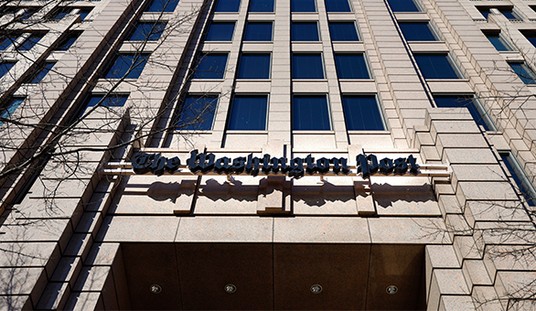
Heading into the Florida primary, The Washington Post reported January 27 on Florida resident Ivan Toledo, saying he is “looking to the presidential candidates for answers.”
Answers to what? Upon closer inspection, the careful reader learns that at one point he quit a job because he wanted something different – without another lined up. With a baby on the way, Toledo and his wife refinanced their house to take out a home equity loan.
If you’ve been paying any attention to media coverage lately, you could guess the Toledo’s got an adjustable-rate mortgage. Yes, that 1.5-percent teaser rate “ended up being too good to be true,” he said. Now it’s up to 8.7 percent. They’re still in the house, but they’re not even attempting to make payments.

This is a familiar scenario to journalists, who have used people like Toledo to vilify lenders and portray an apocalyptic recession in the United States. A Business & Media Institute study showed the media blaming lenders for debt six times more often than borrowers.
The bright spot is Toledo is taking classes to gain skills for a better job. In the meantime, though, he and many others are waiting for a presidential candidate to come along and offer the best deal.
And the best deal is … well, that depends. Do you want “free” money in your pocket?
More people told Los Angeles Times/Bloomberg pollsters in mid-January 2008 they would prefer tax cuts to health care and education spending, when it came to economic “stimulus.”
But tax cuts are historically scoffed at by the media. Covering the campaign trail, Time magazine’s Michael Duffy and Karen Tumulty upbraided Republicans for thinking economic problems “could be solved with the standard-issue GOP economic prescriptions of tax cuts and less regulation.” Adding insult to injury: “Even now, most of them still haven’t figured out how to address the economic concerns of voters,” they declared in the January 28 issue.
So let us, the supposed victims of the economy, look at candidates’ ideas for the United States. Universal health care. Education programs. Homeowner-help funds. All lauded by the media. Two massive questions remain: How much will it all cost, and who will pay for it?
The bottom line is, unless Rudy Giuliani or Ron Paul wins the presidency, we’re looking at sizeable spending increases. The National Taxpayers Union Foundation (NTUF) crunched the numbers on candidates’ proposals, finding Barack Obama would be the biggest spender – adding about $287 billion per year in new spending. Hillary Clinton was second with $218.2 billion. The biggest-spending Republican would be Mike Huckabee, adding $54.2 billion. Mitt Romney was next with $19.5 billion. Giuliani and Paul – neither contenders at this point – were the only ones in the study whose plans showed savings instead of spending increases.
For journalists – who love to hate the deficit – critical coverage of Campaign Promises Galore shouldn’t seem like such a tall order.
As for where the money’s going to come from, don’t worry; it’s “government money,” Time said.
Put simply, we could tell Mr. Toledo, struggling in Florida, to go knock on the door of a McMansion and ask for the amount of money he wants.
After all, the top 50 percent of earners in this country pay a whopping 97 percent of all the income taxes. Yeah, that’s pretty close to 100 percent. The NTUF reports the entire bottom half of tax filers are paying just 3 percent of the income taxes.
And both the media and politicians are keen on that redistribution setup. NBC’s Matt Lauer recently wanted to know whether a stimulus package would “give rebates to the rich.”
In an uncertain economy, media audiences are being conditioned to hold out for the biggest payout. Too bad we’re all going to be the ones paying.







Join the conversation as a VIP Member