



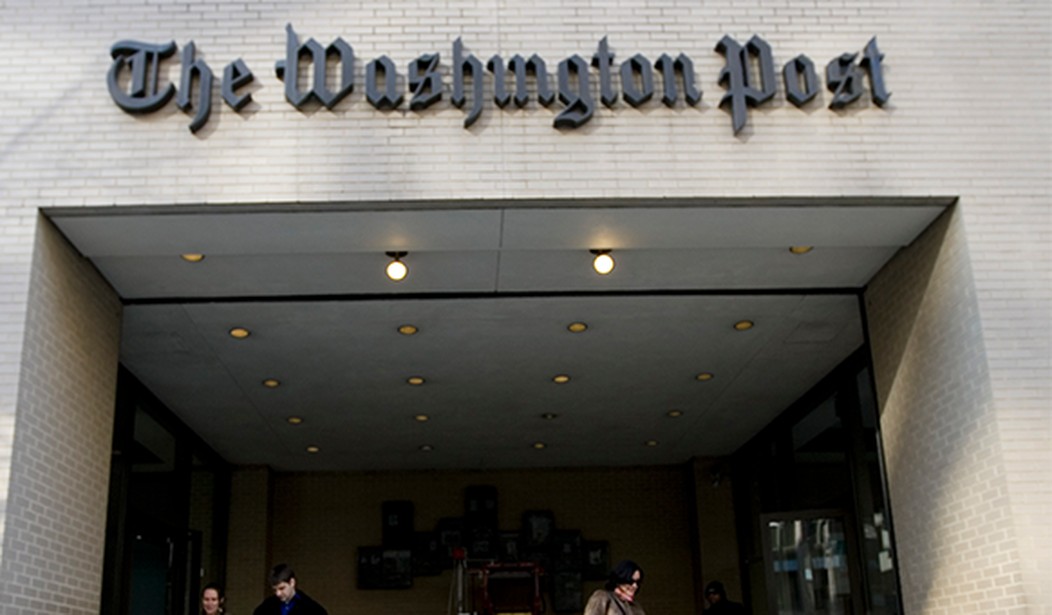
“Democracy Dies in Darkness” may be The Washington Post’s slogan, but after running an opinion piece calling for elitists to have more control in U.S. elections, many are wondering if it’s actually the paper’s mission statement.
“It’s time to give the elites a bigger say in choosing the president,” reads the op-ed written by Julia Azari, an associate professor and assistant chair in Marquette University’s political science department.
In the piece, Azari makes the case that the uncertainty of the primary process doesn’t help political parties prepare for the general election. "Preference primaries” would be a better system, she argued.
For decades, the conversation about nominations has been about the conflicts between party elites and everyone else. Today, that conversation is counterproductive. A better approach is to think about how voters and elites could best play their different roles: to make their political parties more representative while ultimately narrowing the nomination choice down to one person. And the best way to do that would be through preference primaries.
Preference primaries could allow voters to rank their choices among candidates, as well as to register opinions about their issue priorities — like an exit poll, but more formal and with all the voters. The results would be public but not binding; a way to inform elites about voter preferences.
This process could accompany a primary of the sort we’re used to — in which voters’ first choices instruct the delegates, and preferences come into play only if there’s no clear winner. The primaries could also be held in combination with elections for convention delegates so that these representatives are informed by their constituents’ preferences. This would also help voters hold these delegates accountable in the future. The point is to build a way for party elites to understand what their base is thinking, and to allow them to bargain so that these different preferences and priorities can be balanced. (WaPo)

As you could've guessed, the piece did not go over well on social media.
They really want to make "Democracy Dies in Darkness" their goal. pic.twitter.com/oI8I9Qf6qO
— ????????Mike?? (@The_Mikei) February 19, 2020
“Democracy dies in darkness” isn’t always true. Sometimes it dies in daylight on the pages of @washingtonpost, especially when @BernieSanders is winning and elites are having a meltdown: https://t.co/TDp9JWIxbz #Bernie2020 #NotMeUs
— LeftOfTheDial (@EricShapiro3) February 19, 2020
One of the more mask off headlines I’ve seen in awhile pic.twitter.com/CwlDXikoDG
— Ken Klippenstein (@kenklippenstein) February 19, 2020
Shit people say when Bernie Sanders takes the lead. https://t.co/uiRu4sTc86
— Krystal Ball (@krystalball) February 19, 2020
Seeing the words "Democracy dies in darkness" over an article literally calling for oligarchy is the height of irony
— Lucas (@RealLLRenno) February 19, 2020











Join the conversation as a VIP Member